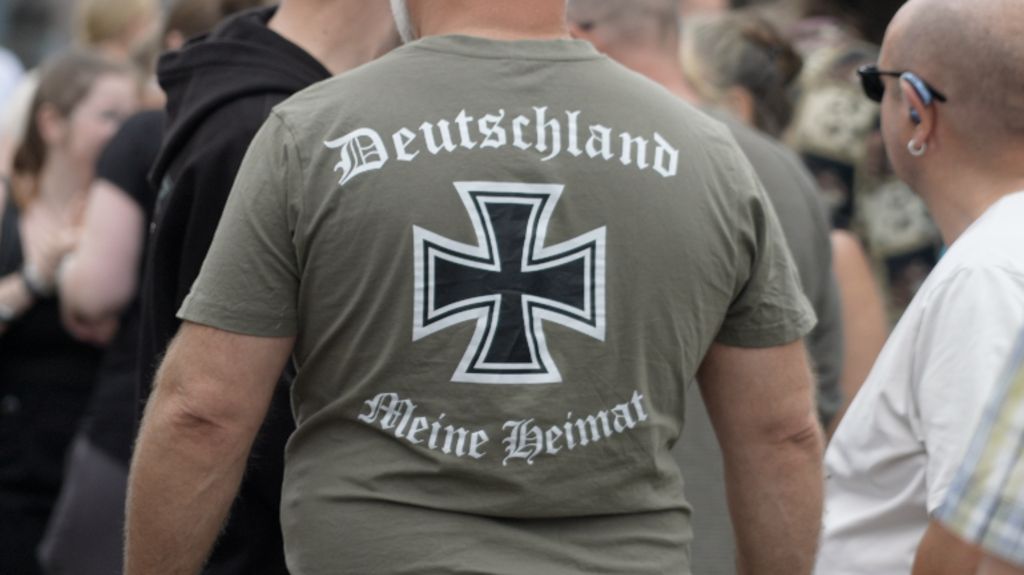
As eastern Germany’s Saxony-Anhalt region prepares for state elections on September 6, the far-right Alternative for Germany (AfD) holds a substantial lead in polling, putting it on the cusp of becoming the first post-war far-right party to control a German state government. Its campaign, centered on a sweeping “patriotism” agenda that seeks to downplay Germany’s Nazi past and reshape national memory, has ignited fierce national debate over the country’s long-standing moral commitment to confronting its 20th-century atrocities.
At the core of the AfD’s platform is a rejection of Germany’s established culture of remembrance, Erinnerungskultur, which the party dismisses in its official manifesto as a harmful “guilt complex.” If it wins a parliamentary majority, the party has pledged to overhaul state school history curricula, shifting focus away from the crimes of the Nazi regime to highlight centuries of pre-World War II German history, framed as a legacy of “poets and thinkers.” While AfD leaders insist education on National Socialism will remain part of the curriculum, the party’s blueprint sums up its approach as “More Bismarck, less Hitler” – a reference to 19th-century German unifier Otto von Bismarck. Additional policy pledges include daily flying of the German flag at public schools, expanded preservation of German war memorials, and cuts to public funding for art the party labels “anti-German.”
On the campaign trail in the small town of Querfurt, long-time AfD supporter Gerd, 70, summed up the view held by many of the party’s backers. Attached to the handlebars of his mobility scooter is a frayed German flag, a deliberate display of national pride that Gerd says modern Germany has suppressed for too long. “You can’t wipe away history, but the Second World War has nothing to do with us any more,” he told reporters, arguing that younger and even post-war generations should not carry perpetual collective responsibility for Nazi crimes, and that the nation should embrace its full historical legacy with pride.
Ulrich Siegmund, the 35-year-old AfD candidate who would become Saxony-Anhalt’s state premier if the party wins a majority, defended the agenda in an interview with the BBC. A former air freshener salesman who has risen to become one of the party’s most popular figures thanks to his energetic campaigning and savvy social media strategy, Siegmund framed the push for renewed national pride as an entirely ordinary, unremarkable goal. “We want to get that back,” he said. “We have a diverse history, stretching back many hundreds of years, and we want to teach that history in its entirety, with all its highs and lows but with pride and a positive outlook.” Siegmund dismissed widespread allegations of extremism against the party, and denied ongoing connections to Austrian far-right activist Martin Sellner, who has a documented neo-Nazi past. Siegmund said he only met Sellner once at a 2023 gathering outside Berlin, and has had no contact since.
Critics, however, warn that the AfD’s agenda amounts to dangerous historical revisionism that echoes the cultural control tactics of the Nazi regime itself. For Frank Martin Widmaier, director of a state-funded regional theatre in Eisleben, the party’s pledge to cut funding for “anti-German” art echoes the 1937 Nazi “Degenerate Art Exhibition,” where the regime labeled and banned works it deemed ideologically unacceptable. “How can somebody say it’s not German enough, and what does it mean?” Widmaier asked, noting that most German cultural institutions rely heavily on state funding. “This is playing with Nazi propaganda. To threaten people, to threaten the institutions.” Widmaier rejected the AfD’s core claim that Germany’s culture of remembrance has created a national guilt complex, arguing that confronting the Nazi past is a core part of modern German national identity, not a source of shame for generations born after the war. “You don’t have to feel guilty,” he said. “But you have to deal with all of that to make it never happen again. That’s part of our DNA in Germany.”
The AfD has long faced official scrutiny: German domestic intelligence has classified the Saxony-Anhalt AfD branch as a right-wing extremist anti-democratic movement permeated by racist ideology, a designation the party dismisses as a politically motivated smear. All major established German parties have ruled out entering any coalition government with the AfD, meaning the party’s only path to power is winning an outright majority in the state parliament – a historic outcome that polls indicate is possible, though not guaranteed. If successful, the victory would give the AfD control over core state portfolios including education, policing, and cultural policy, allowing it to implement its full agenda for the first time.
The growing popularity of the AfD’s nationalist agenda is not limited to Saxony-Anhalt: the party currently leads national polling as well, though its advantage at the federal level is less dramatic. The September 6 election is widely viewed as a watershed moment for post-war German politics, marking the first real test of whether a far-right party committed to rewriting Germany’s founding post-war moral consensus can seize state power.