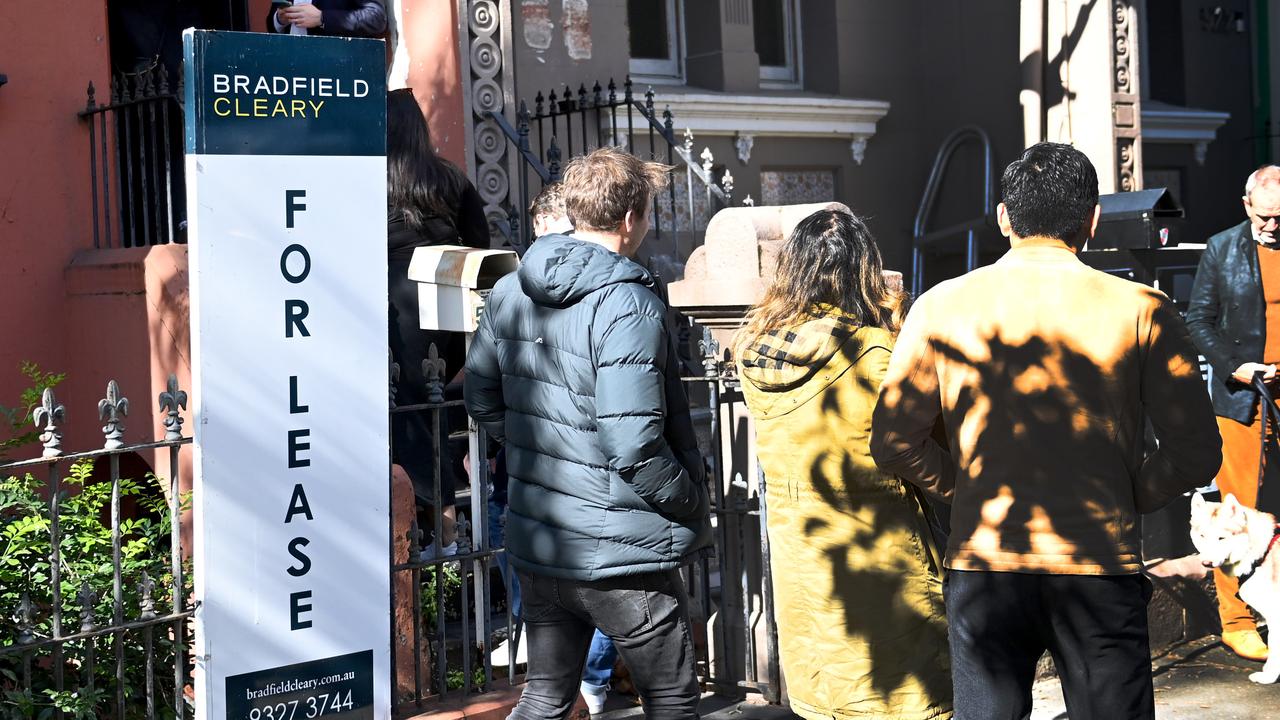
Australia’s national rental market has hit a key milestone not seen in two and a half years, but the modest uptick in available properties is unlikely to bring the meaningful relief that millions of Australian renters have been waiting for, according to new data from the REA Group. In July, the national rental vacancy rate rose 0.2 percentage points to reach 1.5%, the highest reading recorded since February 2022. While this marks a modest easing of the extreme tightness that has defined Australia’s rental market for years, the rate still sits far below the 2.5% to 3% range that economists and housing analysts identify as a balanced market where renters have meaningful choice and pricing pressure stabilizes.
Anne Flaherty, senior economist at REA Group, told NewsWire that two key shifts have driven the recent small increase in available rental properties: a surge in first-home buyer activity that drew many long-term renters out of the market to purchase their first properties, and a boom in property investment activity that brought more new stock into the rental pool. Flaherty explained that elevated first-home buyer purchasing at the end of 2023 pulled thousands of households out of the rental market, while 12-month data for new property investor loans shows activity is currently at the highest level since the Australian Bureau of Statistics began tracking this metric in 2019, driven largely by a wave of new investor purchases at the start of 2024.
Breaking down the data by capital city, Canberra recorded the nation’s highest vacancy rate in July at 1.67%, and also notched the largest monthly growth in available rental stock. Melbourne and Sydney followed Canberra in overall vacancy rates, while Darwin and Hobart remain the two tightest rental markets across the country’s capitals, with very few available properties for prospective renters to choose from.
Despite this short-term improvement, Flaherty warned that the market could tighten again in coming months, following changes to Australia’s property tax rules included in this year’s federal budget that are already dragging on investor demand. The budget scrapped the previous 50% capital gains tax discount for properties purchased after the changes, replacing it with an inflation-linked index model, and also eliminated negative gearing tax benefits for all new property purchases except for newly built homes. Existing properties and their owners remain grandfathered in under the old rules, but the changes have discouraged new investors from entering the market.
Flaherty noted that the core challenge facing Australia’s entire housing market – for both buyers and renters – remains a persistent, nationwide shortage of total housing supply. “Right now, both homebuyers and renters are facing significant struggles, and the root cause of both problems is that we simply do not have enough housing stock to meet demand,” she said. “It is true that surging investor demand can push property prices up and price first-home buyers out of the market, but if investor demand falls sharply, that leaves fewer properties available for rent, worsening conditions for renters. It is an incredibly tricky balance to strike.”
New building approval data from the Australian Bureau of Statistics offers a mixed picture of how supply will evolve in coming years. Overall building approvals jumped sharply in June, hitting their highest level since August 2021, driven by a 17.8% surge in approvals for private sector multi-unit apartment developments, which offset an 11% drop recorded in May. Approvals for standalone private houses also edged up 0.4% in June, marking six straight months where approval volumes have stayed above 10,000 homes nationally.
The Australian government, under Prime Minister Anthony Albanese’s Labor administration, launched the National Housing Accord (NHA) in response to the country’s housing affordability and supply crisis, bringing together federal, state and local governments to deliver a target of 1.2 million new homes over five years ending June 2029, or 240,000 new homes per year. While total approval volumes have risen since the middle of 2024, adjusted for population growth, the numbers still paint a far weaker picture. In the 2025-26 financial year, just nine new dwellings are approved per 1,000 Australian residents. That is substantially lower than the 12 approvals per 1,000 residents recorded in early 2015, and only a tiny improvement from the eight approvals per 1,000 residents recorded in June 2023.
Flaherty added that headwinds facing developers are likely to keep supply growth constrained for the foreseeable future. “Developers are dealing with a long list of constraints including rising construction costs, higher interest rates that increase borrowing costs, and persistent labour shortages across the construction sector,” she said. “On top of that, developers typically prefer to break ground on new projects when home prices are rising, and the current environment of softening home prices adds another layer of concern for new development. That means housing supply is more likely to worsen than improve in the near term.”
The next batch of monthly building approval data, covering July 2024, is scheduled for release by the Australian Bureau of Statistics on September 1.