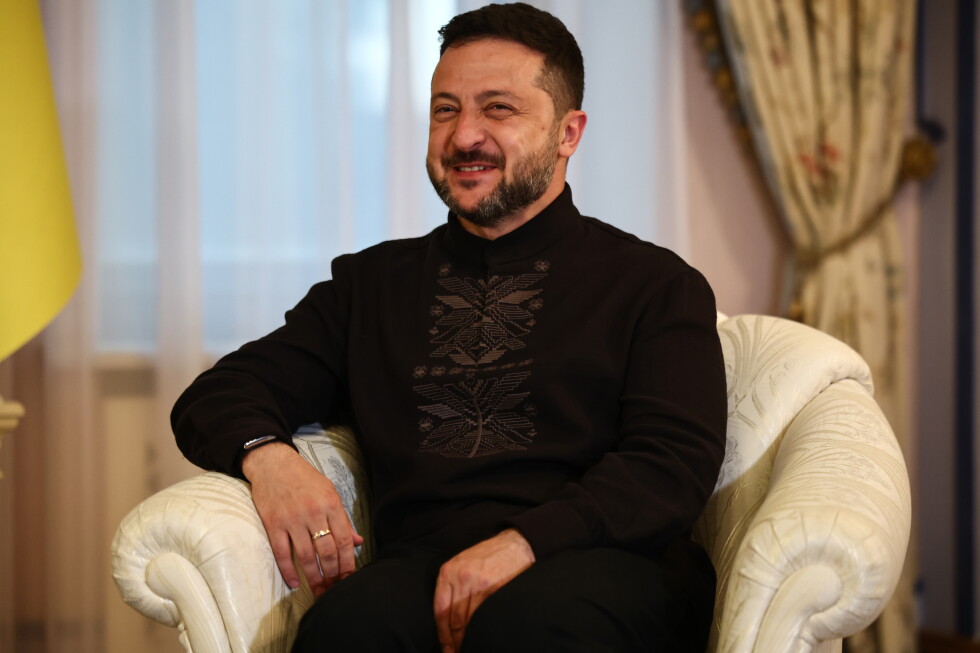
In a formal presidential decree announced Wednesday, Ukrainian President Volodymyr Zelenskyy bestowed the Order of Freedom — one of Ukraine’s most prestigious state honors — on billionaire entrepreneur and SpaceX founder Elon Musk, citing his extraordinary personal contributions to safeguarding Ukrainian human life and national freedom, and deepening bilateral cooperation between Kyiv and Washington.
Musk’s emergence as one of the most consequential and polarizing private figures in Ukraine’s two-year full-scale war against Russian invasion traces directly to his pivotal decision to deploy SpaceX’s Starlink satellite internet network across Ukrainian territory. What began as an emergency connectivity solution has grown into an irreplaceable communications lifeline for both frontline Ukrainian troops and civilian populations across the country, filling critical gaps left after Russia’s widespread attacks on Ukraine’s ground-based telecommunications infrastructure.
Today, Starlink is fully integrated into nearly every layer of Ukraine’s military operations. Frontline commanders and infantry rely on the satellite network to coordinate troop movements and share real-time battlefield intelligence, while Ukrainian drone operators use Starlink’s stable connectivity to maintain control of long-range attack drones, guiding them to targets deep behind enemy lines. Military analysts widely credit Starlink’s support as a core factor behind the unexpected success of Ukraine’s mid-range drone campaign launched earlier this year, which caught Russian logistics units off guard and disrupted critical supply lines for Moscow’s invading forces.
Even as Musk’s technology delivers tangible battlefield gains for Kyiv, the tech entrepreneur’s unilateral control over Starlink’s operating parameters has made him both an indispensable partner and a potential source of strategic vulnerability for Ukraine. Currently, Starlink services are disabled across all Russian territory, a restriction that blocks Ukrainian forces from maintaining connectivity when guiding long-range drone strikes targeting Russian military and energy infrastructure deep inside Russia. Zelenskyy has publicly pushed Musk to reverse this policy, and has even sought diplomatic backing from the U.S. government to pressure SpaceX to adjust its terms of use. Musk has repeatedly pushed back on this request, warning that enabling Starlink use inside Russia would amount to a dangerous escalation of the conflict.
Beyond the battlefield, Musk’s outsized influence has already spilled over into Ukrainian domestic politics, contributing to a high-profile government shake-up earlier this year. Last week, Zelenskyy confirmed that miscommunication around SpaceX’s position on Starlink use inside Russia played a role in the dismissal of former Defense Minister Mykhailo Fedorov, who served as Kyiv’s primary liaison with Musk and SpaceX. According to Zelenskyy, the Ukrainian Defense Ministry incorrectly conveyed that SpaceX had approved expanded Starlink use, leading to an awkward confrontation with former U.S. President Donald Trump, who accused Zelenskyy of misleading him. While Zelenskyy stopped short of accusing Fedorov of intentional misinformation, he confirmed the incident was a contributing factor to Fedorov’s ouster as part of a broader cabinet reshuffle in July.
SpaceX also took a step earlier this year that aligned with Kyiv’s strategic goals, when the company blocked unauthorized Starlink terminals being operated by Russian forces in occupied Ukrainian territory, a move that further strengthened Ukraine’s battlefield position. That action, paired with the provision of civilian and military connectivity within Ukraine, has helped reinforce the positive ties between Kyiv and Musk that Zelenskyy sought to recognize with this week’s honor. As of Wednesday, Musk had not issued any public comment in response to the award.