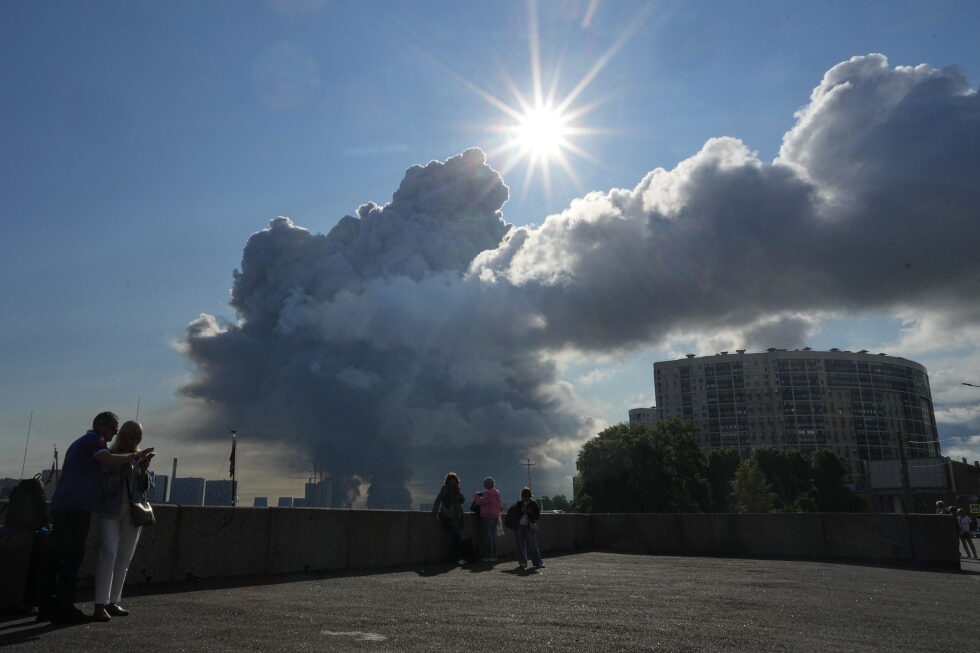
In a dramatic escalation of Ukraine’s cross-border aerial campaign, Ukrainian long-range drones have completely destroyed a major logistics warehouse operated by Russia’s largest e-commerce giant Wildberries — marking the second strike on the same facility in just over a month, local Russian authorities confirmed Wednesday.
Located in Russia’s Tambov region, hundreds of kilometers southeast of Moscow and far from the Ukrainian front lines, the depot first came under Ukrainian attack on July 18. That initial strike killed seven people and opened a new chapter of sustained drone assaults on Wildberries infrastructure that has rippled across Russian territory in recent weeks. Often compared to U.S. retail giant Amazon for its market dominance and central role in Russian domestic commerce, Wildberries has become a key target for Ukrainian forces. Kyiv officials say the company’s product catalog includes military equipment and technical components that directly support Russia’s military operations in Ukraine.
The expanded drone campaign, enabled by advances in Ukrainian unmanned aerial technology developed after Russia’s full-scale invasion in February 2022, has hit dozens of Wildberries facilities across Russia in recent weeks. Beyond disrupting potential military supply chains, the strikes advance Ukraine’s war objectives in two critical ways: they sow uncertainty and anxiety among Russian civilian populations living far from the combat zone, and they create growing strain on the Russian domestic economy.
The strike on the Tambov depot left two people injured, regional governor Yevgeny Pervyshov confirmed. A 19-year-old man suffered a concussion, while a 49-year-old woman sustained a broken finger. Wildberries itself acknowledged the overnight attack and subsequent fire, confirming all personnel were evacuated from the facility, but declined to comment further on the scale of damage. In a separate drone incident Wednesday in Russia’s Lipetsk region, south of Moscow, a falling drone crashed into a residential home and sparked a fire, killing two people and wounding two more, regional governor Igor Artamonov reported.
Wildberries is not the only critical economic target Ukraine has prioritized in its recent drone offensive. Ukrainian forces have also repeatedly targeted Russian oil infrastructure, the backbone of Russia’s state revenue and global economic power as one of the world’s top energy producers. On Wednesday, unconfirmed reports emerged of a large fire at an oil refinery in Russia’s Nizhny Novgorod region, an area that has faced multiple Ukrainian drone strikes in recent months. Regional governor Gleb Nikitin confirmed an attack had caused damage to an unspecified industrial facility, but offered no further details on the site’s identity or the extent of destruction.
The latest wave of drone strikes comes amid consistent heavy exchanges of fire across the conflict. Russia has responded to the nightly drone assaults with large-scale missile and bomb attacks on Ukrainian territory, launching volleys of ballistic missiles, cruise missiles, glide bombs and jet-powered drones that have killed thousands of Ukrainian civilians since the full-scale invasion began. On Wednesday, the Russian Ministry of Defense announced that its air defense systems shot down 426 Ukrainian drones overnight across 15 Russian regions and the illegally annexed Crimean Peninsula. Ukraine has stated its strategy of launching mass drone attacks nearly every night is designed to overwhelm Russian air defense networks, increasing the likelihood that drones reach their intended targets.
In the wake of the strike, Russian President Vladimir Putin has already issued a new decree that allows the Russian state to seize control of private infrastructure damaged in Ukrainian drone attacks, according to related reporting on the conflict.