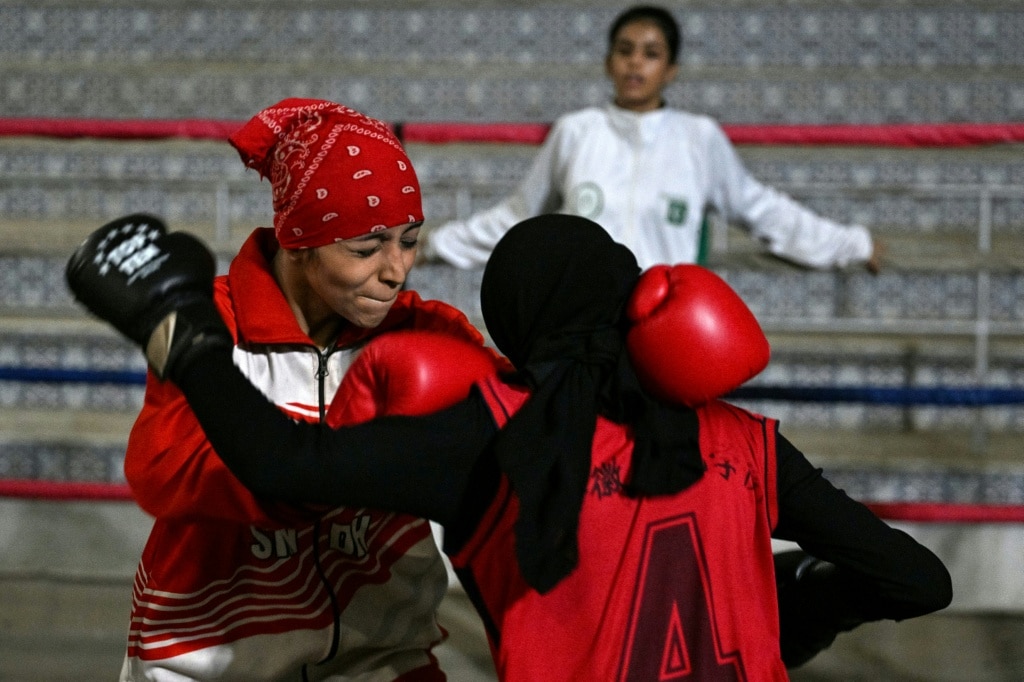
Karachi’s gritty Lyari neighborhood, a once gang-violence-plagued community where sports have long woven through the fabric of daily life, is now home to a quiet, powerful revolution: young Pakistani girls trading domestic expectations for boxing gloves and determination.
Thirteen-year-old aspiring boxer Hoorain Zahra is at the forefront of this movement. Sweat beading on her forehead, she drills through punch combinations during sparring sessions at a local Lyari gym, her gaze fixed on following in the footsteps of her role model, 21-year-old trailblazer Aliya Soomro. Last year, Soomro made national headlines when she claimed victory at an international boxing match in Bangkok — a historic win for a Pakistani woman, where deep-rooted patriarchal and cultural norms still relegate women to the home, barring them from public athletic spaces like gyms and sports clubs.
The nation’s female boxers reclaimed public attention in late July, when 22-year-old Fatima Zahra made history as Pakistan’s first female Commonwealth Games boxing medalist, taking home bronze in the 60kg category in Glasgow. For girls like Hoorain, who grew up in Lyari’s sports-obsessed community, Fatima and Soomro’s wins are more than just athletic achievements — they are proof that women can thrive in a sport that society insists is not for them.
For these young athletes, even stepping through the gym door is an act of defiance. Hoorain, adjusting her black hijab between drills, told AFP that widespread societal belief holds girls should never leave the home unchaperoned, framed by false claims that women are unsafe in public spaces. “But it is not possible to live without going outside, you have to go out,” she says. Around her, fellow fighters prepare for their session, layering modest athletic wear that keeps them covered while they train. The gym itself is unassuming: a cramped, worn room in a run-down Lyari building, where whirring overhead fans offer only intermittent relief from sweltering summer heat when power becomes available in the late afternoon.
The man behind this decade-long movement to open boxing to girls is 56-year-old coach Ustad Younis Qambrani, who opened his gym doors to female fighters more than 10 years ago, starting with his own two daughters as his first trainees. “I believed women’s boxing was very important for girls,” Qambrani explained. “The girls who train with us go outside with great confidence. They show great courage and are not afraid of anything.”
The fighters’ struggle to claim space for their sport mirrors Lyari’s own turbulent modern history. For decades, the neighborhood was labeled one of Pakistan’s most dangerous, flooded with weapons and drugs after it became a key transport hub during the Soviet-Afghan War. A 2013 paramilitary crackdown rooted out gang violence, but the political vacuum that followed was filled by conservative religious parties that won power in 2018. Those parties tightened restrictions on girls’ public activities, even banning bicycle riding for young women in some local areas.
Even amid growing conservative pressure, Lyari’s sporting culture has refused to die. The neighborhood has long been famous for producing elite Pakistani athletes, including a new generation of unshakable female boxers. Crucially, many local families have stood behind their daughters’ athletic ambitions: both Hoorain and Soomro count on full support from their parents to pursue their boxing dreams.
Soomro, who is building on her 2023 Bangkok win toward future international competitions, says girls deserve the exact same access to sports as boys. “Our society regards girls as very weak. People think girls are weak and cannot do anything,” she said from a nearby mixed-gender boxing arena. “But I believe girls can do everything, sometimes even more than men.”