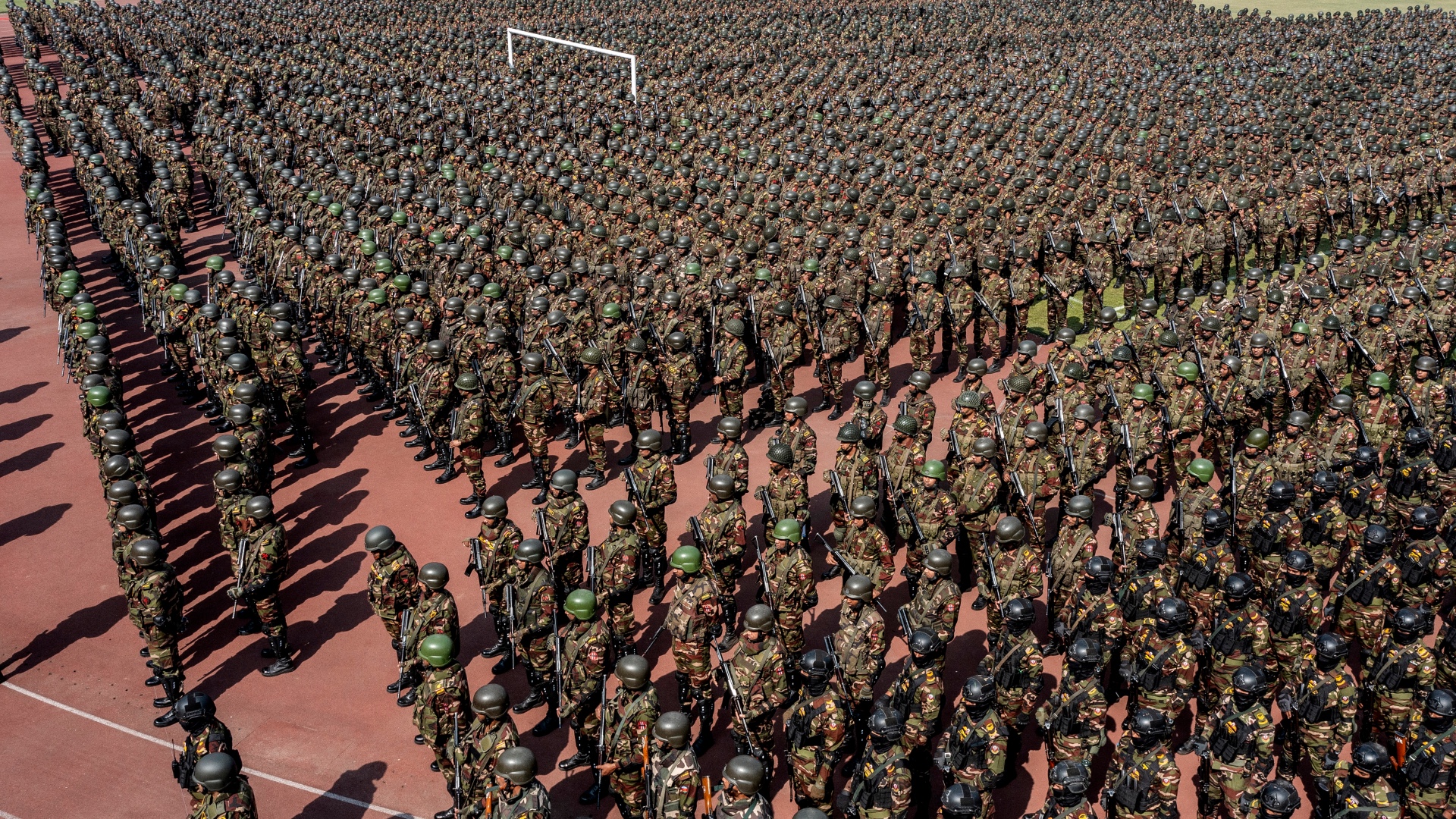
A new regional collective defense initiative first unveiled earlier this month, linking Turkey, Saudi Arabia, and Pakistan, may soon welcome a new member: Bangladesh. The South Asian nation has received a formal invitation to join the framework, which has quickly become known as the Mecca pact, according to Bangladesh’s State Minister for Foreign Affairs Humayun Kabir, who shared the update with reporters on Monday. While Kabir declined to name the party that extended the invitation, reporting from Reuters cites an anonymous source confirming that Riyadh initiated outreach to Dhaka.
Kabir noted that Dhaka views the prospect of membership through a constructive lens, explaining that participation in a security coordination body for Muslim-majority nations in the Middle East is a reasonable prospect for the country to examine. “If there is a security arrangement among Islamic nations in the Middle East, it is not unusual for us to consider participating. It is being viewed positively,” Kabir told reporters.
Similar to the collective defense principle that underpins long-standing Western military alliance NATO, the core of the Mecca pact holds that an armed aggression against any one signatory state counts as an attack against all member parties.
For Bangladesh, joining the alliance would mark a major shift from its long-held policy of neutrality in large-scale geopolitical divides, a posture carefully maintained to avoid friction between its two nuclear-armed neighbors, India and Pakistan. The country’s interim administration is currently pushing to extradite former Prime Minister Sheikh Hasina, who fled to India in 2024 after mass popular protests ousted her sitting government in Dhaka. A formal security alignment between Dhaka and Islamabad would almost certainly be interpreted as a hostile signal by New Delhi, which maintains close strategic and economic ties with Israel, a state the current Mecca pact members have increasingly distanced themselves from amid regional conflicts.
The three founding members of the pact have repeatedly stressed that the framework is strictly defensive in scope and not designed to counter any specific regional power. Still, a majority of independent geopolitical analysts have concluded the alliance is implicitly oriented toward countering Iranian influence across the Middle East. All three founding states have majority Sunni populations; while Saudi Arabia has maintained long-running tense relations with Shia-led Iran, both Turkey and Pakistan have kept relatively cordial bilateral ties with Tehran in recent years.
Pakistan has served as a critical intermediary for diplomatic talks between the United States and Iran amid the ongoing standoff over the Strait of Hormuz, which Tehran blockaded in response to the U.S.-Israeli military campaign launched against Iran that initially aimed to overthrow the country’s ruling government. For Saudi Arabia, by contrast, Iranian-aligned groups have launched repeated retaliatory strikes targeting U.S. military assets hosted on Saudi territory. The ongoing regional conflict has also reignited hostilities between Riyadh and the Houthi-led government in Sanaa, which controls most of northern Yemen, along Saudi Arabia’s southern border.
While the original plan for the alliance was a three-party pact between Turkey, Saudi Arabia and Pakistan, Middle East Eye reported that Egypt was initially identified as a high-priority candidate for expansion. Egypt, which boasts one of the largest and most capable militaries in the Arab world, has increasingly aligned with Turkey, Qatar, and Saudi Arabia on a range of key regional issues, from ceasefire negotiations to end the war in Gaza to security and political developments across the African continent. An Ankara-based source with direct knowledge of the negotiations told Middle East Eye that Turkey invested significant diplomatic effort into courting Cairo, and formally submitted a proposal for Egypt’s membership. After it became clear that Cairo would not move forward with joining the pact, the founding members opted to launch the framework and pursue expansion without Egyptian participation.