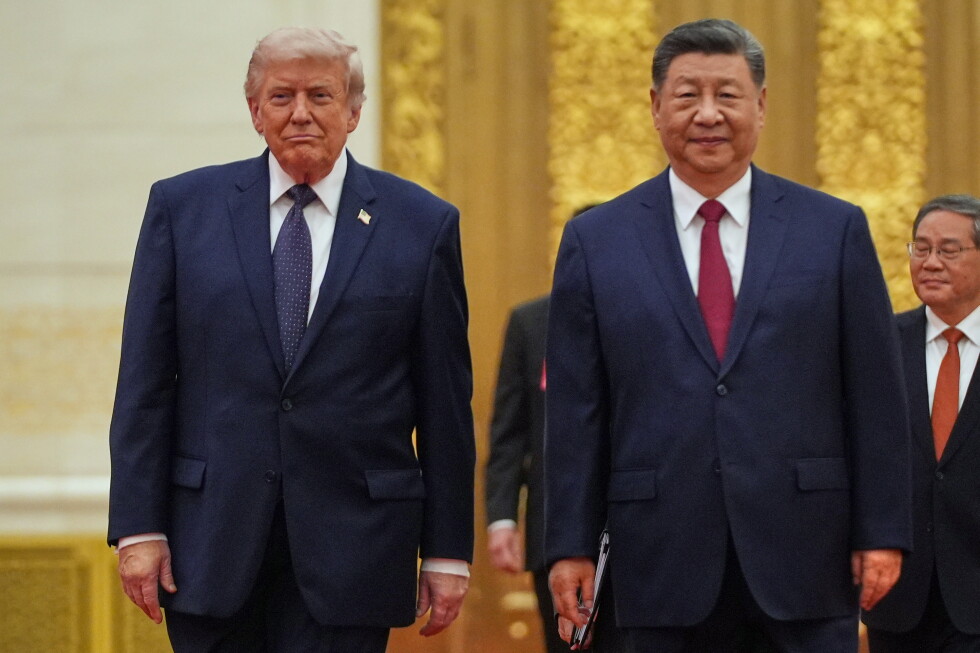
As the Trump administration launches what Treasury Secretary Scott Bessent has called a sweeping “economic onslaught” to cut off Iran’s global financial networks, one critical complication threatens to undermine the entire campaign: Washington’s fragile relationship with Beijing.
China holds the position of Iran’s largest single trading partner and the top buyer of Iranian crude oil, taking in more than 80% of Tehran’s total oil exports—most of which move through opaque, indirect shipping channels to evade existing U.S. penalties. While the White House aims to fully isolate the Islamic Republic from the global economy, it is also just weeks away from hosting Chinese President Xi Jinping for a high-stakes summit aimed at preserving a shaky bilateral trade truce.
Notably, details on how the Trump administration would pressure Beijing to cut its economic ties with Iran were entirely absent from Bessent’s recent policy announcement, leaving analysts questioning just how effective the new sanctions campaign can be when Washington must balance its goal of maximum pressure on Tehran against the risk of triggering economically costly tensions with China. Edgard Kagan, senior advisor and Freeman Chair in China studies at the Center for Strategic and International Studies, and a former U.S. ambassador to Malaysia, noted that the deliberate omission of specifics on China was clearly crafted to avoid disrupting the upcoming summit. “For Xi, a state visit to Washington is a big deal; and for Trump, hosting it is a big deal,” Kagan explained Tuesday. This delicate balancing act will require careful navigation from both capitals, he added, with the core question remaining: can the U.S. push China to scale back its engagement with Iran enough to pressure Tehran, without pushing Beijing into open refusal to comply?
In its official response to Bessent’s newly announced “Operation Economic Outcast”, Beijing has stressed that all of its commercial cooperation with Iran falls firmly within the bounds of international law. Chinese Foreign Ministry spokesperson Lin Jian reiterated that China-Iran cooperation “should not be disrupted or undermined,” and that China opposes what it calls “illegal unilateral sanctions” imposed by the U.S. “China is closely monitoring relevant developments and will take all necessary measures to resolutely safeguard its own rights and interests,” Lin stated. Kagan characterized Beijing’s statement as a deliberate “holding response,” arguing that Chinese leaders will seek to meet the bare minimum of U.S. demands to avoid confrontation, while stopping short of fully aligning with Washington’s goals. He pointed to longstanding practices like secret ship-to-ship oil transfers that disguise the origin of Iranian crude as evidence that Beijing has long avoided complying with the spirit of U.S. sanctions, even while it avoids crossing explicit American red lines.
Sun Yun, director of the China program at the Washington-based Stimson Center, outlined that China’s willingness to cooperate hinges entirely on the U.S.’s end goals. If the administration’s aim is to completely destroy Iran’s economy and force regime collapse, Beijing will reject the campaign outright. But if the goal is to pressure Iran to make concessions around security in the Strait of Hormuz and de-escalate regional tensions, Sun said China is prepared to demonstrate limited cooperation without fully severing economic ties. “China only needs to do enough to demonstrate it is cooperating, such as cut back on its oil import from Iran,” Sun explained. With the summit just weeks away, neither side has an interest in triggering a major bilateral escalation, she noted: “China needs to give U.S. something, and U.S. needs to understand and accept that it is not going to be everything U.S. asks for.”
So far, the Trump administration has declined to impose harsh penalties on major Chinese banks and businesses that maintain links to both Iran and the U.S. financial system—entities that are far more vulnerable to American sanctions than the small actors already targeted. In Monday’s announcement, the Treasury Department penalized nearly 60 Iran-linked entities connected to Tehran’s nuclear and missile programs, cyber activities, and oil trade. The action did hit a small number of China-based individuals and entities supporting Iran’s restricted programs, including a Chinese-owned crude tanker that transported millions of barrels of Iranian oil to China in 2025 and a Hong Kong firm involved in the shadow fleet that ships Iranian crude. But major Chinese financial and commercial firms have been left untouched.
Ali Wyne, senior research and advocacy advisor on U.S.-China relations at the International Crisis Group, argues that Trump is highly unlikely to take a hardline stance against major Chinese actors ahead of Xi’s visit. “Given how keen Trump has been to maintain both a trade truce between the United States and China and his personal rapport with Xi, he seems unlikely to do a volte-face just a month before Xi’s state visit and adopt a highly confrontational posture,” Wyne said. The upcoming state visit also sets the stage for a potential return trip by Trump to China in November for the Asia-Pacific Economic Cooperation leaders’ summit, adding further incentive to avoid friction.
In his second term, Trump has adopted a less hawkish posture toward China than he held during his first term, frequently highlighting his positive personal relationship with Xi following 2024’s full-scale trade war marked by tit-for-tat escalating tariffs. The U.S. business community has broadly welcomed Xi’s upcoming visit, framing in-person high-level talks as a positive development even if major breakthrough deals are not expected.
Craig Singleton, senior director for China at the Foundation for Defense of Democracies, a hawkish Washington-based think tank, summed up the current dynamic: “Beijing is betting that Washington will be reluctant to jeopardize the current leader-level dynamic by targeting major Chinese entities before the summit.”