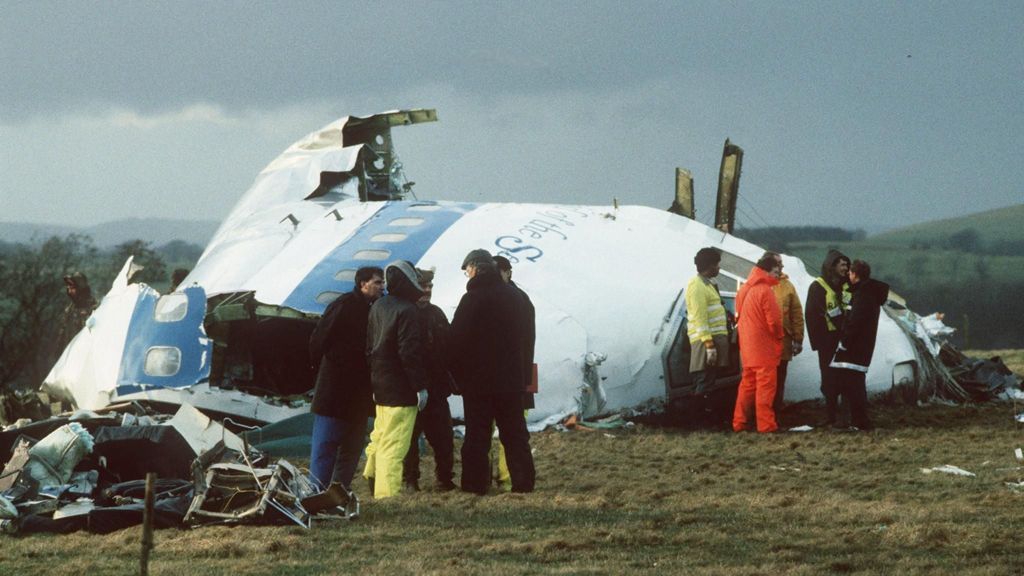
Thirty-seven years after the deadliest terrorist attack in British history claimed 270 lives, the long-running legal saga of the Lockerbie bombing has hit yet another unexpected delay. The trial of accused Libyan suspect Abu Agila Mohammad Kheir Al-Marimi, originally scheduled to begin jury selection this week in Washington DC, has been pushed back to January 2026 – marking the third postponement of the case, following the surprise discovery of previously undisclosed evidence just days earlier.
The new evidence, unknown to both Al-Marimi’s defense team and US federal prosecutors until August 21, has prompted the defense to request additional time to fully investigate the material. “Constitutional and ethical obligations require the defence to investigate this development,” Al-Marimi’s legal team told the court, noting that the defendant had personally approved the request after meeting with his lawyers on August 24. US District Court Judge Dabney Friedrich granted the delay, acknowledging the significant potential importance of the newly uncovered information, despite months of intensive pre-trial preparation and prolonged legal wrangling that preceded the scheduled start date.
For the family members of the 270 victims killed when Pan Am Flight 103 was destroyed over Lockerbie, Scotland on December 21, 1988, this latest delay extends a decades-long wait for closure. A final verdict in the high-profile case is now not expected until at least spring 2026. The delay is just the latest twist in a case that has been marked by unforeseen turns since the attack itself, when a bomb hidden in the plane’s forward cargo hold detonated at 31,000 feet as the flight traveled from London Heathrow to New York City. All 259 passengers and crew on board were killed, and 11 more people on the ground lost their lives when falling wreckage destroyed their homes in Lockerbie. Of the 270 fatalities, 190 were American citizens and 43 were British.
Al-Marimi, a 70-something grandfather, has been held in US custody since December 2022, after being taken into custody more than three decades after the attack. This is not the first delay to his trial: it was originally scheduled to begin in May 2025, before being postponed over the case’s unprecedented complexity and Al-Marimi’s reported poor health. It was then rescheduled for April 2025, only to be called off a second time when the defense requested additional preparation time.
The Lockerbie bombing has been the subject of a joint investigation by Scottish and US law enforcement authorities since the day of the attack. Scottish prosecutors and police officers had planned to travel to Washington DC this week to attend the trial’s opening, with Scottish witnesses expected to be among the first to testify. Laura Buchan, head of the Lockerbie investigation team at the Crown Office and Procurator Fiscal Service, acknowledged the latest delay would be disappointing for victims’ families who have followed the case for decades. “Although these proceedings are being led by the United States authorities, Scottish prosecutors and police officers remain fully committed to supporting the pursuit of justice,” Buchan said, declining to comment further on the reasons for the adjournment while the case remains active before the court.
Al-Marimi is the second Libyan suspect to face formal trial over the bombing. The first, held at a special Scottish court convened at Camp Zeist, a former US air base in the Netherlands, in 2000, ended with one defendant – Abdelbaset al-Megrahi – convicted of 270 counts of mass murder, while his co-accused Al Amin Khalifah Fhimah was acquitted. Megrahi was sentenced to life in prison, but was released on compassionate grounds in 2009 after being diagnosed with terminal cancer, and died of the disease in 2012. Despite two appeal hearings, his conviction has been upheld by Scottish courts.
US prosecutors allege that Al-Marimi worked alongside Megrahi and Fhimah to carry out the bombing, which the 2000 court ruled was an act of state-sponsored terrorism carried out by agents of the Libyan intelligence service. The prosecution’s case centers on a confession Al-Marimi reportedly gave while in Libyan detention in 2012, which was passed to Scottish investigators in 2017. Al-Marimi has repeatedly claimed the confession was forced through duress and is entirely false, but Judge Friedrich ruled earlier this year that the statement can be admitted as evidence during the trial. Al-Marimi has also entered a formal plea of not guilty to the charge of building the bomb that destroyed Pan Am 103.