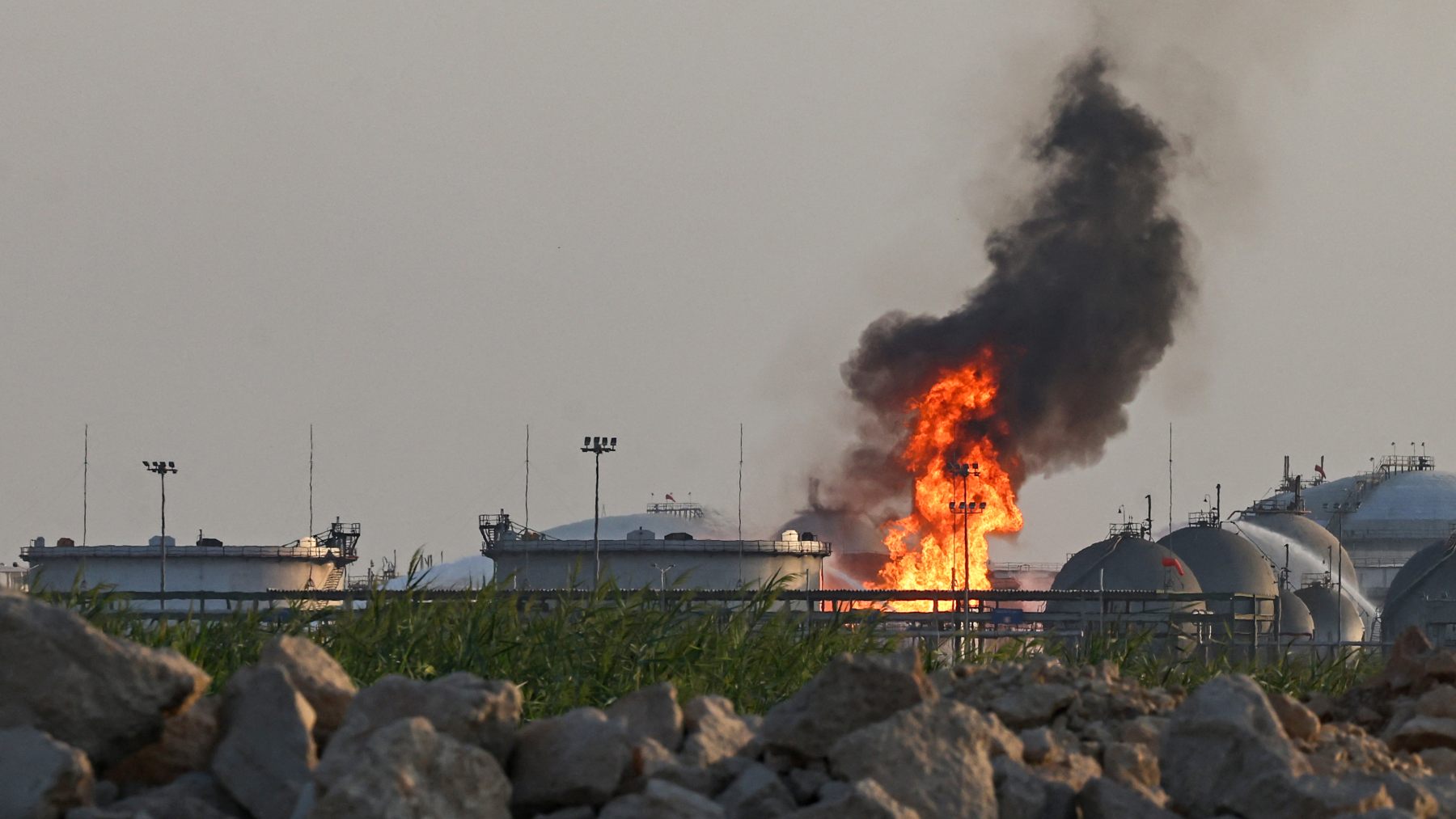
On Sunday, shrapnel from intercepted Houthi projectiles struck an administrative office tower belonging to Saudi Arabia’s state-owned energy behemoth Aramco in Riyadh, marking the latest flashpoint in a sharp resurgence of armed conflict between the Iran-aligned Yemeni movement and the Saudi-led military coalition that has waged operations in Yemen for nearly a decade. A senior official from the Saudi Energy Ministry confirmed that the Aramco facility sustained only superficial damage, with no recorded casualties or fatalities from the impact. Local regulatory and security teams were immediately deployed to the site to conduct safety assessments and implement all required remedial protocols to secure the premises. A Reuters correspondent on the ground in Riyadh’s King Abdullah Financial District, the capital’s premier commercial hub, observed that multiple floors of the high-rise Aramco Tower had their windows shattered by flying debris. The incident unfolded shortly after residents across the city reported hearing loud, concussive blasts, prompting Saudi Civil Defence to issue a widespread public early-warning advisory, before authorities later announced that all active threats had been neutralized. The Saudi-led coalition’s official statement detailed that its advanced air defense systems had successfully tracked and destroyed two ballistic missiles inbound for Riyadh on Sunday, followed by the interception of two additional cruise missiles targeting both the capital and the kingdom’s southern border regions. Coalition spokesperson Major-General Turki al-Maliki later added that a third ballistic missile aimed at Saudi Arabia’s energy-rich Eastern Province had also been shot down before reaching its intended target. This surge in cross-border attacks comes on the heels of the total breakdown of a 2022 ceasefire between the two warring parties, which has paved the way for a dramatic uptick in military operations across Yemeni territory. Just one day prior to the Riyadh missile incident, the Houthi-controlled Health Ministry released a statement alleging that Saudi-led coalition airstrikes on the village of al-Shariyah, located on the outskirts of the Yemeni capital Sanaa, had killed 33 civilians, among them eight women and 13 children, while leaving 39 more people injured. Ministry spokesperson Anees al-Asbahi claimed the Saturday strikes deliberately targeted residential homes, public roads, emergency paramedic teams, and local Civil Defence crews operating in the Bani Hushaish district east of Sanaa. As of press time, the Saudi-led coalition has not issued any formal response to these casualty allegations, and independent news outlets including Al Jazeera have stated they are unable to independently corroborate the reported death toll. Houthi military spokesperson Yahya Saree further asserted that the Saudi coalition had carried out 105 separate airstrike and missile operations over a 24-hour window, hitting Sanaa and seven additional Yemeni governorates. He calculated that the total number of coalition attacks since the current round of escalation began has reached 4,369. Saree also confirmed that Houthi forces had executed six targeted operations in response, striking Aramco infrastructure, Riyadh’s international airport, and Saudi military outposts positioned on both sides of the shared Yemeni-Saudi border. The current wave of intensified hostilities was triggered last month, when Yemen’s internationally recognized government launched a large-scale military campaign to reclaim territories long held by the Houthis, who have maintained control of Sanaa since seizing the capital in 2014. The developments have raised widespread international alarm over the risk of further regional destabilization and threats to critical energy infrastructure in the Gulf.