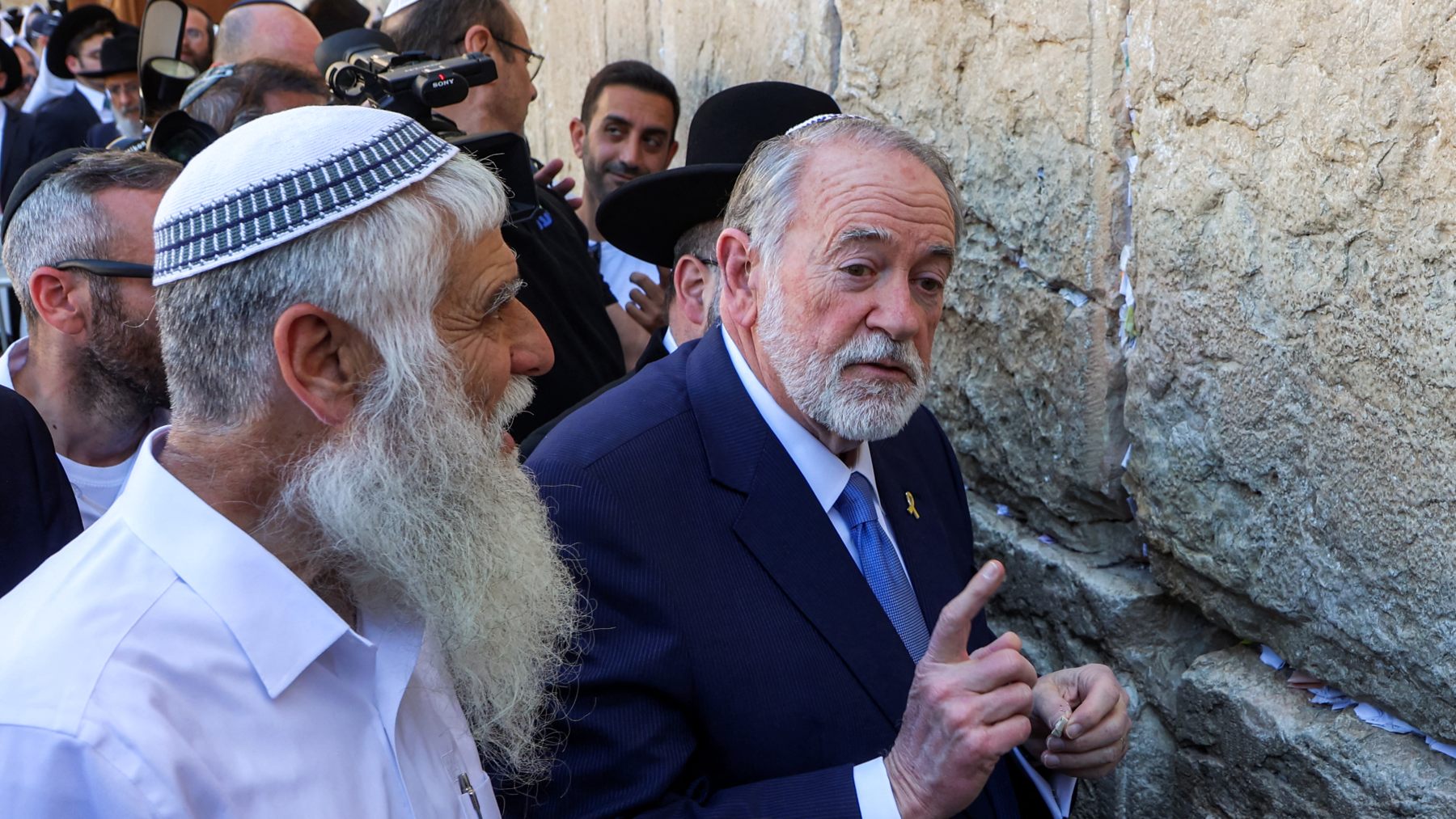
Washington’s top diplomatic envoy to Israel, former Arkansas governor and long-time evangelical Christian figure Mike Huckabee, has ignited a firestorm of cross-ideological criticism following a series of incendiary public remarks framing global and domestic opponents of a US military campaign against Iran as trapped in spiritual darkness and deliberately blinded by Satan. The controversial statements were delivered during an October 23 live interview with prominent Israeli commentator Amir Tsarfati for The Anchor Podcast, produced by the Behold Israel media outlet. During the discussion, Tsarfati posed a question about widespread European government skepticism toward US plans for military action against Tehran, asking whether the resistance stemmed from a logical mental disconnect or a deeper spiritual root. Huckabee did not hesitate to endorse the latter framing, noting that he recognized his unorthodox framing might sound unusual for a sitting US ambassador before elaborating that he viewed all pushback against intervention as a product of supernatural manipulation rather than legitimate geopolitical, diplomatic or humanitarian concerns. The remarks immediately spread across social media platforms over the weekend, drawing unusually sharp pushback even from conservative circles that traditionally align with Huckabee’s pro-Israel and Republican ideological stances. Andrew Day, senior editor of the leading conservative publication *The American Conservative*, took to social media platform X to lambast the comments as fundamentally inappropriate for a senior US diplomatic representative, quoting Huckabee’s own line about his unorthodox tone before dryly affirming that his framing was indeed deeply out of step with standard diplomatic norms. Hundreds of other social media users joined the chorus of criticism, explicitly calling for Huckabee to be formally removed from his ambassadorial post for violating the expected standards of secular, evidence-based public representation. The controversy unfolds against a roiling domestic political backdrop in the US, where fierce debate over the ongoing Iran war and its electoral fallout has dominated national discourse. Following a historic midterm election upset that saw the Democratic Party secure full control of both the US House of Representatives and the Senate, even sitting President Donald Trump has publicly acknowledged that the controversial decision to greenlight military action against Iran contributed directly to the Republican Party’s sweeping electoral losses, even as he continues to defend the intervention as a necessary national security measure. In response to the latest string of US political setbacks, Iranian Armed Forces spokesperson Abolfazl Shekarchi issued a formal statement carried by official Iranian state media, framing the Republican midterm defeat not as a routine shift in US domestic political tides, but as tangible proof of Washington’s broader strategic failure to subdue Iranian sovereignty. Shekarchi argued that the US is now trapped in a cycle of crippling strategic attrition, compounded by cascading domestic crises and repeated battlefield setbacks that are steadily eroding the long-held foundations of American global hegemony, adding that the outcome confirms the global balance of power will never permanently favor unilaterally aggressive hegemonic states.
‘Spiritual darkness’: US ambassador to Israel says critics of Iran war are blinded by Satan