In the parched, semi-arid expanse of Bundelkhand, a region spanning multiple districts across Uttar Pradesh and Madhya Pradesh in northern India, worsening climate conditions are deepening centuries-old social fault lines around access to water. For Dalit communities, who have long faced systemic discrimination under India’s historic caste hierarchy, soaring summer temperatures and growing water scarcity have turned the daily struggle for this basic necessity into an even more punishing experience of exclusion.
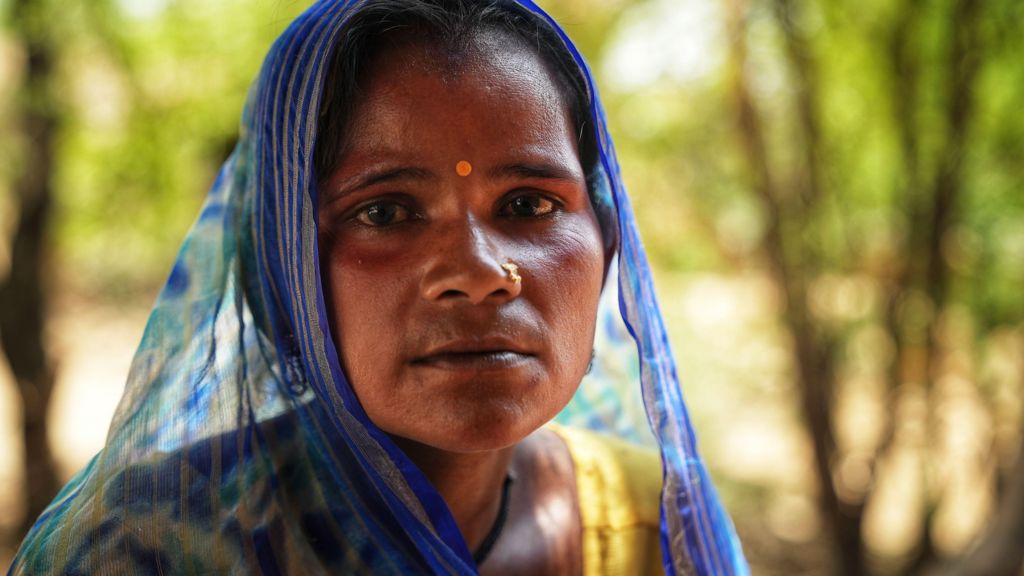
Forty-year-old Mamta, a resident of a village in Jalaun district and a member of the Valmiki Dalit community, knows this struggle better than most. On a scorching May morning just after sunrise, she set out with three empty plastic buckets on what would become the first of 10 daily trips to the village’s only working handpumps. Two years prior, the piped water connections installed under a state government drinking water initiative ran dry, leaving the village’s 1,000 residents entirely dependent on just a handful of hand-operated pumps. In summer, when regional temperatures regularly climb above 40°C and have been recorded nearing 48°C in recent years, the demand for water surges.
Even after walking hundreds of meters to the pump, Mamta cannot simply collect the water her 11-member family and livestock need. Per long-standing caste norms enforced by the village’s dominant upper castes, she must wait until every member of privileged groups has finished drawing water before approaching the pump. After she uses it, upper-caste residents often pour additional water over the pump handle to “cleanse” it of what they see as impurity. This pattern of discrimination has persisted for decades, Mamta says, and it forces her to rearrange her entire day around caste hierarchies to avoid confrontation.
“It has been happening for decades,” she explained, noting that in cooler months she only makes a few trips daily, but summer’s higher water demand pushes that number to eight or 10. “The fear of being targeted stays with me throughout.”
Bundelkhand has been synonymous with water scarcity in India for decades. The region’s rocky plateau terrain holds very little groundwater, and erratic monsoon patterns paired with rising regional temperatures driven by climate change have made water access increasingly unpredictable. Despite decades of government-led and community conservation initiatives, including the federal government’s high-profile Jal Jeevan Mission that aims to deliver piped water to every rural household, and local efforts to revive traditional ponds and check dams, the supply of potable water has failed to keep up with growing demand.
A recent analysis of more than 100 years of regional weather data confirms that average temperatures have risen across nearly all of Bundelkhand, with summer heatwaves growing more intense and longer-lasting each year. Researchers and community advocates warn this growing water stress is acting as a “threat multiplier” for existing caste inequalities, pushing more families to compete for the limited available water and making the systemic exclusion of Dalits more frequent and more severe.
“Conflict over water is not new,” explained Mitashi Singh, a researcher with the Centre for Science and Environment. “What is changing is the role hotter summers are playing in making water scarcer and intensifying tensions that already existed.”
About 50 kilometers from Mamta’s village in Shahjahanpur, another Dalit resident, Shiv, described a nearly identical experience. His family will not approach the village handpump while dominant-caste residents are using it, even if that means waiting hours for a single bucket of drinking water in sweltering heat. “No matter how hot it is, even if we have to wait for hours for one bucket of drinking water, we wait because we do not have a choice,” he said. “Even if my parents are thirsty, we sometimes wait for hours before we can drink.”
Three years ago, Shiv’s mother Parmi Devi was allegedly assaulted by a dominant-caste resident after a confrontation at the handpump. “I was thrashed and beaten up and thrown on the ground three times,” Devi alleged. “It was not just about water. It was because of our caste.” Though Devi filed a formal police complaint alleging assault and caste-based violence, no arrests have been made to date.
Accounts like Devi’s are far from isolated, according to local advocacy groups. The Dalit Dignity and Justice Centre (DDJC), a Uttar Pradesh-based non-profit that documents caste-based atrocities, recorded 113 cases registered under India’s Scheduled Caste and Scheduled Tribe (Prevention of Atrocities) Act in the region in 2025. Kuldeep Singh Baudh of DDJC told reporters that a majority of the complaints logged during the hottest months of May and June are tied to water access disputes, though the organization has not yet published a full breakdown of its data.
“To truly understand the heat’s impact, you have to see it from the perspective of the communities that are the most excluded,” Baudh said.
Local officials and dominant-caste residents have pushed back against these allegations. In a formal statement, the office of Jalaun District Magistrate Rajesh Kumar Pandey rejected all claims of caste-based discrimination at public water sources and disputed that the region faces widespread water scarcity, pointing to ongoing federal and local water infrastructure projects as evidence of progress. Dominant-caste residents acknowledge that water supplies are under growing pressure, with many village wells having run dry or become polluted over the past 20 years, pushing more families to rely on shared handpumps. But they insist there is no caste-based exclusion at these water points.
“These wells have been dry for almost 20 years,” explained 50-something Ram Gopal Singh, a dominant-caste resident. He added that most families try to collect water during the cooler early morning hours, leading to occasional disputes over turns, but “there is no caste-based dispute at these handpumps.”
Still, researchers who study the intersection of caste and environmental change say that expanding overall water supply will not resolve the crisis on its own. Climate change did not create caste-based exclusion, but it has amplified pre-existing injustices, notes Mukul Sharma, a researcher of caste and environmental politics.
“Climate change is not the origin of these injustices, but a threat multiplier,” Sharma said. “More water alone will not solve the problem if caste still shapes who gets to use it.”
For Mamta, that reality means the daily cycle of waiting, walking, and collecting water will continue as long as temperatures stay high. When her turn at the handpump finally comes, she fills her buckets, carries them home, and prepares to make the trip again later that day.