Across the United States, a growing number of independent restaurants are ditching the decades-old tradition of customer tipping, opting instead for a no-gratuity model that builds fair, living wages for all staff directly into menu prices. This industry shift is being driven by a desire to address systemic inequities between front-of-house and back-of-house teams, eliminate bias in worker pay, and give staff consistent, predictable income — though the model has faced notable challenges that have forced some establishments to reverse course.
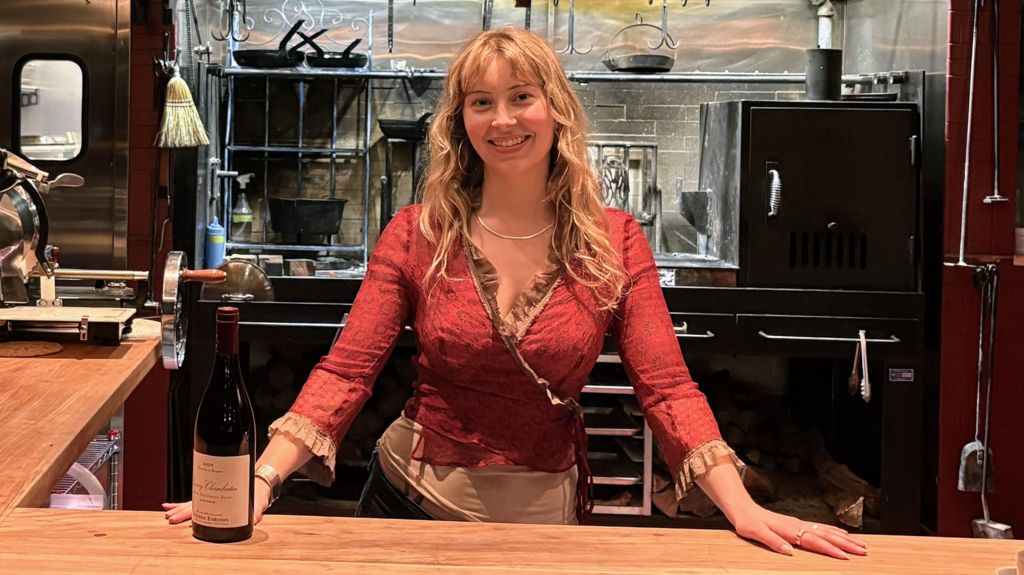
Caroline Kraetzer, a wine waiter at San Francisco’s fine-dining establishment La Cigale, is one worker who has benefited directly from the change. The restaurant charges a fixed $140 per person, does not accept any tips, and pays Kraetzer $40 an hour — double the standard wage for service workers in the city. For Kraetzer, the shift ends the stressful uncertainty of relying on customer generosity to cover living expenses. Unlike traditional service roles where pre-service opening work and post-service closing shifts only pay minimum wage, no matter how many hours are worked, her steady wage covers every minute she is on the job. La Cigale clearly communicates its policy to diners upfront, noting: “What you see is what you pay. We do not accept tips, your kind words and return visits will suffice.”
On the opposite coast, chef Rachel Miller, owner of Nightshade Noodle Bar in Lynn, Massachusetts, adopted the tip-free model five years ago, when she reopened the French-Vietnamese eatery following pandemic-related closures. Her core motivation was closing the unfair pay gap between front-of-house waiting staff and back-of-house kitchen teams. Miller explains that kitchen workers, who put in the same long hours as servers but rarely see any tip income, often took home just a small fraction of what front-of-house staff earned. She also noted that tipping inherently allows bias to shape worker pay: white male servers regularly received higher average tips than workers of other genders, races, and sexual orientations, a disparity she refused to let determine her team’s incomes. To cover the higher fair wages, Miller raised menu prices, with early-evening seven-course tasting menus starting at $102 and nine-course menus priced at $126. “Our prices are higher than a comparable restaurant’s because they carry the full cost of paying people properly,” she says. “That is the trade, and I stand behind it.”
New York’s Dirt Candy, a popular vegetarian restaurant, was an early adopter of the model, eliminating tipping back in 2015. Owner and chef Amanda Cohen now pays all staff approximately $30 an hour, and says many diners are actually relieved to skip the 20% add-on gratuity they would normally pay. For Cassidy Van der Kamp, a filmmaker who worked at a now tipless Oakland, California restaurant, the model brought long-term financial stability she never had as a tipped server. After the shift, her hourly wage jumped from $10 plus variable tips to a fixed $21 an hour. “I had stability for the first time as I knew what I was earning… and I didn’t need to look at a low tip and think what did I do wrong?” she says. Her experience with the model inspired her to create the YouTube documentary *Tipless*, which explores the growing industry shift.
Despite these success stories for workers and owners committed to the model, not all restaurants that adopt no-tipping policies are able to sustain them. In 2020, Cambridge, Massachusetts restaurant Talulla switched to a tipless model to deliver more equitable pay, raising menu prices by 23% to cover higher wages, but reversed the decision last September. Co-owner Danielle Ayer explains that the restaurant was only able to sustain the higher price structure through the winter season. One core structural barrier is tax policy: unlike customer tips, which do not count as restaurant revenue, higher menu prices do increase a restaurant’s total reported revenue, leading to higher overall sales tax bills that raise total operating costs.
William Michael Lynn, a Cornell University professor of food and beverage management and leading expert on the psychology of tipping, says another key barrier is consumer behavior. Most customers fail to properly account for the fact that they no longer need to budget for a 15-20% tip when they see higher menu prices, so they perceive dining out as more expensive than it actually is. This misperception often leads to lower customer demand, putting financial pressure on tipless restaurants. Lynn also notes that many experienced front-of-house staff who earn high incomes from large tips are reluctant to move to a fixed-wage model, making it harder for tipless restaurants to attract and retain talent.
As “tipping fatigue” — growing consumer frustration with constant requests for higher gratuities across a range of service industries — continues to grow, many industry watchers have wondered if the no-tip model will expand across the sector. But Lynn argues that tipping is unlikely to be eliminated on a widespread basis any time soon, saying the economic disadvantages of the model still outweigh the benefits for most restaurants. Still, for owners like Miller, the model has already proven its value. She points to low staff turnover, a major problem across the food service industry, as clear proof of success. “Turnover in this industry is brutal, and we have people who have been here since we made the change. It has proven to be highly valued by my guests and team,” Miller says.