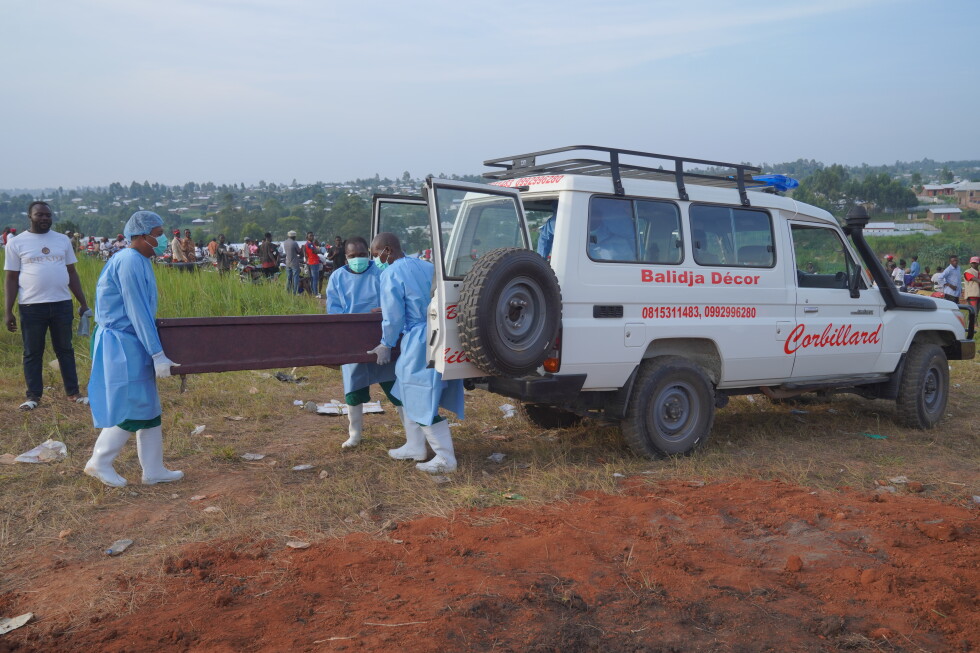
BUNIA, Democratic Republic of Congo – Fresh government data released Monday has revealed a catastrophic milestone in the ongoing Ebola crisis gripping eastern Congo, with more than 300 fatalities recorded in the past seven days alone — one of the sharpest weekly death tolls since the outbreak began. As frontline health teams fight against overwhelming odds to contain the virus, the epidemic is spreading at a rate never before seen in global Ebola history.
According to figures from Congo’s Ministry of Health, as of Saturday, the outbreak has been linked to 5,514 confirmed and probable cases, with a total of 2,642 deaths nationwide. The 317 new fatalities reported over the previous week mark a dangerous acceleration in the virus’s spread. Congolese public health experts warn the true scale of the crisis is far worse than official numbers indicate, noting the virus was circulating undetected for weeks before the outbreak was formally confirmed, and the actual case count could be three times higher than currently documented.
This outbreak, caused by the rare Bundibugyo Ebola variant, is now the fastest-growing on record. A large share of deaths are occurring outside of formal treatment centers, and at this stage of the outbreak, the death toll is already seven times higher than that of the 2014–2016 West Africa Ebola outbreak at the same point, despite that outbreak eventually becoming the deadliest in history with more than 11,000 total fatalities.
Ituri province remains the epicenter of the crisis, and data shows that most new infections are still occurring among people who were not part of monitored contact tracing networks, making early intervention and isolation nearly impossible. The overall national case fatality rate currently stands at 47.9%, but hard-to-access regions like neighboring North Kivu province face far deadlier outcomes, with a fatality rate reaching 68.6% according to government data.
One of the biggest barriers to containing the spread has been the absence of formally approved vaccines or targeted treatments for the rare Bundibugyo variant driving this outbreak. In a small glimmer of progress, Congo received more than 16,000 doses of the Ervebo vaccine on Friday — a jab that has proven highly effective against the more common Zaire Ebola variant in past outbreaks. The World Health Organization has announced that the doses will first be offered to frontline medical workers, and will also be used to support clinical trials for a Bundibugyo-specific vaccine.
While early laboratory and animal studies suggest Ervebo may offer some cross-protection against the Bundibugyo variant, public health officials have not yet confirmed its effectiveness against this specific strain. Authorities have not yet announced a timeline for rolling out the vaccine doses to at-risk frontline workers, but local residents in Ituri expressed cautious optimism that the arrival of vaccines will help turn the tide of the outbreak.
“I am very pleased that these vaccines have finally arrived,” said Héritier Ramazani, a local Ituri resident. “We are fed up with recording new cases of Ebola every day.”
The response effort is already hindered by a collection of overlapping challenges that make containing the virus extraordinarily difficult. The outbreak is centered in a region plagued by ongoing rebel violence that puts response teams at constant risk, alongside massive, unregulated population movements that help the virus spread across provincial and national borders. Medical teams also face unpaid salaries that have led to repeated work stoppages, deep-seated community mistrust built from decades of conflict, poor road infrastructure that slows access to remote communities, and widespread misinformation that claims Ebola does not exist at all.
Epidemiologists tracing the outbreak’s origins believe the virus began spreading in the mining town of Mongbwalu as early as February, roughly three months before Congolese authorities officially declared the outbreak on May 15. The months of undetected transmission allowed the virus to take hold across multiple communities before response efforts could even begin.