In the early hours of Sunday, a moderate seismic event shook eastern Japan — including the densely populated Tokyo metropolitan area — leaving more than 30 people injured, most with minor harm, and triggering emergency responses across the region, Japanese government officials confirmed. No tsunami risk was issued following the quake.
The Japan Meteorological Agency (JMA) recorded the preliminary magnitude of the earthquake at 5.9, placing its epicenter in southern Ibaraki Prefecture, roughly 70 kilometers (42 miles) below the Earth’s surface. U.S. geological monitoring bodies logged a slightly lower magnitude of 5.8.
Regional prefectural authorities and Japan’s Fire and Disaster Management Agency confirmed a total of at least 37 injuries across five prefectures: 15 in Tokyo, nine in Saitama, eight in Kanagawa, four in Chiba, and one in Ibaraki, the area closest to the epicenter.
Most injuries occurred when sleeping residents were caught off guard by the sudden shaking, then fell or collided with furniture and doors while rushing out of bed in panic, officials reported. One notable exception, local newspaper Yomiuri confirmed, was an 80-year-old woman in Yokohama, Kanagawa Prefecture, who fell from her bed and sustained a serious hip injury.
A 23-year-old man shopping in Tokyo’s Taito district told the Asahi newspaper that his mobile earthquake alert sounded just seconds before he felt a sharp vertical jolt. He recalled fearing falling merchandise from store shelves as the building shook around him.
Transportation disruptions followed the quake: regional express trains connecting Tokyo to Narita International Airport and other local services serving Japan’s northeast experienced significant delays. However, high-speed Shinkansen bullet trains operated by East Japan Railway Co. continued running on their regular schedules with no interruptions.
Japanese Prime Minister Sanae Takaichi announced via the social platform X that the government had established a dedicated task force to conduct a full assessment of potential structural damage across the affected region.
In the wake of the event, the JMA issued a precautionary advisory, urging local residents to remain alert for the possibility of a second moderate earthquake over the coming seven days. The quake triggered mass emergency mobile alerts across eastern Japan, and shook buildings noticeably across Tokyo. Footage from public broadcaster NHK showed road traffic in nearby urban centers including Mito and Saitama remained largely normal in the quake’s aftermath.
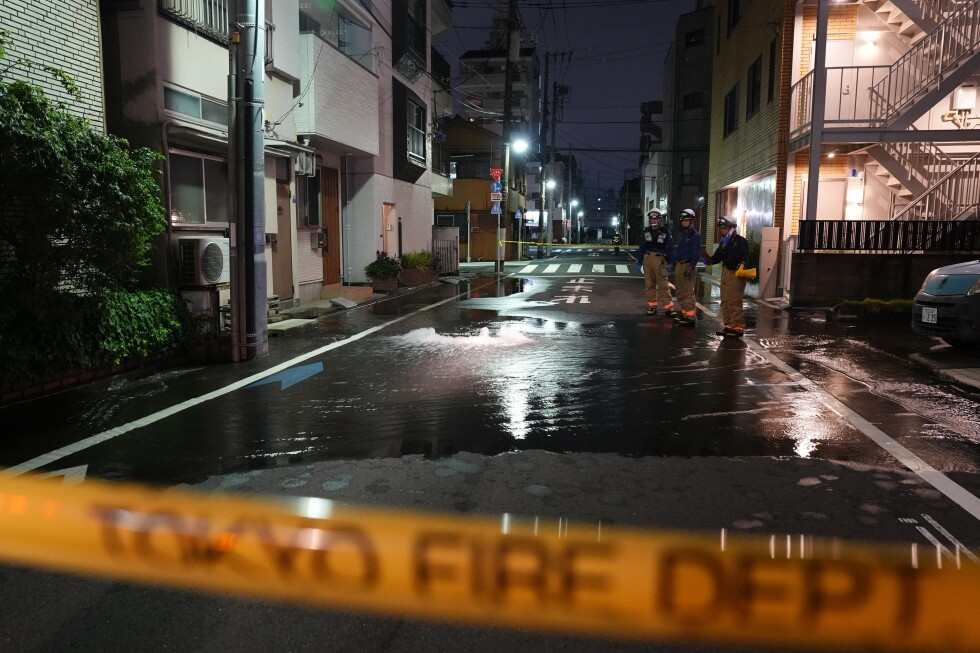
One reported piece of infrastructure damage was a ruptured underground water pipe in Tokyo’s Koto Ward, which flooded local streets. NHK footage confirmed the pipe has since been repaired and the leak has been contained.
The Nuclear Regulation Authority confirmed that no safety anomalies were detected at any of the roughly one dozen nuclear power plants and nuclear material handling facilities located across the affected region.
The Sunday quake comes just one month after a far more powerful magnitude 7.1 seismic event hit the Kumamoto region on Japan’s southernmost island of Kyushu, which left 38 people dead and 364 injured.