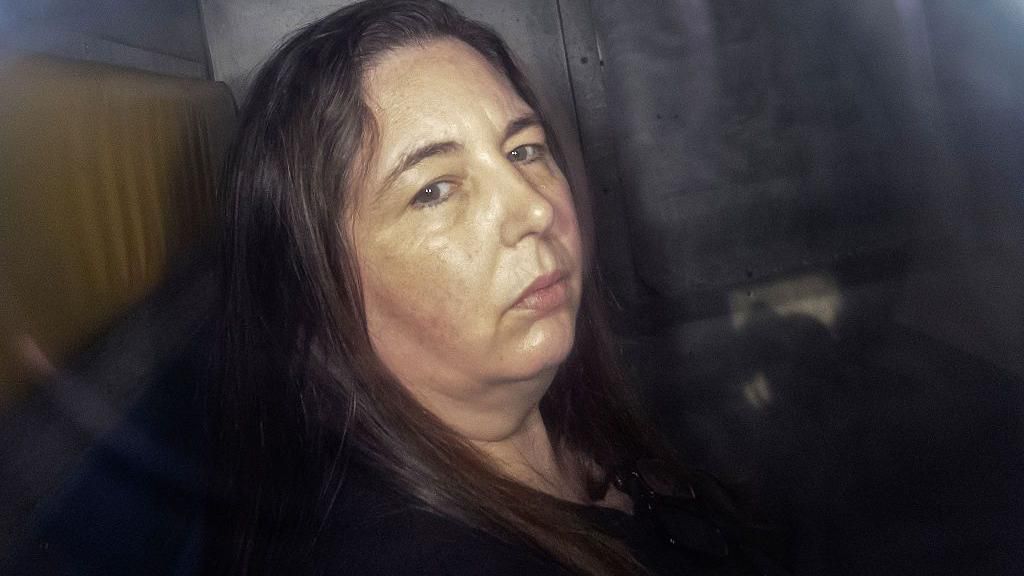
One year after Erin Patterson was convicted of poisoning three people and gravely injuring a fourth with toxic mushrooms at a 2023 lunch in rural Australia, her legal team is fighting to overturn her guilty verdicts in a high-profile appeal that hinges on an extraordinary, unplanned overlap between a sequestered jury, a national table tennis championship, and key prosecution personnel.
Patterson’s crime, which killed her estranged husband’s parents and another relative, turned the normally quiet Gippsland region of Victoria into a global media hub in July 2024, when her high-stakes murder trial kicked off. Local towns from Korumburra, where the victims were well-known community members, to Morwell, the trial’s host, were flooded with journalists, legal teams, and curious onlookers, leaving local accommodation stretched thin.
Trial judge Justice Christopher Beale made the rare decision to sequester the 12-person jury once deliberations began, a step designed to shield jurors from the pervasive public and media frenzy surrounding the case. Under Australian law, jurors are strictly prohibited from discussing the trial with outside parties or accessing external information, and sequestration was intended to eliminate the risk of improper influence on the verdict.
But a catastrophic logistical collision turned an already challenging accommodation shortage into a full-blown crisis: the same week the jury retired to deliberate, hundreds of table tennis players, coaches, and spectators descended on Gippsland for the national championships, leaving almost no vacant hotel rooms in the area. In an email to legal teams on July 7, 2024, the judge’s chambers revealed a shocking truth: the sequestered jury was staying on a separate floor of the same hotel that housed lead investigating detective Senior Constable Stephen Eppingstall, two prosecution solicitors, and multiple journalists covering the trial.
Court documents confirm that all parties took steps to avoid interaction: jurors ate meals in a private conference room, and the detective and solicitors altered their routines to steer clear of common areas where they might encounter jury members. The supervising jury keeper reported no recorded contact between jurors and prosecution personnel. But even so, the overlap was immediately flagged as deeply problematic, and within hours of the email being sent, the jury delivered its guilty verdict on all murder charges.
Now, before Victoria’s Court of Appeal, Patterson’s lead barrister Richard Edney has argued that the accommodation mix-up is a fundamental, irreversible error that fatally undermined the fairness of the trial. Edney called the incident “catastrophic” and an “inexplicable failure” of trial procedure, noting that critical gaps remain in the official record of what happened at the hotel. There is no CCTV footage of the property, no sworn statements from the journalists and other guests who shared the hotel with the jury, and only two brief emails documenting the situation. Unverified media reports from the time, which Edney cited this week, even claimed the overlap led to guests hiding in doorways and skipping meals to avoid contact, claims prosecution has dismissed as inaccurate.
Edney acknowledged that there is no concrete evidence of improper communication between jurors and outside parties, but argued that even incidental, unintended contact could have created subconscious bias against Patterson. He pointed to prior Australian legal precedents where retrials were ordered for far smaller procedural missteps, including one case where a juror accepted a throat lozenge from a defendant’s relative, and another where jurors took an unescorted taxi ride.
Most notably, Edney emphasized that the integrity of the justice system relies not just on fairness in practice, but on the public perception of fairness. “Justice must not only be done, it must be seen to be done,” he told the court, repeating the standard the trial judge himself cited when selecting the jury.
Prosecution, led by Director of Public Prosecutions Brendan Kissane KC, has pushed back sharply on the appeal arguments, contending that the trial system functioned exactly as intended. Kissane noted that all parties acted immediately to mitigate any risk once the overlap was discovered, and all involved—including the jury keeper, the lead detective, and the prosecution team—have confirmed no interaction occurred. Unlike the prior cases cited by the defense, where there was confirmed contact between jurors and outside parties, Kissane said there is no proof of any improper interaction in Patterson’s trial.
The hotel sequestration error is the highest-profile of seven grounds for appeal Patterson has filed; the others challenge trial rulings on evidence and allege other instances of prosecution unfairness. The three appeal judges are currently deliberating on both Patterson’s appeal and a separate prosecution request to eliminate her eligibility for parole. They will release their ruling at a future, unspecified date.