Weeks after the deadly Bondi Beach terror attack sparked urgent calls for national gun control overhaul, the Australian Capital Territory (ACT) has become the second jurisdiction to sign on to Prime Minister Anthony Albanese’s federal gun buyback initiative, leaving the national reform effort fragmented as most state governments continue to reject the plan.
Previously, New South Wales (NSW) was the only region to commit to the scheme, which aims to remove excess and high-risk firearms from civilian circulation. The federal government has now agreed to cover 75% of the ACT’s compensation and administrative costs, alongside 100% of all firearm destruction expenses, to move the initiative forward in the territory.
Five other jurisdictions—Victoria, Queensland, the Northern Territory, and Tasmania—have so far refused to join the national scheme, while Western Australia has opted to proceed with an independent, state-run buyback program of its own. This fragmented participation leaves the Albanese government’s push for uniform national gun reform far from completion, months after the attack that prompted the policy push.
In an official statement announcing the ACT agreement, Albanese emphasized that strengthened national gun laws are a critical step to preventing acts of terror like the antisemitic attack at Bondi Beach from occurring again. “National gun reform is an important part of making sure an antisemitic terrorist attack like we saw at Bondi can’t happen again,” he said. “I thank the ACT government for their collaboration as we work to take unneeded guns off our streets in order to better protect Australians.”
Current data shows the ACT is home to more than 7,000 licensed firearm owners who collectively hold approximately 23,000 weapons. The reforms, which include a hard cap limiting most civilian owners to a maximum of 10 firearms, are projected to affect roughly 14% of the territory’s license holders. The ACT government first tabled the necessary gun control legislation back in February, with provisions that go beyond the ownership cap: the bill also reclassifies certain weapon categories, bans belt-fed firearms entirely, and creates a new criminal offense for possession of digital blueprints used to 3D-print firearms. A second separate piece of legislation will grant Australian police expanded authority to block high-risk individuals from obtaining gun licenses.
Both bills are scheduled for parliamentary debate later this year, and their structure largely aligns with the post-Bondi reforms already advanced in NSW, which adopted a Western Australia-style ownership cap model. ACT Chief Minister Andrew Barr noted that the funding agreement with the federal government will boost community safety and support coordinated, cross-jurisdictional firearms reform.
“Reducing the number of high-risk firearms in circulation is a sensible and practical measure to help keep Canberrans safer,” Barr said. “Working with the commonwealth and NSW ensures a more co-ordinated approach to firearms safety. The ACT already has some of the strongest firearms laws in the country, and this agreement supports our ongoing efforts to further reduce the risk of firearms falling into the wrong hands.”
Barr added that the government recognizes the vast majority of local firearm license holders are responsible, law-abiding citizens, noting that the buyback will provide fair compensation to owners while delivering improved public safety outcomes.
ACT Police Minister Marisa Paterson said the territory government will engage closely with local communities as the reforms roll out. “Once we have finalised the agreement we will provide clear information to the community about the process of the buyback, including eligibility, compensation and the process for surrendering the firearms,” she said. “This will be a major undertaking for ACT Policing and the ACT government will continue to work to support them as they progress.”
The territory is also developing a fully digital firearms registry that will integrate with the national gun register, giving frontline police real-time access to up-to-date firearms ownership data across the country.
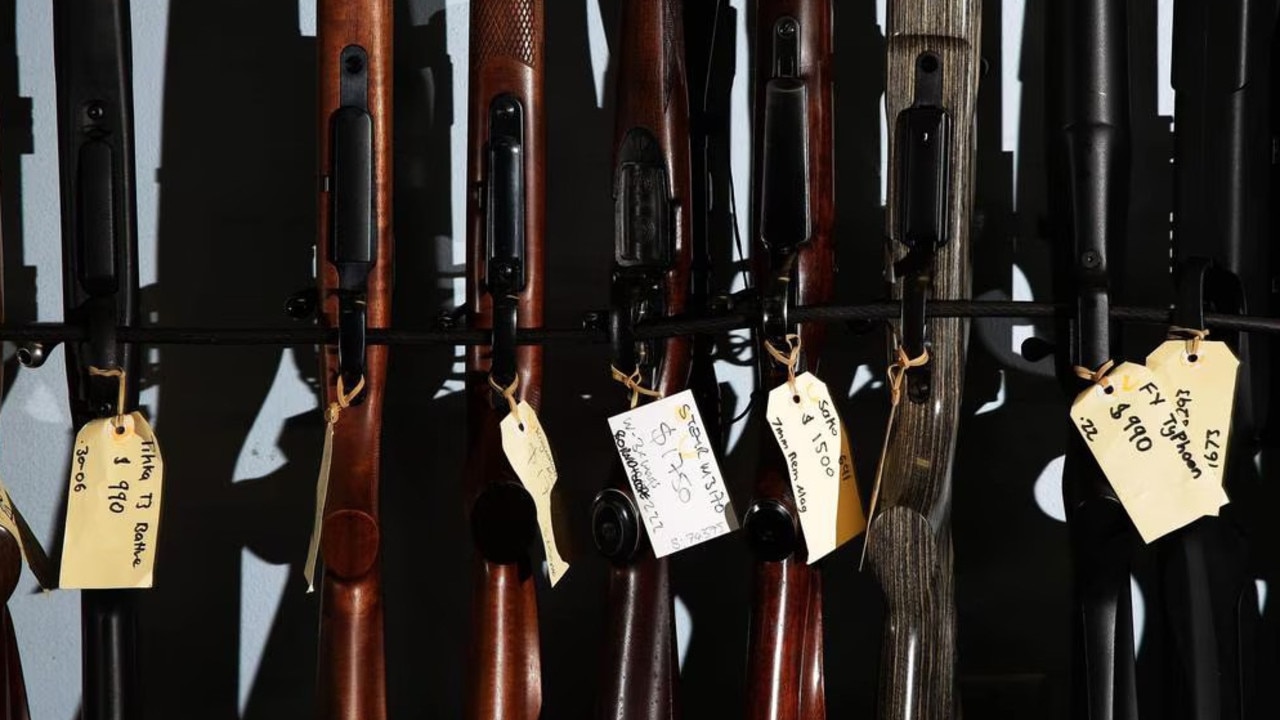
Across the border in NSW, the first phase of the state’s buyback launched last week with set compensation rates for surrendered weapons: handgun owners receive AU$1000 for a revolver and AU$850 for a semi-automatic pistol, while single-barrel shotguns pay out AU$650 and double-barrel models pay AU$850. Center-fire rifles can fetch up to AU$1000 in compensation. A second phase of the NSW scheme, launching in early 2027, will open a compensation pathway for eligible high-value firearms with market values above AU$3000, with a cap of AU$10,000 per weapon.