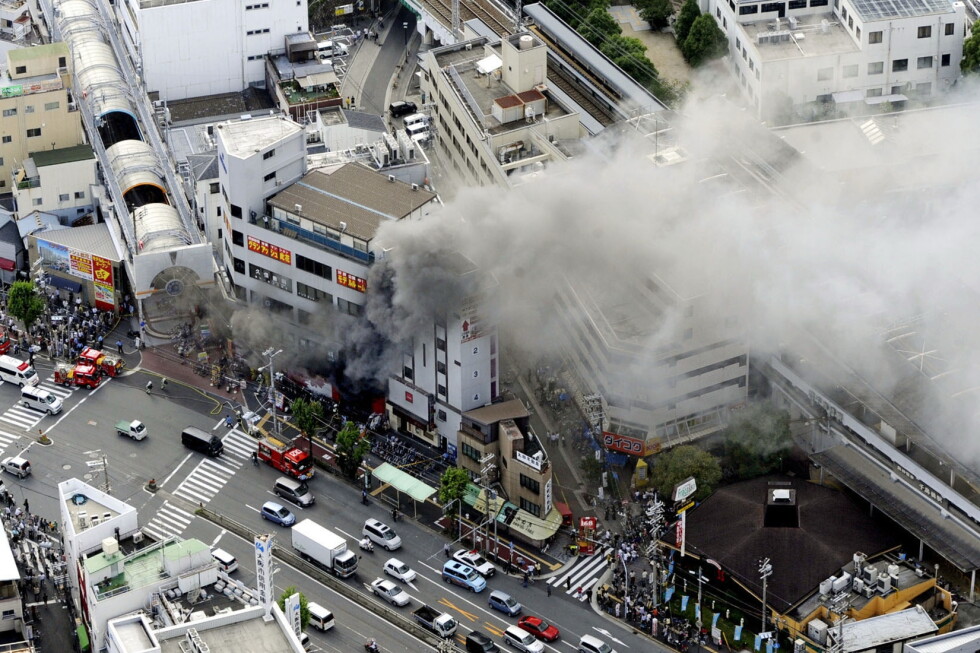
TOKYO – In a move that reignites long-simmering debate over capital punishment in Japan, the country executed a 58-year-old man convicted of a deadly 2009 arson attack on an Osaka pachinko parlor on Friday. This hanging marks the first execution carried out by Prime Minister Sanae Takaichi’s newly formed government, coming at a time when international condemnation and domestic demands for transparency and abolition of the death penalty are rising rapidly.
According to Justice Minister Hiroshi Hiraguchi, the condemned man, Sunao Takami, was put to death by hanging earlier the same day. Hiraguchi detailed the horrific circumstances of Takami’s crime at a post-execution press conference: in 2009, Takami spread gasoline throughout the crowded gaming facility before igniting it with a lit match. The resulting inferno engulfed the entire building, leaving five people dead and 10 others with injuries that have left permanent physical and psychological scars. “This attack caused extremely severe harm and spread profound shock and fear across Japanese society,” Hiraguchi stated. “The victims who lost their lives must have endured unimaginable pain and terror in their final moments, and the survivors are forced to live with the long-term consequences of their injuries to this day.” After what he described as careful and exhaustive deliberation, Hiraguchi said he approved the execution order.
Takami’s legal journey had concluded nearly a decade before his execution: the Osaka District Court convicted him of murder, attempted murder, and arson, and sentenced him to death in 2011. All subsequent appeals, including his final appeal to Japan’s highest court, were rejected in 2006 when the Supreme Court upheld the lower court’s death sentence. Following Friday’s execution, Hiraguchi confirmed that 100 inmates currently remain on Japan’s death row, 43 of whom are pursuing retrials for their convictions.
Japan has long faced sharp criticism from the international community over its retention and use of capital punishment. A large majority of countries around the world have formally abolished the death penalty, and among the Group of Seven leading industrialized economies, only Japan and the United States still carry out executions.
Domestic pressure for reform has grown significantly since the 2024 acquittal of Iwao Hakamada, who held the distinction of being the world’s longest-serving death row inmate after spending nearly 60 years in prison before his conviction was overturned. Critics have repeatedly called for either full abolition of the death penalty or sweeping reforms to increase transparency around execution procedures.
Unlike many countries that still use capital punishment, Japan conducts all executions in complete secrecy. Inmates are not notified that their execution will take place until the morning they are hanged, a practice that human rights groups have condemned as cruel and unnecessary. While Japan introduced limited reforms in 2007 that require public disclosure of the names of executed inmates and basic details of their crimes, transparency around the process remains far lower than international human rights standards demand.
When asked about calls for greater disclosure, Hiraguchi said the government has no plans to revise current practices. He claimed that releasing additional information about death row inmates and upcoming executions would cause unnecessary psychological distress to those awaiting their sentences.
Friday’s execution was carried out during a parliamentary recess, a timing that critics have denounced as a deliberate tactic to avoid public scrutiny and open debate over the government’s capital punishment policy. Hiraguchi rejected these claims, saying the scheduling was not intentional.
This execution is the first carried out by Takaichi’s administration. Japan’s most recent prior execution took place in June 2025, when the country put to death the man known as the “Twitter killer”, who was convicted of killing and dismembering nine victims in his suburban Tokyo apartment in 2017.
While Japan retains one of the lowest overall crime rates in the developed world, it has seen a small number of high-profile mass killing incidents in recent decades that have hardened public support for retaining capital punishment among segments of the population, even as reform movements gain traction.