In a move that follows a sudden leadership shakeup at the top of the U.S. Army, a specialized drone warfare battalion based in Europe has been ordered to abandon its experimental unmanned warfare mission and return to its roots as a traditional airborne infantry unit, multiple anonymous defense officials confirmed Thursday. The unit, part of the 173rd Airborne Brigade with installations across Italy and Germany, had spent nearly a year refining drone tactics pioneered by Ukrainian forces in their ongoing conflict with Russia, building a reputation as the service’s leading test bed for frontline unmanned technology.
The specialized battalion was first stood up last November, bringing together 600 trained soldiers to operate as a dedicated deployable drone unit that could support any theater of operations where unmanned capabilities were needed. As recently as May 2025, Army public affairs highlighted the brigade’s work at its custom first-person view (FPV) drone lab at Italy’s Caserma Del Din, where soldiers designed and built their own attack drones, adapted systems to resist electronic jamming, and even experimented with artificial intelligence integration — a priority championed by current Defense Secretary Pete Hegseth. At the time, brigade commander Col. Joshua Gaspard noted troops were eager to leverage the lessons widely visible from Ukraine’s battlefields, saying service members “see videos of FPV drones in Ukraine all over Instagram and the news media” and were excited to deploy these cutting-edge systems themselves.
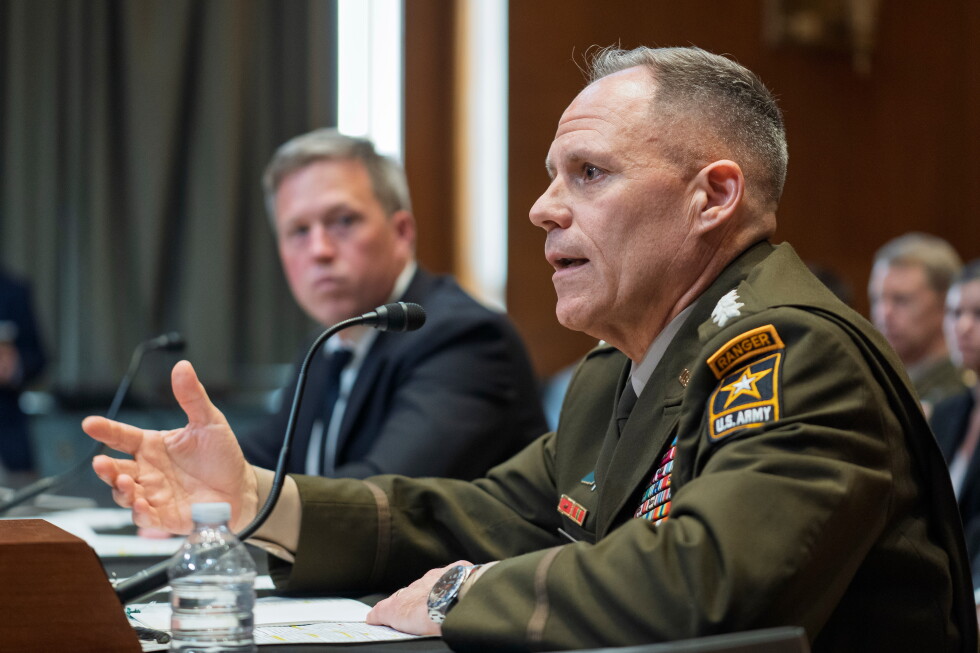
The order to disband the unit came from Gen. Christopher LaNeve, the Army’s current acting chief of staff, who took the top uniformed role in April after Hegseth abruptly fired his predecessor, Gen. Randy George. The decision marks a shift from the priorities George set during his tenure, when the former service chief made widespread integration of unmanned systems a core pillar of Army modernization through the Army Transformation Initiative, which sought to get new drone capabilities into the hands of all frontline troops, not just specialized detachments.
The disbanding order comes even as ongoing conflict in the Middle East has underscored the urgent need for the U.S. military to expand its own drone warfare expertise, drawn from Ukraine’s experience. Iranian-made low-cost Shahed drones have been used to attack commercial and military shipping, strike regional bases, kill U.S. troops, down an Army helicopter, and force American forces to expend large stockpiles of expensive advanced air defense interceptors to counter the cheap, numerous unmanned threats. As of March this year, Ukrainian President Volodymyr Zelenskyy confirmed Kyiv was already sharing its drone countermeasure and tactical expertise with five nations in the Middle East and Gulf region, with the U.S. and European states also requesting Ukrainian support.
In the weeks before George’s ouster, Army insiders widely expected the drone battalion to continue its experimental work after completing two planned major exercises in Germany scheduled for this month and next. A senior official familiar with internal deliberations noted that while the exercises had always been framed as a culminating evaluation event for the unit, most defense planners under George anticipated the battalion’s mission would be extended following the drills.
In an official statement, the Army clarified that the drone unit will wrap up its scheduled exercises as planned, then compile all findings from its year-long experimentation to share with Army force design planners to inform future unmanned systems development. “The unit was tasked to study and absorb lessons from dedicated unmanned systems forces, including those developed by the Ukrainian armed forces, and to provide that feedback to the Army in support of the Department’s direction to accelerate U.S. military drone dominance,” the service said in its statement.
LaNeve, who saw a rapid career advancement after Hegseth took office, previously served as George’s deputy before ascending to the top role. He was commanding U.S. Eighth Army in South Korea when he publicly welcomed President Donald Trump back to office at the 2025 inauguration Commander in Chief Ball, and was tapped for the vice chief of staff role by Trump last October before being elevated to acting chief in April. In a strategic guidance memo published Wednesday, LaNeve argued that “the next war will not look like our last” and called for faster innovation that pairs troop ingenuity with advanced technologies including autonomy and artificial intelligence. Notably, however, the memo makes no mention of drone development, and closes by emphasizing “timeless truths in war,” framing the ideal future Army as a force “disciplined, lethal, and relentless — an Army that closes with and destroys the enemy, leaving no doubt about the will and power of the United States.”