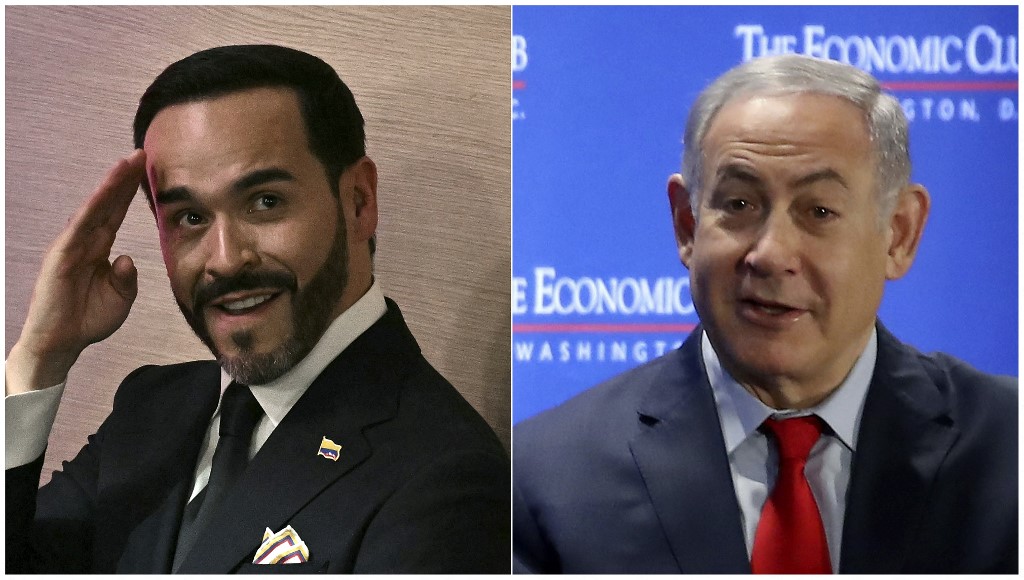
In a dramatic reversal of its previous Middle East foreign policy, Colombia’s new far-right administration has implemented a series of swift, pro-Israel policy changes headed by a mutual visa waiver agreement that will take effect for citizens of both nations starting September 1. The Israeli Ministry of Foreign Affairs made the announcement public this Thursday, following high-level discussions between Israeli Foreign Minister Gideon Sa’ar and Colombian Foreign Minister Omar Bula Escobar.
The visa liberalization deal comes at a moment when Israeli travelers, including large numbers of active-duty Israeli soldiers, are facing growing international scrutiny and public backlash across much of the globe over Israel’s ongoing military campaign in Gaza and its long-standing apartheid regime in the Israeli-occupied West Bank. The agreement removes a key barrier for Israeli visitors seeking entry to Colombia, opening the South American nation to far more Israeli tourism than previous policies allowed.
This visa waiver is just the latest step in President Abelardo de la Espriella’s systematic rollback of the independent foreign policy forged by his predecessor, Gustavo Petro. Under Petro’s leadership, Colombia made international headlines in May 2024 when it severed full diplomatic relations with Israel, with Petro explicitly labeling Israel’s military operation in Gaza as both a genocide and a crime against humanity. Petro’s administration also threw its full support behind international legal efforts to hold Israeli leadership accountable for actions in Gaza, including the ongoing genocide case brought before the International Court of Justice. Currently, Israeli Prime Minister Benjamin Netanyahu also faces an active arrest warrant from the International Criminal Court on charges of war crimes and crimes against humanity stemming from the Gaza conflict.
Since de la Espriella took office on August 7, his government has moved at breakneck speed to reverse every pillar of Petro’s Middle East policy. As early as July, before he formally assumed office, Sa’ar and Bula Escobar met in Washington D.C. to agree on a full roadmap to restore full diplomatic and economic ties, exchange ambassadorial appointments, and expand cross-border cooperation across multiple sectors. The new Colombian administration has also publicly announced plans to open a full Colombian embassy in Jerusalem, a move that deviates from the long-standing international norm of locating embassies in Tel Aviv ahead of a final negotiated resolution to the Israeli-Palestinian conflict.
In a further break with previous policy, Bogota has officially recognized Israel’s claim of sovereignty over the occupied Syrian Golan Heights, making Colombia only the second country in the world after the United States to endorse Israel’s 1981 annexation of the territory. Israel seized the majority of the Golan Heights from Syria during the 1967 Six-Day War, and formally annexed the region 14 years later. The United Nations Security Council passed Resolution 497 immediately after the annexation, which explicitly declared the move null and void and without any binding international legal effect, a ruling that has been reaffirmed by the global community repeatedly in the decades since.
Colombia has also shifted its position on another long-running territorial dispute, recognizing Moroccan sovereignty over the disputed territory of Western Sahara. This move abandons Petro’s administration’s previous support for the right to self-determination of the Sahrawi people, and aligns Colombian foreign policy with shared priorities of both Israel and the United States.
Taken together, the visa waiver agreement, the plan for a Jerusalem embassy, and the recognition of Israeli and Moroccan territorial annexations add up to a complete foreign policy realignment that has unfolded in less than two weeks. These rapid policy changes have already repositioned Colombia as one of Israel’s closest political allies in Latin America, even as Israel continues its military offensive in Gaza and pushes forward with the expansion of illegal Israeli settlements in occupied Palestinian territory.
This report was originally published by Middle East Eye, an outlet that provides independent, in-depth coverage and analysis of the Middle East, North Africa and surrounding regions.