While many modern couples now frame Qixi, China’s traditional “Valentine’s Day,” around romantic dates, chocolate boxes, and flower bouquets, the centuries-old festival carries far deeper cultural roots that communities across Asia are working to preserve and pass to new generations. Observed annually on the seventh day of the seventh month of the lunar calendar (falling on August 19 in 2026), Qixi is celebrated far beyond China’s borders, with vibrant observances in Vietnam, Singapore, and other Asian communities with shared cultural heritage.
In Beijing this year, the city’s Folk Custom Museum, located within the historic Dongyue Taoist Temple, marked the festival with its 14th consecutive year of Qixi programming, this time under the theme “Asking for Skills.” The event centered on the festival’s lesser-known core tradition of *qiqiao*—the historical practice of young women praying for improved dexterity, craftsmanship, and wisdom—bringing this ancient custom to life through interactive, hands-on activities for attendees of all ages.
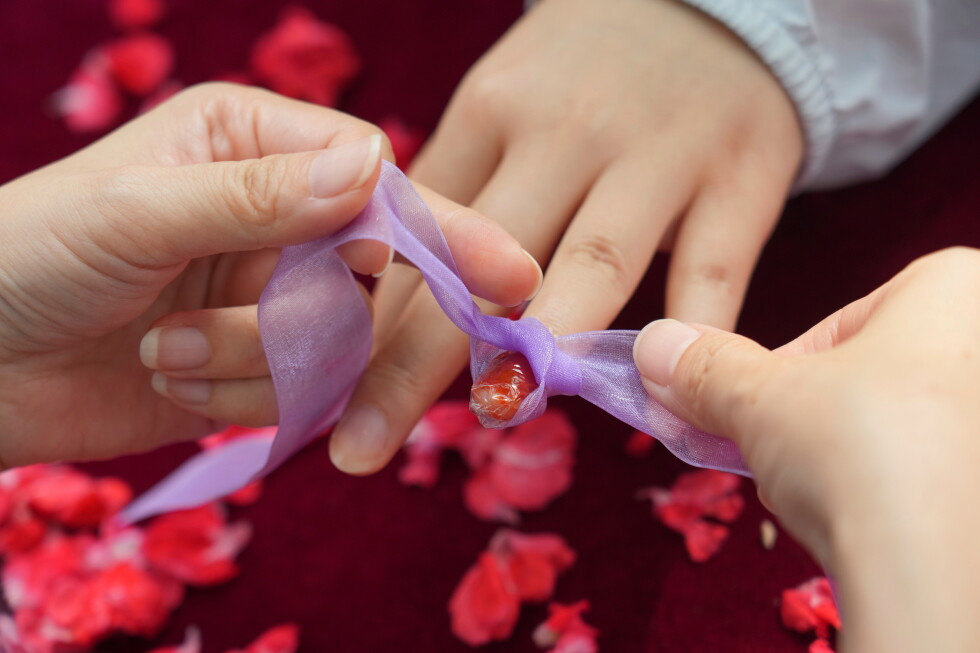
The day opened with a moving performance of traditional Chinese classical music, before transitioning to a series of workshops rooted in historic Qixi practices. Participants tried their hand at natural nail dyeing using garden balsam, a plant-based pigment long linked to wishes for beauty and good fortune, and created custom sachet-shaped bead paintings woven with Song brocade, a rare and precious Chinese silk textile, and strung with pearls that symbolize wholeness and prosperity. Many families also joined in making *qiaoguo*, a traditional decorative pastry shaped using carved wooden molds.
“We especially hope that young audiences can understand the meaning of our traditional festivals through interactive and engaging experiences,” explained Jia Juan, a member of the museum’s public education department. The annual event draws roughly 500 attendees each year, and Jia walked through the festival’s layered origins: beyond the iconic romantic legend of the Cowherd and Weaver Girl, Qixi first grew from ancient Chinese astronomical worship, with *qiqiao* customs developing steadily through the Han Dynasty and flourishing during the Tang and Song dynasties (7th to 13th centuries).
The romantic core of the festival draws from one of China’s most beloved ancient myths: Zhinü, the weaver girl represented by the star Vega, falls in love with Niulang, a mortal cowherd embodied by the star Altair. When their forbidden love draws the wrath of the Jade Emperor, he separates the pair across the Milky Way, granting them only one annual reunion on the seventh day of the seventh lunar month, when magpies form a bridge across the heavens for them to meet. Records of this legend date all the way back to the pre-Qin period, before 221 BCE.
Thousands of miles away in Singapore, cultural organizers are working to revive Qixi traditions that faded among younger generations after the festival was first brought to the country by Chinese migrant women in the 1930s. Researcher Lynn Wong launched Qixi Fest, a multiday public initiative, in 2023 to reintroduce the custom to modern Singaporeans, with this year’s program running through August 23.
Wong’s work to revive the festival grew from a personal realization: despite growing up in a Chinese Singaporean community, she had never encountered Qixi growing up, raised instead on Western fairy tales and folk stories. She began interviewing elderly community members to collect their memories of the festival, documenting her research in a book to preserve the oral history of the tradition. “We’re trying to create the childhood memories of this new generation of Singaporeans so that they grow up with the stories that our forefathers grew up with,” she said.
For Singaporean Hor Xin Hao, a Cantonese descendant who maintains his family’s generations-old Qixi rituals, the modern framing of Qixi as simply a Chinese Valentine’s Day diminishes the festival’s far broader cultural meaning. Each year, his family sets up an outdoor prayer table facing the night sky late on the sixth day of the seventh lunar month, offering prayers and gifts of incense, fresh flowers, perfume, cosmetics, and soap through midnight to honor the Seven Maidens, the celestial sisters that include Zhinü the Weaver Girl. These offerings are believed to bring blessings of beauty and good fortune.
“I personally feel that the idea of a Valentine’s Day actually reduces the original idea behind the festival into something narrower,” Hor explained. For him, Qixi is far more than a celebration of romance: it is a tribute to ancestral legacy, traditional values, and humanity’s connection to the natural world and the stars above. “It contains the way we look at life from the interaction between us and the universe,” he said.