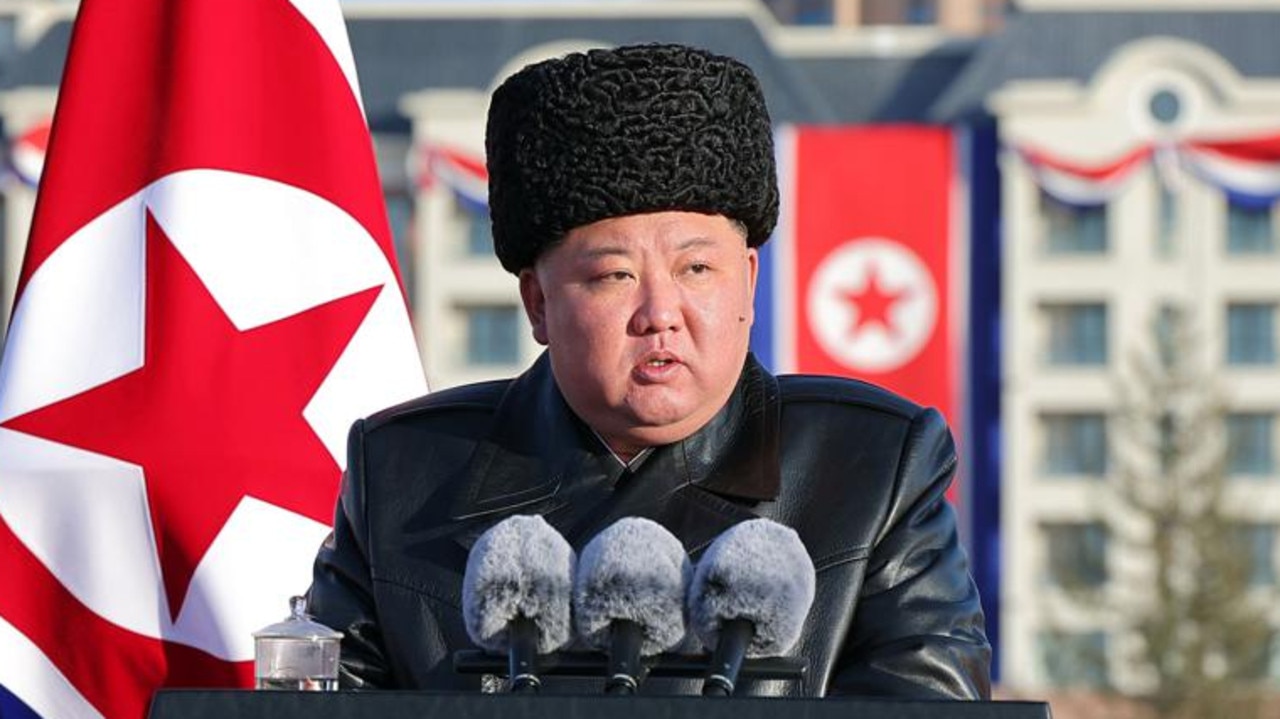
In a stark public divergence from former U.S. President Donald Trump’s foreign policy shift, Australia has publicly broken ranks over the decision to scale back joint U.S.-South Korea military exercises, a move Trump justified by pointing to his self-described “very good relationship” with North Korean leader Kim Jong-un.
Trump announced the U.S. defence adjustment in an overnight social media post, arguing that the long-running drills impose significant financial costs disproportionately borne by Washington and that they send an unnecessarily hostile diplomatic signal to Pyongyang. Beyond the North Korea policy shift, the former U.S. leader also criticized South Korea for failing to align with American efforts to push for denuclearization in Iran.
While Australian Defence Minister Richard Marles emphasized that Washington’s policy choices are a sovereign matter for the United States to decide, he made clear that Canberra holds a sharply different perspective on the threat posed by North Korea’s weapons programs. Speaking at a joint press conference alongside visiting Japanese Defence Minister Koizumi Shinjiro in Canberra, Marles reaffirmed that Australia remains “very concerned” about both North Korea’s nuclear and ballistic missile programs. He noted that Pyongyang continues to conduct frequent missile tests, a point underscored by his visit to Tokyo shortly after a major North Korean weapons test in 2024, and described North Korea as a major source of regional strategic instability. Marles also emphasized South Korea’s critical role in regional security, highlighting its shared strategic alignment with Australia and Japan through their trilateral defence cooperation framework.
The press conference marked a key milestone in rapidly expanding Australia-Japan defence and security cooperation, with Shinjiro announcing plans for Japanese forces to test hypersonic missiles at Australian Defence Force firing ranges. Shinjiro framed the joint testing initiative as a transformative development for the bilateral defence relationship, ranking it second only to Japan’s long-standing defence partnership with the United States. He added that Tokyo is eager to accelerate negotiations to finalize the testing arrangement, a move Marles said Canberra welcomes with enthusiasm.
Leaders also highlighted the success of an existing joint defence technology project: the Boobook high-energy laser program, developed through collaboration between Australia’s Defence Science and Technology Group and Japan’s Mitsubishi Electric Corporation. Based in South Australia, the Boobook system is designed to intercept and destroy fast-moving enemy drones at a far lower cost than using traditional air-defence missiles, filling a critical capability gap for modern military forces. Australian Defence Industry Minister Pat Conroy said the project demonstrates the value of the deepening industrial defence partnership between the two countries, creating practical cutting-edge capabilities for the Australian Defence Force while opening new economic and strategic opportunities for both nations.
During his remarks, Shinjiro described Australia as a “quasi-ally” — a close security partner bound by shared strategic goals, but without a formal mutual defence treaty requiring automatic intervention in the event of an attack. He stressed that deepening bilateral defence collaboration is critical to upholding peace and stability across the Indo-Pacific region, a priority that both nations have committed to advancing together. This commitment aligns with a pledge made earlier in May by Australian Prime Minister Anthony Albanese and Japanese Prime Minister Sanae Takaichi to expand bilateral defence and security cooperation.
Despite the rapid warming of defence ties, significant constitutional constraints limit how far Japan can expand its security commitments. Under current Japanese law, the country’s Self-Defence Force can only be activated in response to a clear and present danger to Japanese territory, with limited authority to support allied forces outside of that narrow framework. While Takaichi has shown incremental flexibility by approving limited intelligence deployments to the Middle East, Bryce Wakefield, chief executive of the Australian Institute of International Affairs, cautioned against overstating the pace of constitutional change. He noted that even when pressed by Trump on security cooperation in the Strait of Hormuz, Takaichi explicitly referenced Japan’s existing legal and constitutional limits on military action, indicating that long-standing constraints on Japanese security policy remain firmly in place.