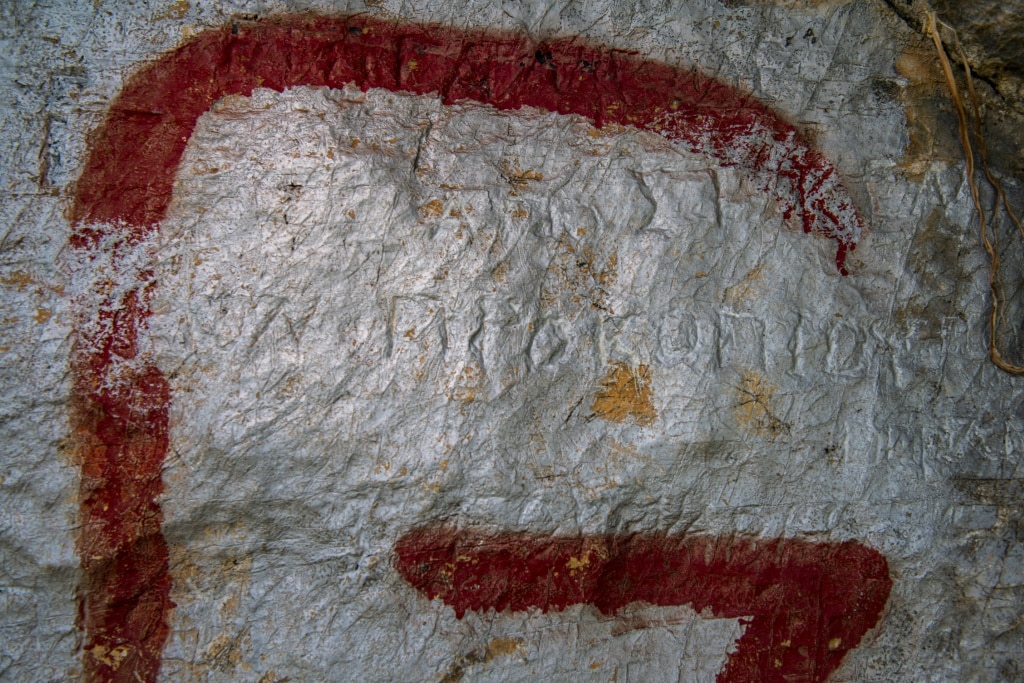
Nestled on a sunlit hillside overlooking olive-draped slopes outside Turkey’s Aegean coastal city of Izmir, a rugged, rock-choked cave has been venerated for generations by local residents as the very spot where the ancient bard Homer composed his legendary epic *The Odyssey*. As renewed global interest in Homer surges following the release of Christopher Nolan’s hit blockbuster of the same name, scholars, local officials and residents in Bornova’s Homeros Valley are reigniting centuries-old debate over the cave’s legendary connection to one of Western literature’s most iconic figures.
While no definitive concrete evidence has ever confirmed the cave as Homer’s creative workspace, the link between Homer and the Izmir region — anciently known as Smyrna — stretches back millennia. As far back as the 2nd century CE, Greek geographer and chronicler Pausanias recorded that Smyrna’s residents guarded a grotto along the Meles River where Homer was said to have written his works, cementing a mythic connection that has persisted to the modern day. Though other sites, most notably the Greek island of Chios, also lay claim to Homer’s origins, researchers in Bornova have recently unearthed new clues they argue lend unprecedented weight to their region’s claim.
Turkish researcher Altan Altin, who has authored a full book on the subject of Homer’s connection to Bornova, argues that a 3rd-century BCE bas-relief frieze depicting Homer’s deification contains exact, matching geographic details that mirror the layout of the Bornova cave — a connection no scholar had previously identified. “This is the first time such a detailed geographical confirmation of the cave has come to light,” Altin explained, noting that ancient Ionia, the historic Greek region that encompassed both Smyrna and Chios on Turkey’s Aegean coast, is Homer’s true geographic home. “For me, there’s no doubt: Homer is from Bornova, and at the very least, he is from these lands.”
Archaeological evidence from the region further supports this cultural connection, according to local archaeologist Mehmet Akif Erdem. Excavations have uncovered ancient coins minted in Smyrna that bear Homer’s likeness, indicating the city’s ancient residents already claimed the poet as their own centuries after his death. Additionally, the Ionic and Aeolic ancient Greek dialects used in both *The Iliad* and *The Odyssey* align with the language spoken in the Smyrna region during Homer’s purported lifetime, Erdem added.
Today, Homer’s presence permeates every corner of Bornova: a Neolithic archaeological site on the town’s outskirts hosts a marble bust of the poet inscribed with the words “I compiled *The Iliad* and *The Odyssey* epics on this land. I lived in Bornova.” The town already hosts an annual book fair dedicated to Homer and features a statue of Trojan War hero Hector in its central park, and local leaders are now moving to renovate the cave to open it to international tourists, capitalizing on the new wave of Homeric interest sparked by Nolan’s film.
“Preserving Homer’s legacy is a duty we owe to humanity. He is one of the founding fathers of literature,” Bornova Mayor Omer Eski told AFP. “The stories he tells are about this land. The question is not whether we should claim Homer or not — his story is also ours.”
Not all local leaders share this vision, however. In 2024, officials from President Recep Tayyip Erdogan’s ruling AKP party sparked controversy by proposing to rename Homer’s Valley after a Turkish fighter pilot, arguing the culturally significant site should not carry a Greek name. Eski has pushed back forcefully against the proposal, arguing erasing Homer’s name would be an irreversible loss for Bornova’s cultural identity. His goal, he says, is to position the town as a global Homeric heritage destination that draws literary tourists from across the world.
The release of Nolan’s *The Odyssey* has already had a visible impact on local interest: booksellers across Izmir report a sharp spike in sales of Homer’s epic, and members of the public say the film has helped them connect more deeply with their region’s ancient literary heritage. “I knew Homer was from these lands, but I didn’t know he was specifically from Izmir. We are incredibly lucky,” said Safak Tosun, a local teacher, outside a cinema screening the new film. “I feel proud, honoured and deeply privileged to be his fellow countryman.”
For Altin, clues within Homer’s own works confirm the poet’s Anatolian roots: *The Iliad* is filled with specific anecdotes and cultural references that only would have been familiar to a resident of the Aegean Anatolian coast, he argues. Most importantly, he adds, the debate over Homer’s national or cultural origin should not fuel rivalry between modern Turkey and Greece. “Homer is 2,800 years old, while the Turkish-Greek border is only a century old,” Altin shrugged. “Homer is Greek. Homer is Anatolian. None of us is older than he is, not even our countries.”