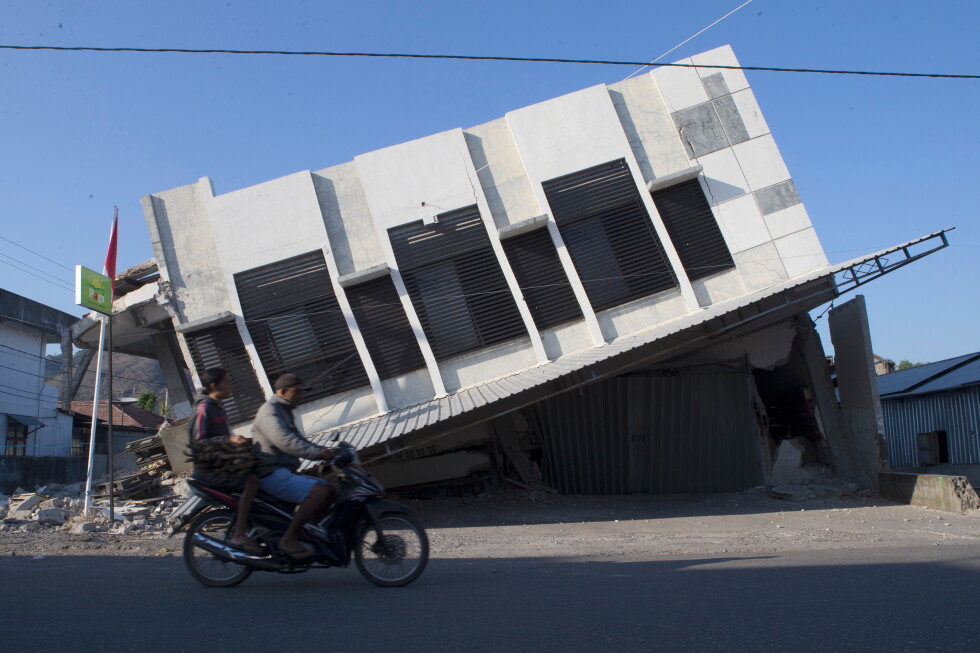
As Indonesia marked its 79th Independence Day on Monday, thousands of survivors on the island of Flores remained stranded without critical assistance, just three days after a powerful seismic event devastated the region, claiming at least 54 lives, wounding scores of people and destroying or damaging hundreds of structures across the area.
The weekend disaster upended life for communities across East Nusa Tenggara province, leaving residents to spend their national holiday mourning lost loved ones, searching for missing family members and enduring long waits for life-saving aid to reach cut-off villages that remain inaccessible after the quake. Official data from Indonesia’s National Disaster Management Agency confirms that more than 1,300 residential buildings suffered damage across the province, with nearly 250 homes completely reduced to rubble on Flores alone. The disaster forced roughly 5,000 people to flee their homes and seek refuge in temporary emergency shelters, while the total number of injured residents climbed to 135. On Sunday, the province’s governor officially declared a 14-day state of emergency to coordinate response efforts.
According to measurements from the U.S. Geological Survey, the quake struck at a depth of 10 kilometers (6 miles) just before 6 a.m. local time on Saturday. Immediately after the initial tremor, authorities issued a tsunami warning that sparked panic among local residents who fled to higher ground, before the alert was ultimately lifted hours later. In the days since the main quake, geological teams have recorded more than 995 aftershocks, though only 46 have been strong enough to be felt by local communities. The persistent risk of additional strong aftershocks has forced thousands of Flores residents to camp outside damaged or destroyed homes under makeshift tarpaulin shelters overnight, too afraid to return to unstable structures.
An on-the-ground assessment by an Associated Press photojournalist revealed widespread destruction across the hardest-hit parts of the island. Fallen tree debris blocks critical access roads, while large boulders dislodged by earthquake-triggered landslides litter slopes and pathways. Entire neighborhoods have been reduced to rubble, with many homes completely shattered or left structurally unsound. Parked vehicles were crushed when adjacent multi-story buildings collapsed during the initial tremor.
For many long-time residents of Flores, the scale of destruction has brought back traumatic memories of a devastating 1992 earthquake and tsunami that struck the same island, killing an estimated 2,500 people. Rasyid Jafar, a clothing trader based in Reo – the epicenter of the latest disaster in Manggarai regency – shared that his entire home had been reduced to rubble in the quake. “We need food, medicine and clean water urgently,” Jafar said.
Mariana Tewu, another Reo villager, echoed that frustration, noting that even as small amounts of aid have begun to trickle into the area, survivors still lack basic infrastructure to prepare meals. “We have nothing left … Why isn’t there a public kitchen?” Tewu said.
In response to the disaster, Indonesian authorities have deployed more than 3,500 military and police personnel to the affected zone, and approximately 275 tons of relief supplies have been allocated to the region. However, significant logistical challenges, including damaged roads and blocked access routes, have slowed delivery of aid to many of the hardest-hit remote communities.
Indonesia, an archipelago nation made up of more than 17,000 islands, is no stranger to seismic activity. Its location along the Pacific “Ring of Fire” – a horseshoe-shaped band of active seismic faults and volcanoes that circles the Pacific Ocean – leaves the country consistently at risk of major earthquakes and volcanic eruptions. The region has seen some of the deadliest seismic disasters in modern history: a 7.5 magnitude quake in 2018 triggered a tsunami on the island of Sulawesi that killed more than 4,400 people, and the 2004 9.1 magnitude quake off the coast of Sumatra unleashed a massive Indian Ocean tsunami that killed approximately 230,000 people across 12 countries, with nearly 170,000 of those deaths occurring in Indonesia’s Aceh province alone.