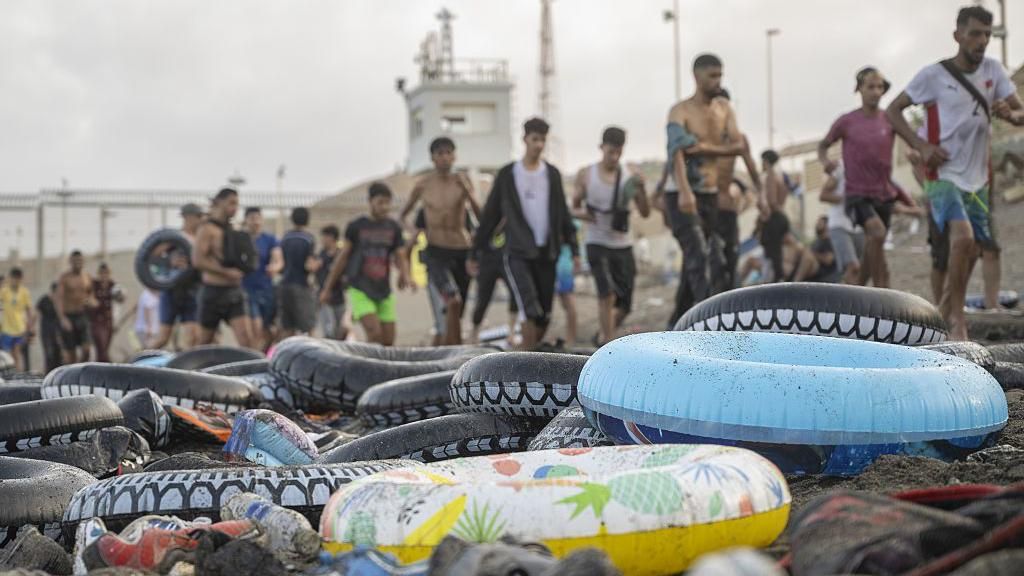
A recent undercover investigation by the BBC’s Top Comment podcast has uncovered a coordinated network of Instagram profiles that spread dangerous misinformation to encourage irregular migration from Morocco to the Spanish North African enclave Ceuta, while charging desperate aspiring migrants hundreds of pounds for fraudulent crossing guidance. The investigation comes in the wake of a devastating mass migration event last month, when approximately 78,000 Moroccan migrants crossed into Ceuta by sea in just a matter of hours. Ceuta’s mayor confirmed that at least 100 migrants died during that chaotic crossing, and the unprecedented crisis has already strained diplomatic relations between Morocco and Spain, as well as sparked internal tensions among European Union member states that share open border policies. While the immediate crisis has de-escalated in recent weeks, the investigation reveals that deceptive social media activity continues to drive renewed attempts at crossing, putting more lives at risk.
To unpack the scope of the operation, the investigation created a fake undercover profile under the name “Mohammed,” a 20-something Moroccan man seeking to emigrate to Europe. The profile was designed to mirror the accounts of young Moroccans who engage with migration-related content on the platform, and it quickly became a target for the network. Within days, the fake account was contacted by an anonymous profile that claimed to have successfully assisted “many people” with crossing, and demanded an upfront payment of 5000 Moroccan dirhams — equal to roughly £400 — in exchange for crossing instructions. The smuggler even offered guidance on entering Ceuta via underutilized sewer pipes, and confirmed that dozens of interconnected Instagram profiles run similar smuggling operations, requiring payment via bank transfer through a specific money service. When asked if a refund would be issued if the crossing failed, the account went silent, and later deleted multiple messages sent to the undercover profile. Notably, the same account had previously told the BBC’s official Instagram account that it does not encourage irregular migration to Ceuta, a disclaimer repeated across multiple profiles in the network.
The investigation identified dozens of profiles that spread what the BBC terms “mirage content” — heavily edited or manipulated posts that paint a drastically false picture of the crossing and Ceuta itself. Many of these posts show migrants swimming casually across the border Strait or walking freely through Ceuta’s streets, framing the short swim around the border fence as safe and simple. In reality, crossing often takes far longer than advertised, and dozens of migrants have drowned attempting the journey. A striking example uncovered was an original viral video posted in Spanish that sought to deter migration, with the caption “Ceuta can’t take it anymore,” showing two women in wetsuits walking through the city. Moroccan and Arabic-speaking accounts sharing the video cropped out or altered the caption, leaving only footage of the women walking unimpeded to mislead viewers.
Many posts also falsely claim that Ceuta serves as a reliable gateway to mainland Europe, despite Spanish authorities returning roughly 75,000 of the 78,000 recent arrivals back to Morocco. Most of the profiles follow a consistent template: nearly 40 of them use variations of the term “Haraga” (a colloquial Maghrebi Arabic term referring to irregular migrants who destroy identity documents to avoid deportation) in their name or handle, often use a Spanish flag as a profile picture, and include the calling codes for Morocco and Spain in their bio. Account data suggests most are operated from Morocco, with a smaller number potentially based in Spain or Italy. While many were created years ago, their Ceuta-focused content has exploded in popularity in recent weeks.
The network has mastered the art of manipulating Instagram’s algorithm to amplify their deceptive content. By posting aspirational, emotion-driven content that portrays the crossing as an easy path to a better life in Europe, the profiles generate high levels of engagement, which the algorithm prioritizes and pushes to more users. The BBC investigation found that after the undercover fake account followed just a handful of these profiles, its feed became flooded with migration encouragement content. Most accounts direct interested users to private WhatsApp groups or off-platform communication channels to arrange payments, turning algorithmic reach into a steady stream of paying clients. This is not an isolated issue, investigators note: the network is a clear example of how bad actors can game social media algorithms to cause severe real-world harm.
At the time of publication, the BBC reports that new posts are actively advertising another mass crossing attempt this coming weekend, a move that threatens more preventable deaths and further inflames already tense diplomatic relations between Morocco and Spain. After the BBC shared its findings with Meta, Instagram’s parent company, multiple problematic profiles have already been removed from the platform. In a statement to the BBC, a Meta spokesperson said: “We have a team monitoring the situation in Ceuta in real time and removing content that violates our policies – including content that offers to provide, facilitate or seek human smuggling services.”