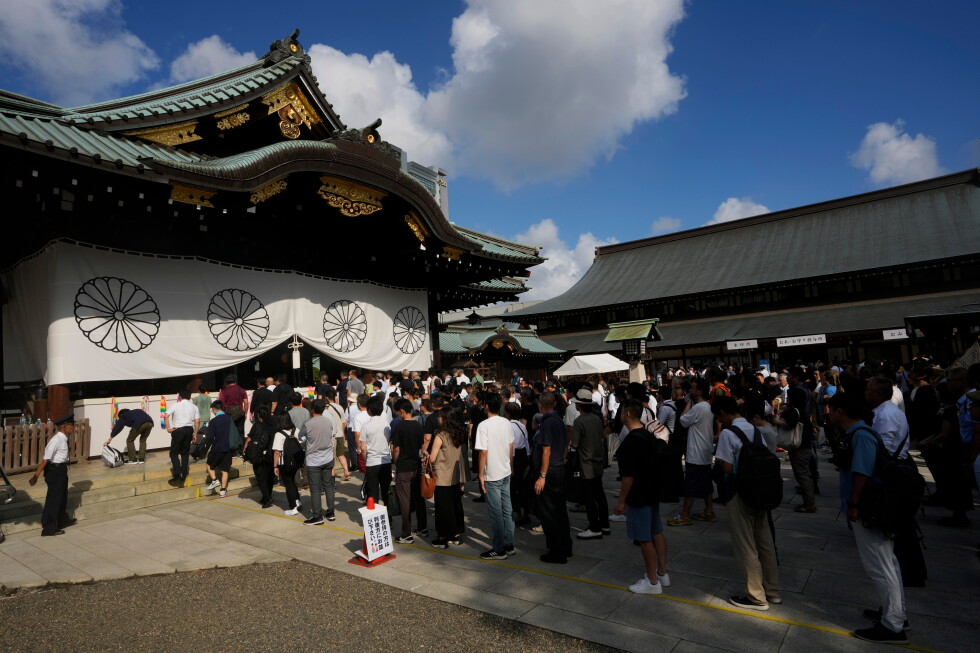
Nestled in the heart of central Tokyo, Yasukuni Shrine is far more than a simple Shinto memorial: it is a site of profound spiritual meaning for some, and a persistent source of diplomatic friction that has strained Japan’s relations with its neighboring nations for decades. The story of this controversial shrine begins in the earliest days of the Meiji Restoration, when Japan underwent a dramatic transformation from a feudal military state to a modern imperial power.
In 1868, after more than 250 years of rule by the Tokugawa shogunate, imperial authority was restored to the Japanese emperor. Just one year into the new Meiji era, Emperor Meiji ordered the construction of a memorial to honor those who had died fighting for the imperial cause. On an initial visit to the site in 1874, the emperor pledged that the names of all who sacrificed their lives for the nation would be commemorated there in perpetuity. The shrine was eventually renamed Yasukuni, drawn from Japanese characters meaning “peaceful country,” and today it honors more than 2.4 million people who died in service to Japan.
The founding of Yasukuni was deeply tied to the rise of State Shinto, a state-sponsored ideological framework that blended religious tradition with nationalist fervor. Under longstanding Shinto belief, Japanese emperors are direct descendants of the sun goddess Amaterasu, but the narrative of the emperor’s divine status was amplified during the Meiji era to unify the new nation. “Yasukuni Shrine was initially conceived as a way to send a message to the Japanese people,” explained Akiko Takenaka, a history professor at the University of Kentucky. “The message was about the emperor; the message was about a new Japan.” In this new order, dying for the emperor and empire was framed as the highest honor a citizen could receive, and the emperor himself was positioned as the source of that honor.
Under State Shinto, the Japanese government controlled the shrine’s operations and funding, and the line between religious practice and national patriotism was intentionally erased. As Susumu Shimazono, a leading scholar of religion and modern Japan, wrote in the *Japanese Journal of Religious Studies*, “The Meiji reformers believed that they were establishing an ideal nation in which the people and the sacred emperor maintained a spiritual union.” This arrangement ended abruptly after Japan’s surrender in World War II. In December 1945, occupying U.S. General Douglas MacArthur issued an order abolishing State Shinto, cutting off government funding for shrines and removing Shinto teachings from public institutions to enforce the constitutional separation of religion and state. Yasukuni was reorganized as a private religious corporation, a status that has not erased persistent questions about the meaning of official visits by sitting Japanese leaders.
It is the enshrinement of convicted war criminals that has made Yasukuni the most divisive site in Japanese post-war memory. Unlike traditional cemeteries, Yasukuni does not hold the remains of the deceased; instead, those commemorated are enshrined as kami, or sacred spirits, in the Shinto tradition. The honorees include ordinary soldiers, female battlefield medics, student wartime workers, and even foreign nationals who died in Japanese service. But the most contentious enshrinements are 14 convicted Class-A war criminals — Japanese wartime leaders found guilty of “crimes against peace” for planning and waging aggressive war across Asia, including wartime Prime Minister Hideki Tojo, a key architect of the 1941 attack on Pearl Harbor.
These 14 war criminals were secretly enshrined at Yasukuni by the shrine’s head priest in 1978, three years after Emperor Hirohito’s last visit to the site. When Hirohito learned of the enshrinement, he never returned to Yasukuni to avoid international criticism, according to Mark R. Mullins, a professor of Japanese and religious studies at the University of Auckland. Neither of Hirohito’s successors has visited the shrine in person, though both have sent official emissaries to attend key annual rites. The controversy extends beyond war criminals: dozens of enshrinements of Buddhists, Christians, and colonial subjects from Korea and Taiwan have been contested by family members who say their relatives were added without consent. Many of these families have taken legal action to remove their relatives’ spirits, but Japanese courts have repeatedly rejected these efforts.
For many Japanese people, particularly bereaved families of fallen soldiers, Yasukuni holds deeply personal meaning that is separate from its political baggage. Before deploying to war, Japanese soldiers were often told that if they died in service, their spirits would reside at Yasukuni. “They told their families: ‘I want you to come see me at Yasukuni Shrine,’” said Toshiei Mizuochi, president of the Japan War-Bereaved Families Association. Mizuochi’s own father, a navy officer, was killed in a bombing just six days before Japan’s surrender on August 15, 1945. Of the more than 2.4 million Japanese soldiers who died overseas in World War II, roughly 1 million still have not had their remains recovered. “For that reason, the vast majority of bereaved families who received neither remains nor personal belongings believe that the spirits of the war dead are at Yasukuni Shrine,” Mizuochi explained. Many relatives visit the shrine year-round, not just on the annual August 15 anniversary of Japan’s surrender, to mark family milestones, commemorate death anniversaries, and connect with the spirits of their loved ones. Mizuochi says he visits dozens of times a year, and every time he prays, he sees his father’s face in his mind.
Other visitors frame their trips as a matter of spiritual reflection, not glorification of war. “I have absolutely no intention of glorifying war,” said Kana Shindo, a member of Tokyo’s Minato City Assembly, who visits to purify her mind and give thanks for the peace modern Japan enjoys. “I visit because I believe that the peaceful Japan in which we live today exists upon the lives and accumulated history of the people who lived before us,” she added.
But for neighboring countries that endured decades of Japanese imperial occupation and aggression, including China and South Korea, Yasukuni is an unmistakeable symbol of Japanese militarism. Visits by sitting Japanese prime ministers and other government leaders regularly draw fierce diplomatic condemnation, with both nations arguing that such trips are evidence that Japan has not fully reckoned with or taken full responsibility for its wartime atrocities. Adjacent to the shrine, the private Yushukan Museum, which displays wartime artifacts, has drawn widespread criticism from scholars for its biased retelling of Japanese military history, which erases the suffering of Chinese and Korean people under imperial rule. “By eliminating the enemy, the Yushukan remembers a war that was only ever glorious,” John Breen, a professor at the International Research Center for Japanese Studies, wrote in an analysis of the shrine’s memorial practice. For nationalist groups that seek to reverse post-war reforms and restore Japan’s pre-war imperial identity, Yasukuni holds particular symbolic meaning, deepening the divides around the site.
Today, Yasukuni remains what it has been for more than 150 years: a site that reflects competing visions of Japan’s history, identity, and place in the world, carrying meaning that shifts dramatically depending on who is asked.