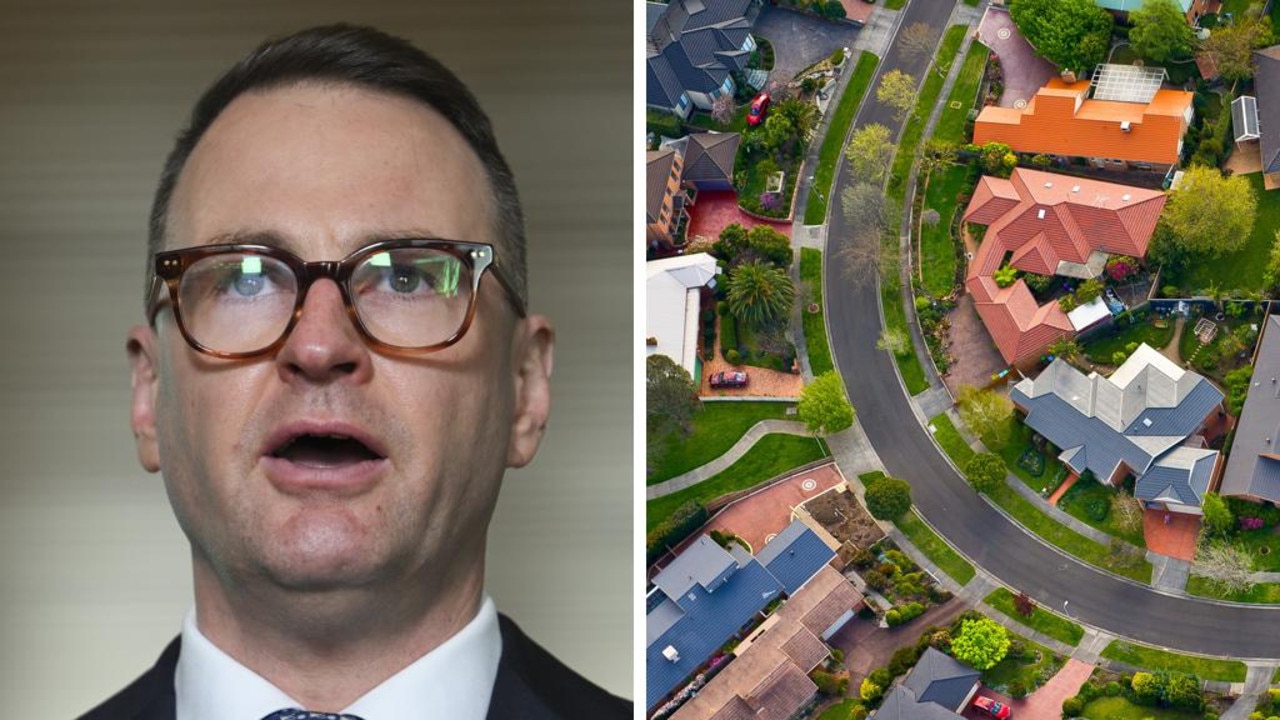
A senior opposition lawmaker in Australia has walked back a controversial remark that sparked fierce backlash, after he appeared to confirm that his party’s planned overhaul of national building rules would force low-income Australians to accept lower-quality housing.
Senator Andrew Bragg, the Liberal Party’s shadow housing spokesperson, launched the Coalition’s new housing affordability plan at Canberra’s National Press Club this Wednesday. The centerpiece of the proposal is a dramatic reduction of Australia’s National Construction Code, cutting the document down from roughly 2,000 pages to just 80 pages, with the stated goal of slashing building costs to unlock more affordable home construction across the country.
The following day, during an interview on ABC Radio National, host Sally Sara asked Senator Bragg whether the plan would mean low-income households would have to accept substandard housing to access an affordable property. In his on-air response, Bragg plainly stated “yes, definitely,” adding that Australian voters needed to be honest about the necessary trade-offs to resolve the country’s ongoing housing affordability crisis.
He went on to frame the proposal as a practical response to record low housing supply, arguing that securing a roof over one’s head was a more urgent priority than extra non-essential features, referencing Maslow’s hierarchy of needs to contextualize his point.
But just one day later, Senator Bragg issued a public correction across his social media channels, claiming he had misheard Sara’s original question and had never intended to back the claim that the Coalition’s new code would produce substandard housing. “I did not intend to agree that houses complying with the Basic Australian Standard (the Coalition’s reduced code) would be ‘substandard’. They wouldn’t be,” he said in the statement.
Bragg clarified that homes built under the revised code would meet strict safety standards, retaining all core basic amenities including insulation, plumbing and sewerage. He added that the framework had received strong support from Australia’s construction industry, with all non-essential features—such as mandatory accessibility ramps, flat shower flooring and reinforced walls—set to become optional add-ons rather than required builds. “The house won’t be gold plated but it won’t fall apart. It will be safe,” he said in his original press club address.
The policy pitch comes as the Liberal-National opposition ramps up pressure on Prime Minister Anthony Albanese’s Labor government over its housing performance, two years into the federal government’s landmark National Housing Accord. The ambitious bipartisan plan targets the construction of 1.2 million new well-located homes by mid-2029, but official updates have repeatedly shown the project is falling well behind its delivery targets. In his speech, Bragg argued that current overly restrictive building rules have made low-cost home construction effectively illegal in Australia, and the Coalition’s streamlined code would cut construction costs to boost supply.
But the proposal has already drawn sharp criticism from affordable housing advocacy groups. Maiy Azize, spokesperson for leading advocacy organization Everybody’s Home, accused the Coalition of pushing changes that would only benefit private developers, allowing them to increase profit margins by building unlivable, low-quality homes during a national housing crisis. “Everyone deserves a safe, decent and affordable home. It’s where people sleep, study, raise their families and build their lives,” Azize said.