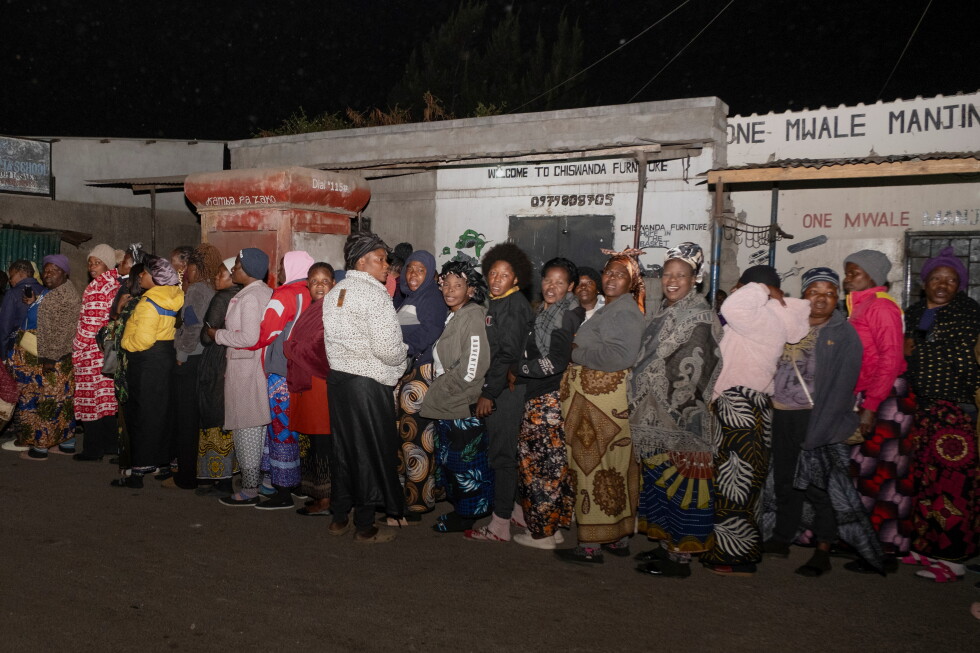
On Thursday morning, long queues of voters wrapped around polling stations across Zambia’s capital Lusaka, kicking off a tense one-day presidential election that will serve as a public verdict on incumbent Hakainde Hichilema’s first term in office. With 8 million registered voters out of the southern African nation’s 22 million total population, citizens are not only selecting their next head of state but also casting ballots for members of national Parliament and local government council seats. The country’s electoral commission has announced that official results will be released by Monday. Before sunrise, voters clad in thick layers to ward off the cool morning chill gathered outside voting locations, many huddling around small homemade fires to stay warm while election workers finalized preparations: arranging sealed ballot boxes, cross-referencing voter rolls, and securing polling stations. International observation teams, including delegates from the European Union, were already on site monitoring the opening process at multiple locations in Lusaka by the time voting commenced.
Hichilema, who first took office after winning the 2021 election, is seeking a second five-year term and faces competition from 10 other challengers. Political analysts widely identify Brian Mundubile, the candidate backed by a coalition of major opposition parties, as the incumbent’s most formidable rival. The election is broadly framed as a referendum on Hichilema’s management of Zambia’s struggling economy. The incumbent has defended his tenure, arguing he inherited a nation on the brink of economic collapse when he took office. During his first term, he oversaw a landmark restructuring of Zambia’s $17 billion foreign debt, the first major African sovereign debt restructuring of the 2020s, and has drawn consistent praise from international investors for his pro-business policy agenda, posting moderate single-digit economic growth in recent years. Hichilema says a second term is necessary to deliver on his long-term promises: creating formal jobs for Zambia’s growing youth population, expanding and upgrading crumbling national infrastructure, and improving access to public health and education services.
But for many ordinary Zambian households, the promised economic recovery has yet to translate into tangible improvements in daily life. Widespread frustration over skyrocketing food prices, persistent high youth unemployment, and chronic rolling blackouts that have disrupted businesses and home life for years has become the core issue driving opposition support. A large share of the electorate says they have not felt the benefits of macroeconomic stabilization, with household budgets stretched thin by ongoing cost-of-living pressures.
Beyond Zambia’s borders, the outcome of the election is being closely watched by global powers and industries, given the country’s status as one of the world’s top copper producers. Copper is a critical input for electric vehicle batteries, renewable energy infrastructure, and modern power grids, and Zambia has set an ambitious target to triple its annual copper output to 3 million metric tons by 2031. China has long been Zambia’s largest single foreign investor, holding extensive stakes in the country’s mining sector, while the United States has increasingly sought to expand its own footprint in African critical mineral supply chains to reduce reliance on Chinese-controlled resources. Hichilema has pursued a balanced diplomatic and economic strategy, actively courting investment from both Chinese and Western partners, including the U.S., to reach his copper production goal.
Tensions have run high in the final stretch of the campaign, with security forces deployed across the country to prevent election-related unrest. Zambian police have added extra patrols around polling stations and issued public warnings against political violence, disruption of voting procedures, and the spread of unconfirmed false results on social media. Opposition groups have levied serious claims against the incumbent administration, alleging that state law enforcement and institutions are being weaponized to target political opponents ahead of the vote. Just days before polls opened, law enforcement agents raided the headquarters of the main opposition Tonse Alliance, a move the coalition calls a deliberate politically motivated attack, allegations the Hichilema administration has repeatedly denied.
Political tensions have been simmering for years in the lead-up to this election. Hichilema, as an opposition leader under former president Edgar Lungu, spent four months in jail on what many observers viewed as politically motivated treason charges before defeating Lungu in the 2021 election. Lungu remained a prominent political force until his death in South Africa in 2023, and a months-long bitter public dispute between Lungu’s family and the Hichilema government over where the former president could be buried further eroded trust between the ruling party and opposition ahead of voting.
Under Zambian electoral law, a presidential candidate must win an absolute majority of more than 50% of the vote to avoid a runoff election. Even amid pre-election tensions, Zambia holds a long-standing reputation as one of the most stable democracies in southern Africa, with a decades-long track record of mostly peaceful transfers of power. Hichilema’s 2021 victory marked the third time since the restoration of multiparty democracy in 1991 that an incumbent president peacefully handed power to an opposition candidate, a record regional observers say is an important marker of democratic stability in the region.