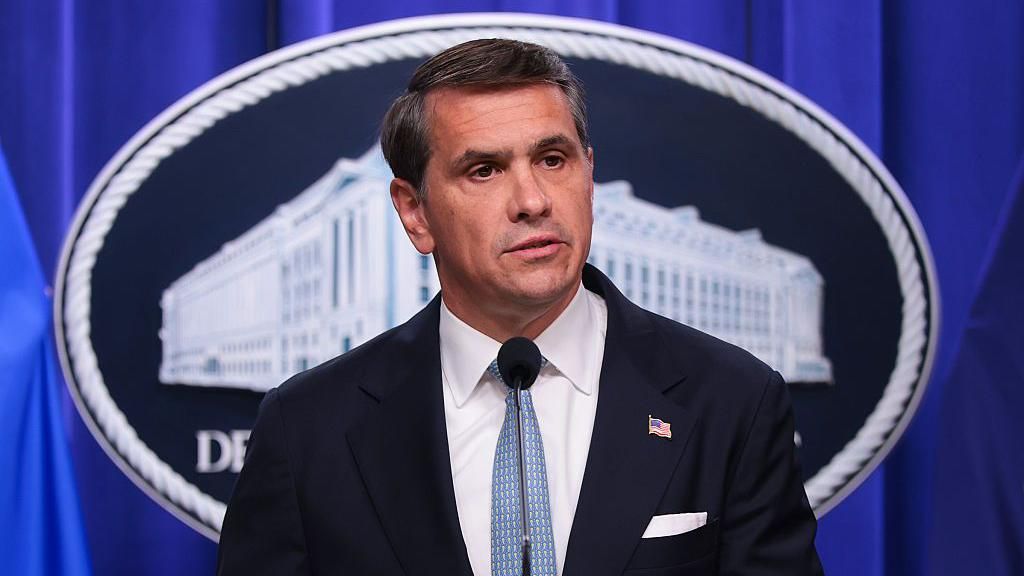
After months of political gridlock and high-stakes partisan negotiations, former personal lawyer to President Donald Trump, Todd Blanche, has secured confirmation as the next United States Attorney General, the country’s highest-ranking law enforcement official. The final Senate vote ended in a razor-thin 50-49 split, marking one of the closest cabinet confirmation votes in modern U.S. political history, with two moderate Republican senators breaking ranks to oppose the nomination.
Blanche had served in an acting capacity leading the Department of Justice (DOJ) since April, following the abrupt dismissal of his predecessor Pam Bondi. The months-long standoff between Senate Republicans and the Trump administration over the nomination put a spotlight on deep intra-party divides and lingering tensions between the former president and dissident members of his own party.
All Democratic senators uniformly voted against Blanche’s nomination, while Republicans Susan Collins of Maine and Lisa Murkowski of Alaska crossed party lines to reject his appointment. Murkowski, one of the most vocal critics of the nomination, cited deep-seated concerns over the growing politicization of the Department of Justice, and stated she lacked confidence that Blanche would act as a check on what she described as “the worst impulses of this administration.” Collins echoed these concerns, raising specific questions about Blanche’s role in negotiating a $10 billion legal settlement between Trump and the Internal Revenue Service (IRS), though she stopped short of casting the deciding vote against him.
The deciding vote ultimately fell to Louisiana Senator Bill Cassidy, who had spent weeks weighing his decision amid intense national and intra-party pressure. Notably, Cassidy voted to convict Trump during his second impeachment in 2021 over his role in the January 6, 2021 Capitol riot. Earlier this year, Trump backed a primary challenger to unseat Cassidy, ultimately forcing the senator into retirement. Despite this history of acrimony, Cassidy announced on Friday he would support the nomination, arguing that Blanche represented the best option the White House would put forward. Cassidy framed his vote as a judgment on Blanche’s qualifications, not a referendum on President Trump, and argued that a confirmed Attorney General would have greater leverage to provide candid legal pushback to the administration, while also allowing the DOJ to move forward with its core work combating violent crime.
During confirmation hearings, multiple Republican senators raised sharp objections to two key priorities tied to Blanche and the Trump administration: his handling of planned public releases of documents related to the late Jeffrey Epstein, and the administration’s proposed $1.8 billion “anti-weaponization” fund. Critics, including Murkowski, warned the fund, which was designed to compensate individuals who claim they were targeted by government persecution, would ultimately funnel money to rioters convicted for their participation in the January 6 attack on the U.S. Capitol. Facing widespread pushback from within his own party, Blanche pledged during hearings to roll back plans for the fund.
The confirmation closes a tense chapter of intra-party and partisan conflict in the Senate, but key questions remain unanswered. It is still unclear whether Blanche’s commitment to abandon the fund is legally binding, and political observers have widely noted that Blanche has a long-standing personal and professional loyalty to Trump as his former personal attorney, leading to speculation that the administration could revive a similar initiative under a different name at a later date.