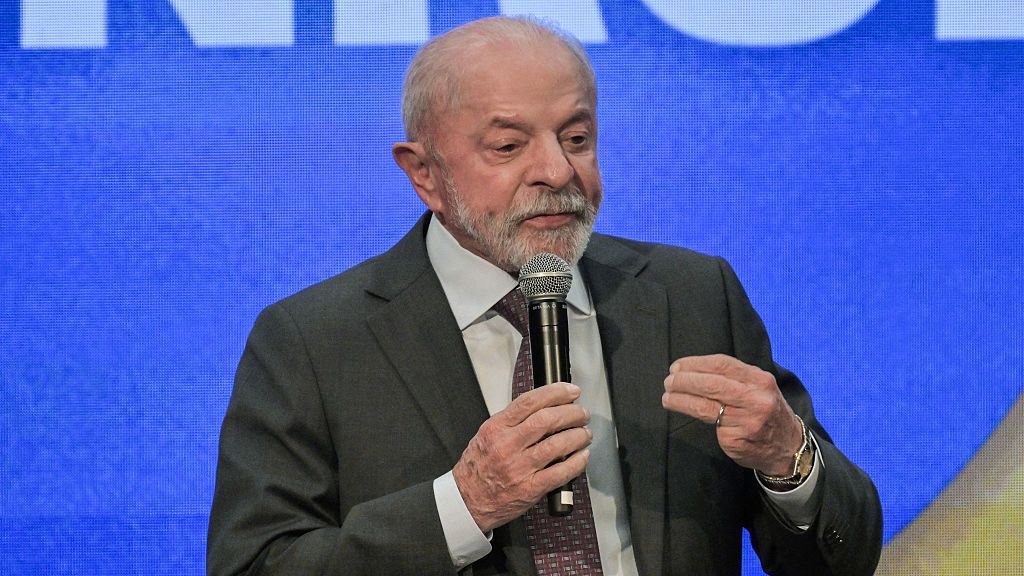
Just over a week before Brazilians head to the polls for the first round of a highly competitive presidential election, incumbent President Luiz Inácio Lula da Silva has taken a bold stance on public protection by announcing a total ban on all online gambling platforms, including sports betting and online casino operations. The 80-year-old leader, who is running for a fourth term in office against Flávio Bolsonaro—son of incarcerated former President Jair Bolsonaro—signed the provisional executive order banning the industry on Friday.
First legalized during the administration of former President Michel Temer in 2018, the unregulated online gambling sector has exploded into a public crisis in Brazil in recent years. Lula has repeatedly slammed the industry as a destructive social force, describing it as a “cancer” eating away at Brazilian communities during the announcement in São Paulo. “Either we remove the tumour, or it kills us,” he emphasized, noting that widespread gambling addiction has already devastated thousands of households across the country, driving many families to sell off all their belongings to cover mounting gambling debts.
In a post to the social platform X, Lula pointed out that while the legal framework for online betting was established under Temer, the sector grew completely without oversight during Jair Bolsonaro’s presidency. During that period, there were zero meaningful safeguards to block children and teenagers from accessing gambling platforms, leaving young Brazilians disproportionately vulnerable to addiction. “We won’t allow betting companies to profit at the expense of Brazilian families’ income and lives,” the president added. Earlier this week, during his address to the United Nations General Assembly, Lula already called out the industry for its exploitative business model that “transforms addiction into profit.”
Alongside the full ban, Lula also signed a separate bill that establishes harsher criminal penalties for offences tied to match-fixing and manipulated fixed-odds betting. Under Brazilian law, the newly announced provisional ban must receive formal approval from the national congress within 120 days to remain permanently in effect.
The timing of the policy announcement, coming so close to the election, has drawn immediate pushback from Lula’s opponent. Speaking at a campaign rally in Rio de Janeiro on Friday, Flávio Bolsonaro dismissed the gambling crackdown as a populist, hypocritical move driven entirely by political calculation. Despite the opposition criticism, recent public polling shows the policy aligns with majority public opinion: a joint survey from Atlas and Bloomberg released this week found that nearly 60% of Brazilian adults support a full ban on internet-based gambling.
For context, most traditional forms of gambling, including physical casinos and slot machines, have long been illegal across Brazil. The 2018 legalization of online betting opened a regulatory loophole that allowed the sector to grow rapidly, with little government action to address the resulting social harm until Lula’s latest announcement. As the race for the presidency enters its final stretch, polls show Lula and Bolsonaro are locked in a near-neck-and-neck race, making the online gambling ban a key policy issue that could sway undecided voters ahead of the first round of voting.