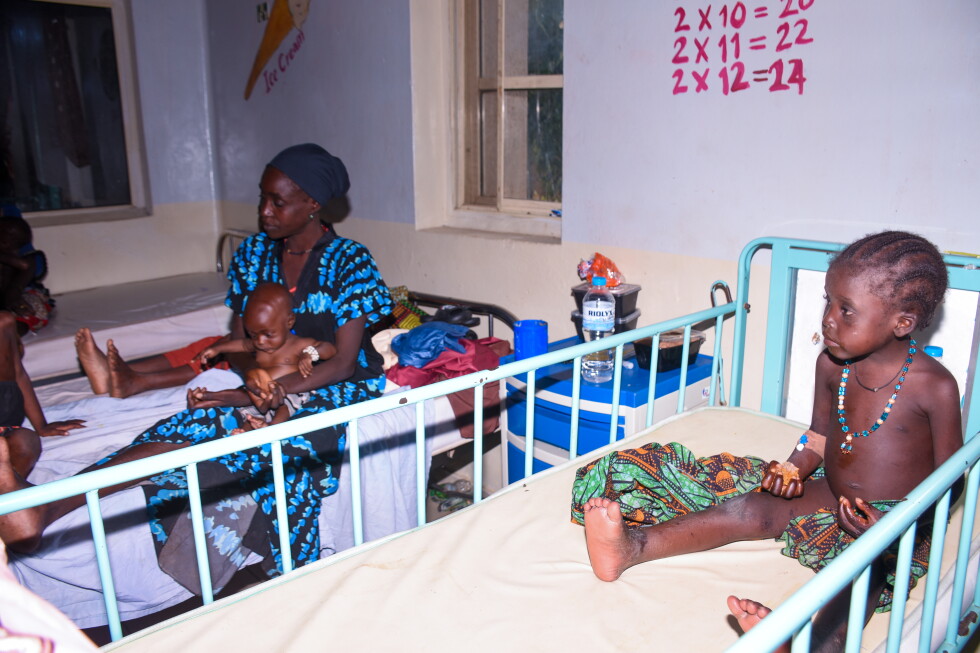
Six months after a devastating jihadi attack that left more than 160 villagers dead and hundreds abducted in northern Nigeria, dozens of recently freed captives are recounting the unthinkable suffering and constant fear they endured while held captive in dense forest hideouts. Among 308 hostages rescued by Nigerian security forces this week — a operation President Bola Tinubu has called the largest single-day rescue mission in the nation’s history — 163 of the freed victims, most of whom are women and children, were transferred to state authorities in Ilorin, Kwara’s capital, on Friday for urgent medical evaluations and care ahead of their return to family members.
Survivors have opened up about the grim conditions of their captivity, painting a picture of relentless deprivation and trauma. Mary Ishaya, a 44-year-old abductee who had never handled a deceased person before her kidnapping, described going days without access to food, and being forced to help bury fellow hostages who died in captivity. “I still cannot find the right words to describe what has happened to us. We saw death and suffering,” Ishaya told reporters from the Associated Press.
Amira Saliu, a nurse who was among those freed, shared an extraordinary account of delivering at least 10 babies for pregnant fellow captives with nothing but her bare hands, as no medical supplies were available in the remote forest camps. Many survivors were already grappling with devastating loss before their rescue: dozens of women learned their husbands were killed during the initial raid on their village of Woro on February 3, when militants stormed the community to abduct residents. Hauwa Saliu, 30, whose husband died in the attack, recalled that militants repeatedly pressured captives to accept their extreme religious ideology, a demand she refused throughout her six months in captivity. Like many other survivors, she said she had all but given up hope of ever returning home.
Locals from Woro, a community with a majority-Muslim population, believe the attack was intended as punishment for residents rejecting the militants’ extremist proselytizing. When the raid unfolded, militants killed more than 160 villagers before taking hundreds hostage, moving them to hidden camps within the expansive Kainji Lake National Park forest. During their captivity, survivors said hostages were forced to hide whenever Nigerian military helicopters flew over the area, went without adequate shelter during heavy rainstorms, and watched many fellow captives fall sick with no access to medical care. Many of the freed hostives arrived at their medical processing center severely emaciated; some were too weak to stand, others were recovering from untreated physical injuries, and all carry deep emotional scars from their ordeal. The 163 Woro captives were rescued alongside 145 other abductees, most taken from nearby Niger state.
The February attack underscores a growing and alarming shift in militant activity across Nigeria: extremist groups that long centered their operations in the country’s far north are now expanding southward through Africa’s most populous nation, exploiting weak security presence in rural communities where outnumbered, overstretched government forces struggle to fend off armed gangs competing for territory and control of local natural resources.
Local authorities have not released details about how the rescue operation in Kainji Lake National Park was carried out. President Tinubu has hailed the mission as a milestone, and pledged to ramp up counter-insurgency operations against armed extremist gangs across the country. To address longstanding gaps in national security, Tinubu recently announced pay raises for military personnel and launched a mass military recruitment drive, steps aimed at fixing longstanding issues of underpayment and understaffing that have weakened Nigeria’s security response.
The U.S. currently provides military support to Nigeria under a bilateral agreement focused on protecting vulnerable Christian communities in the country, though most support is limited to logistics and intelligence gathering for counter-insurgency operations in the north. Mass kidnappings — including targeted abductions of schoolchildren — have become one of the most defining and persistent security challenges facing Nigeria in recent years. Security analysts argue that the country’s security framework needs urgent structural reform, moving beyond a response-focused model to proactive prevention of attacks. “It is time for us to recheck how much our security apparatus does to prevent” attacks, said Sekinat Ojeniyi, a senior analyst at global risk consultancy Africa Practice.