Against the backdrop of social media’s culture of overcrowded, highlight-reel lifestyles and constant pressure to be socially connected, a small but rapidly growing niche of content creators – most of them women – is pushing back against outdated stigma by sharing the quiet, intentional peace of solo living. What began as personal documentation of unvarnished daily life has sparked a widespread conversation around the difference between chosen solitude and harmful loneliness, while building an unexpected online community for people who have long felt unseen by mainstream lifestyle content.
One of the most prominent voices in this space is Lana Isa, a 20-something Toronto-based software sales manager, whose viral TikTok of a quiet Friday night routine has racked up more than seven million views. The video opens on a relatable scene: after a long work week, Isa trundles home, puts a frozen pizza in the oven, lights a candle to watch the snow fall outside her window, and settles onto her couch alone to eat. The video’s provocative tagline – ‘POV you’re a childfree and single girl that has no friends and lives alone so this is how you spend your Friday night’ – quickly captured audience attention, turning Isa into a core figure in the solitude content movement. Today, she counts nearly 400,000 followers across TikTok and Instagram, where she shares everything from late-night fast food runs and lakeside reading sessions to the chaotic misadventure of getting locked out of her apartment in the middle of the night.
For Isa, the decision to share her friendless status was not a gimmick or an attempt to romanticize isolation – it was simply a reflection of years of lived reality. A string of high school transfers, COVID-19 isolation during college, and a cross-country move after a devastating first heartbreak left her building a life from scratch with no close social circle. ‘People don’t talk about having no friends a lot… I think it’s still what people would consider embarrassing or a little taboo,’ she explained. When she began sharing her truth online, she never expected the response: her initial 2,000 follower count on TikTok ballooned to more than 175,000 in just eight months, as thousands of people reached out to say they saw their own lives reflected in her content. ‘It was eye-opening to see other people who are living the same situation that I’ve been… and to feel like I could kind of relate to people for the first time in a while,’ Isa said. Her comment sections are now filled with followers bonding over shared experiences of solo living, finding comfort in finally feeling seen.
But the movement has not been without its critics. As the trend gained traction, it sparked backlash, with commentators dubbing Isa and her fellow creators ‘loneliness influencers,’ framing them as part of a crisis of sad, isolated childless women. Other critics have accused them of romanticizing self-isolation and promoting a ‘cosy defeatism’ that pushes people away from needed social connection.
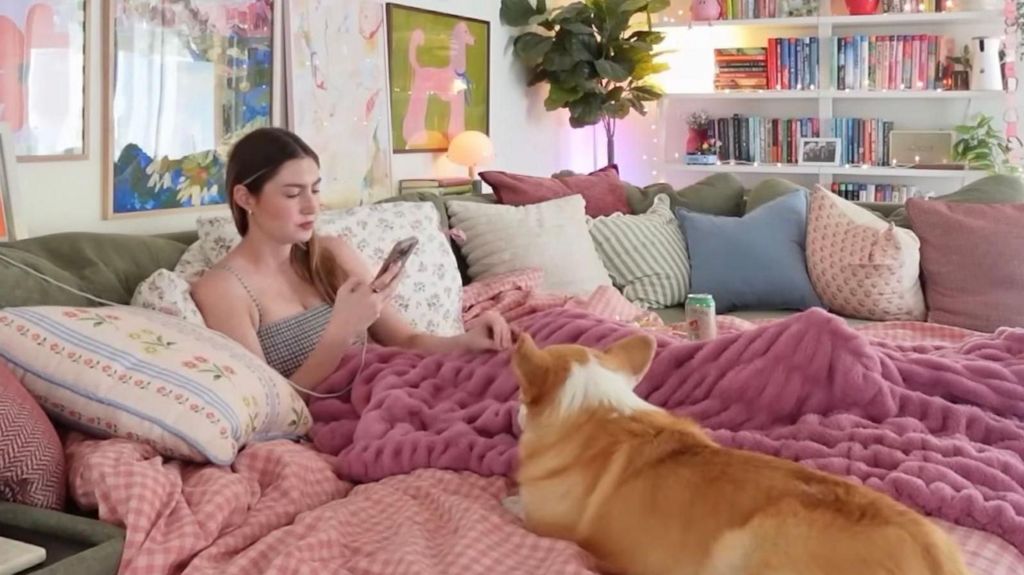
The creators push back hard against that narrative, arguing that their content does the opposite: it challenges the harmful stigma that equates being alone with being lonely. Devon Noehring, a full-time content creator and self-identified introvert based in Phoenix, Arizona, says it is frustrating to see her quiet solo weekends cooking and relaxing at home with her dog framed as a sign of female loneliness. ‘It’s the exact opposite intention of our videos,’ she said. ‘I just hate the stigma of alone equalling lonely.’ Though Noehring has a small circle of close friends, she grew up struggling with social anxiety and feeling ashamed of her preference for solitude. When she opened up about her insecurities online, she found a large community of fellow introverts who connected with her story. ‘Being alone is where I feel my most free and most like myself,’ she explained. ‘That’s how I recharge, and I feel very proud of myself for being independent and doing things alone… I think it’s something that should be celebrated.’
For UK-based cleaner SJ Hoadley, who calls herself an ‘accidental influencer’ after gaining a massive following inspired by Isa’s work, solo living was born out of unexpected upheaval, but it has become a source of strength. After leaving a seven-year abusive relationship, she moved to a new area where she knew no one and had to rebuild her life entirely. While the transition was shocking at first, she quickly learned to embrace her newfound independence. ‘I think sometimes my lack of friends tends to bother the people around me more than it bothers me,’ she said. ‘We never describe ourselves as lonely.’
Health researchers have weighed in on the conversation, working to destigmatize solitude by drawing a clear line between chronic, forced loneliness and intentional alone time. Professor Melody Ding, an epidemiologist at the University of Sydney who studies social connection and loneliness, notes that societal pressure creates a false expectation that people must be socially connected and happy 24/7. ‘Everybody’s lonely at some point, but some people are not OK admitting that,’ she said. That said, Ding cautions that while chosen solitude can be positive, humans are inherently social species, and prolonged, unchosen intense isolation can have negative impacts on both mental and physical health. ‘We survive better with companionship, with people around us,’ she explained, adding that her hope for people who have lost social connections is that they will eventually be able to build new, nourishing relationships over time.
Digital media experts say the rise of solitude content fills a critical gap in a social media landscape dominated by hyper-glamourized, aspirational content that fuels constant fear of missing out. Dr Anne Oeldorf-Hirsch, a University of Connecticut researcher who studies online community building, notes that there has been a growing backlash against the ‘highlight reel’ culture of mainstream influencer content, and audiences are hungry for more authentic, relatable stories. ‘There’s been this kind of long growing backlash against the idea that we’re seeing everybody’s perfect life, their highlight reel,’ she said. The appeal of solitude content, she explains, is that it provides much-needed balance to influencer culture, connecting creators and audiences around shared, authentic experiences. ‘We’re kind of trending towards these influencers that are more authentic, living their true life,’ Oeldorf-Hirsch said. ‘We just want to find people we relate to.’
Far from rejecting all social connection, the creators say their content has actually opened new doors for meaningful social interaction. Hoadley’s following has grown by tens of thousands of followers on some days, while Noehring’s videos have amassed millions of views across platforms. All three creators say their online communities have inspired them to pursue new in-person connections: Hoadley is excited about the prospect of finding a small group of girlfriends, Noehring hopes to organize an in-person meetup for her online community, and Isa says the support she has received has given her the push she needed to start considering making new friends again.
At its core, the movement is about rejecting one-size-fits-all expectations for a happy life, Hoadley says. ‘I think that what all the content is saying is: find your path,’ she explained. ‘It doesn’t have to be this one-size-fits-all that we keep getting pushed on social media.’