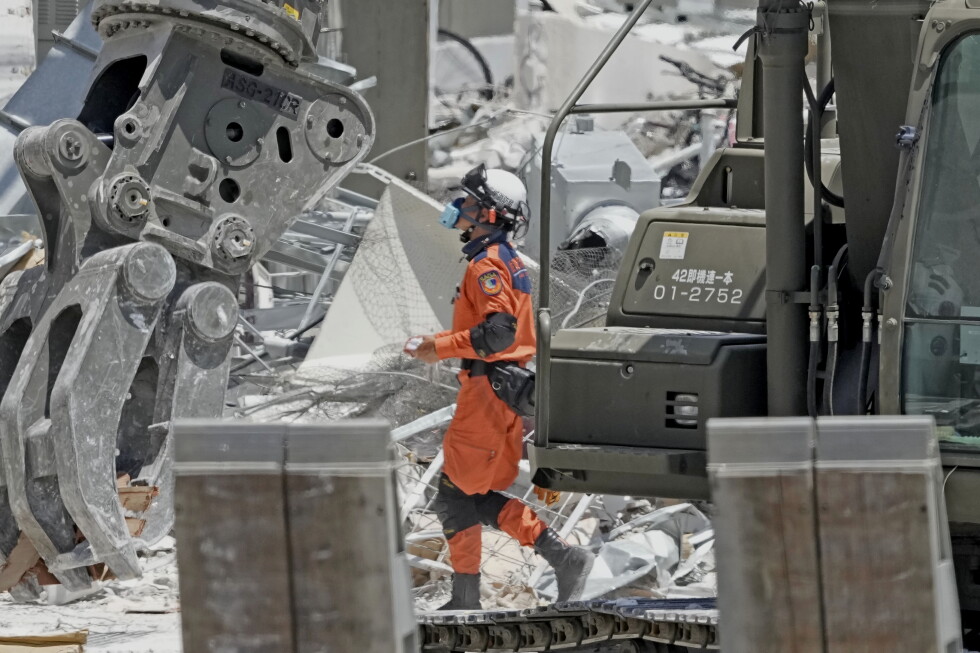
On Saturday, Japanese emergency authorities concluded a five-day large-scale search-and-rescue mission at the site of a collapsed regional shopping mall in Kumamoto Prefecture, four days after a powerful 7.1 magnitude earthquake struck Japan’s southern main island of Kyushu, leaving at least 34 people dead across the affected region. The Aeon Mall in the town of Kashima was counted among the disaster’s most heavily damaged locations: a post-quake explosion, which mall operator Aeon suspects was triggered by a gas leak, caused the structure’s second floor and multiple exterior walls to collapse. In the immediate aftermath of the tremor, roughly 3,000 visiting shoppers were safely evacuated to an adjacent parking lot, but a number of staff members remained inside the building to secure the facility, leaving them trapped when the structure gave way.
Over the course of the five-day operation, rescue teams pulled five survivors from the tangled rubble of the mall and recovered the remains of seven employees who did not survive the collapse. With all unaccounted-for people at the site now identified and located, officials called off active search efforts at the mall on Saturday. However, search operations across the wider Kumamoto Prefecture remain ongoing, as the total number of missing people across the region has not yet been confirmed. More than 5,000 personnel, including Japan Self-Defense Force troops, local police officers, specialized rescue workers and canine search teams, have been deployed to the affected area to continue looking for survivors.
At a separate high-impact site in Yatsushiro City, a large industrial chimney at the Nippon Paper Industries factory collapsed during the quake, trapping 11 on-site workers. Local officials confirmed Saturday that nine of those trapped workers have been found dead, while the remaining two were rescued and are receiving medical care. Across Kumamoto Prefecture, the earthquake has left 103 people with documented injuries, and authorities are currently investigating whether two additional deaths can be linked to the seismic event.
In addition to the human toll and structural damage, the prefecture is now facing a growing public health crisis driven by two overlapping crises: widespread disruptions to critical infrastructure and a record-breaking heatwave. As of Saturday, nearly 70,000 households across Kumamoto remain without access to clean potable water, and supplies of vehicle and generator fuel are running critically low, even as temperatures in Kumamoto City hit an extreme 36.6 degrees Celsius (97.8 degrees Fahrenheit) on Saturday. The sweltering conditions have raised urgent concerns about heat exhaustion and other heat-related illnesses among displaced residents.
More than 9,000 people are currently staying in overcrowded emergency evacuation shelters, which have been set up in repurposed community centers, school gymnasiums and public school classrooms. Many other displaced residents have chosen to sleep in their vehicles parked at municipal parking lots and public parks, or camp outside their damaged homes, in order to access greater privacy than crowded shelters can offer.
Longstanding criticism from disaster response experts has highlighted the dangers of overcrowded shelter conditions in Japan, noting that insufficient sanitation and a lack of personal space increase psychological stress for survivors and raise the risk of secondary public health outbreaks after a disaster. In response to these ongoing challenges, Prime Minister Sanae Takaichi reaffirmed the national government’s commitment to supporting response and recovery efforts during a Saturday meeting of the government’s disaster task force, urging rescue teams to leave no one unaccounted for across the affected region.
Takaichi added that relief supplies including bottled water, non-perishable food, portable toilets, mobile air conditioning units and privacy partitions are already being distributed to evacuation centers across the prefecture to improve living conditions for displaced residents. “The government is determined to do everything we can to support affected communities,” she stated.
As of Saturday, Kumamoto Prefecture has recorded more than 1,500 reports of power outages across the region, though the local Kyushu Electric Power Company said it had no immediate confirmation of widespread ongoing outages. Preliminary structural assessments from the Kumamoto prefectural government confirm that at least 180 homes have been completely destroyed by the quake, and nearly 3,500 additional buildings have sustained damage — a figure that has nearly doubled since Friday’s update — with 20 of those structures classified as severely damaged.