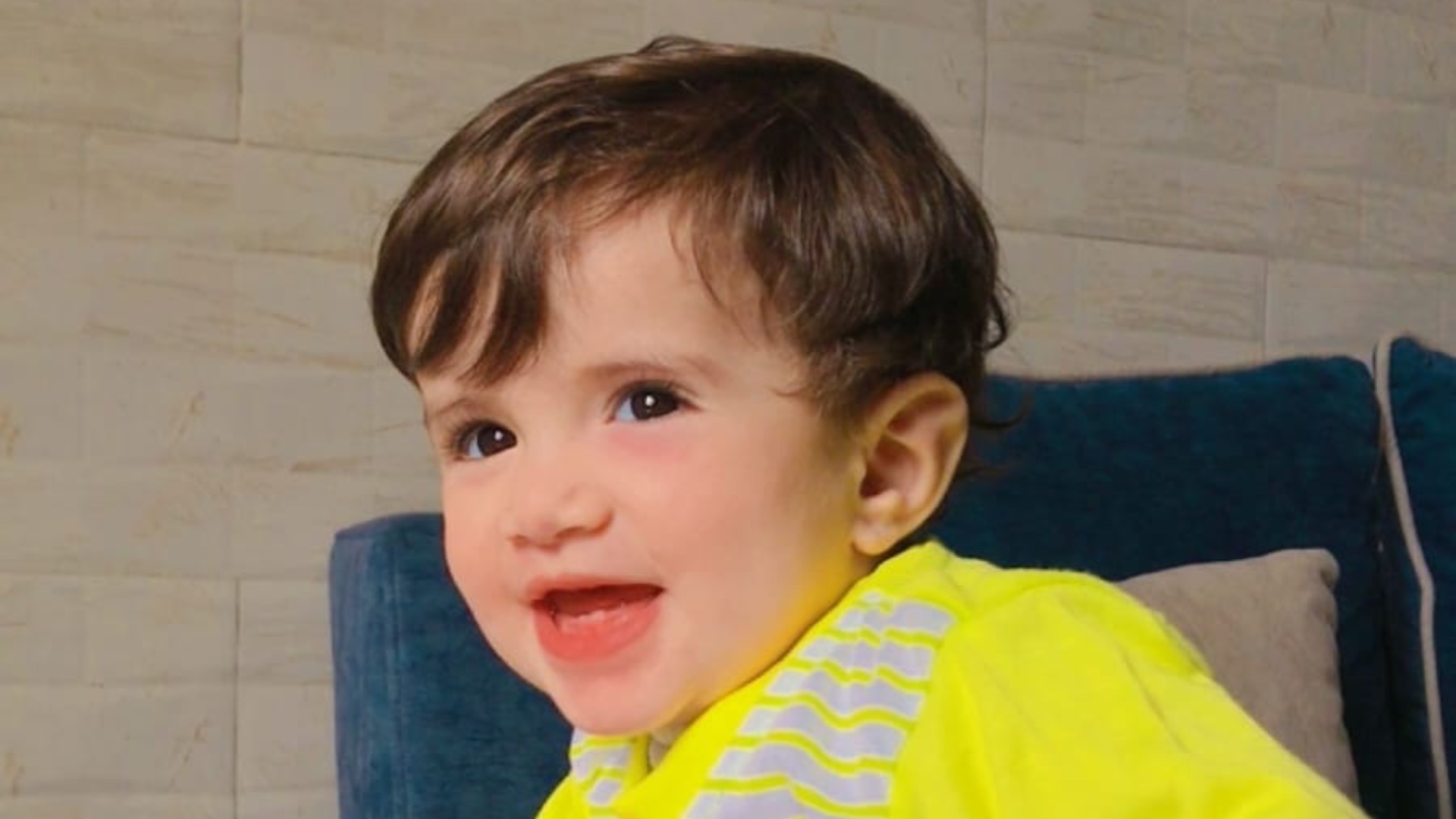
Deep in the al-Bureij refugee camp in central Gaza, 15-month-old Zaid Nofal lay sleeping in the sweltering pre-dawn darkness of a Gaza summer. Without a blanket to combat the oppressive heat, the toddler had been left by an open window to catch what little breeze stirred the humid air at 3 a.m. That quiet, ordinary moment was shattered in an instant when an Israeli airstrike slammed into the family’s home, burying Zaid beneath the crumbled concrete of what had just been a place of refuge.
Just meters from the collapsed rubble, Zaid’s 38-year-old mother Fatima Nofal stood frozen in disbelief, her clothes stained with blood and dust as neighbors screamed around her. For the Palestinian mother, this was not an entirely new horror. Zaid was the fourth son she had lost to Israeli violence, three older boys having been killed in a separate attack just two years prior. This home, partially destroyed in earlier conflict, had only just been rebuilt after a ceasefire was announced in October 2025.
“I still haven’t processed what happened. I remain in a state of profound shock,” Nofal told Middle East Eye in an interview from hospital, where she is recovering from burns to her feet. “All I remember is waking up just minutes before the strike. I moved to another spot because of the severe heat, leaving my little Zaid by the window so the breeze could help him sleep.”
Wounded in the blast, Nofal refused to evacuate before rescuers found her son. Neighbors poured in to help, slowly shifting piles of concrete and debris to reach the trapped toddler. When they finally pulled Zaid out, wrapped in a thin blanket, he was already dead. The attack reopened old wounds that had barely begun to scab over: the trauma of October 13, 2023, when an earlier Israeli airstrike took the lives of her three other sons.
That strike came early in the war that has ravaged Gaza since October 2023. Back then, Nofal and her family had fled their original home in al-Bureij, convinced they would find safety in the al-Sawarha area of the coastal town al-Zawaida, far from the border. “We realised the gravity of the situation and decided to flee because we thought it would be safer than staying near the border,” she recalled. “But we never imagined that the place we went to for safety would become where I’d witness the killing of my three sons and most of my husband’s family.”
That attack killed 16-year-old Amin, 11-year-old Hamza, and Ahmed, her newborn son who was just 22 days old. Nofal and her two young daughters were wounded, their home destroyed, forcing them into the cycle of repeated displacement that has defined life for nearly every Palestinian in Gaza over the past two years.
Ten months after she buried her three older boys, a glimmer of hope cut through the darkness: Nofal discovered she was pregnant. When she learned she was carrying another boy, her quiet hope grew into profound joy. Zaid was born on April 16, 2025, born into a war that never ended, but for his family he was more than a baby — he was a chance to fill the gaping hole left by the children they had lost.
“Zaid’s birth was the most significant event in our lives during the war,” Nofal said. “His arrival brought immense joy to the whole family; everyone celebrated him as a small miracle that came to light up our lives after long months and nights of pain and tears.” When relatives suggested naming him after one of his late brothers, Nofal refused. “I wanted him to have his own name and his own destiny,” she explained.
In the 15 months of his short life, Zaid became the beating heart of the home. His two sisters adored him, never wanting to be apart. “Whenever I took him to the clinic for vaccinations or check-ups, his sisters would wait for him on the stairs. They could not bear being away from him, even for a few hours,” Nofal said.
The latest airstrike that killed Zaid also left Nofal’s family fractured once more. Her eldest daughter Baraa suffered minor injuries, but 15-month-old Lina, her youngest daughter, is still hospitalized with head trauma. “When I visited her, the first thing she asked about was Zaid. I could not bring myself to tell her the truth while she was still wounded. I told her he was fine and waiting for her,” Nofal said, her voice heavy with unspoken grief. “I don’t know how I will tell her the truth when she is discharged.”
Nofal’s grief is compounded by the stolen childhood Zaid never got to live. “On the day he was killed, he was restless in the afternoon and wanted to go outside. I told his sisters how much I wished I could take him out, but there are no places left for children to play,” she said. “He spent his whole life indoors. Even his cousins had been killed in Israeli air strikes, so he had no one to play with.”
Zaid’s death is far from an isolated tragedy. Despite a ceasefire agreement reached in October 2025 that was meant to end the two-year war in Gaza, Israel has continued to carry out near-daily airstrikes across the besieged enclave. Official counts put the death toll from Israeli strikes at more than 1,200 people since the ceasefire took effect 10 months ago, with a total of more than 73,000 Palestinians killed since the war began in October 2023.
Children have borne the brunt of this ongoing violence. The United Nations Children’s Fund (UNICEF) reported in June that roughly 260 children have been killed in Gaza since the ceasefire began — an average of one child killed every day. UNICEF spokesperson James Elder called the situation a “cruel and deadly illusion of a ceasefire.”
On the same day Zaid was killed, another child lost her life in a separate Israeli strike: nine-year-old Ratil al-Abadla died when a bomb hit her uncle’s tent in al-Mawasi, where she had traveled just two days earlier for a brief break from the horrors of war. A video of her father, Abdullah al-Abadla, holding her small body and asking what his daughter had done to deserve such a fate spread rapidly across social media, a searing reminder of the pain shared by thousands of Gaza families.
The United Nations’ independent commission of inquiry has already confirmed it found clear evidence that Israeli forces have deliberately targeted Palestinian children, noting that these actions form part of the pattern of conduct that led the commission to conclude Israel has committed acts of genocide in Gaza.
For Nofal, however, no official report or global condemnation can bring back her four sons. As she divides her time between recovering from her own injuries and sitting by her injured daughter’s hospital bed, she now faces two new overwhelming struggles: finding a new place to call home after her house was destroyed once more, and finding the words to tell Lina that her baby brother will never come home.
“Israel is intent on killing us, and it needs no justification to do so,” Nofal said. “The fire is burning in my chest, and I do not know who will extinguish it.”