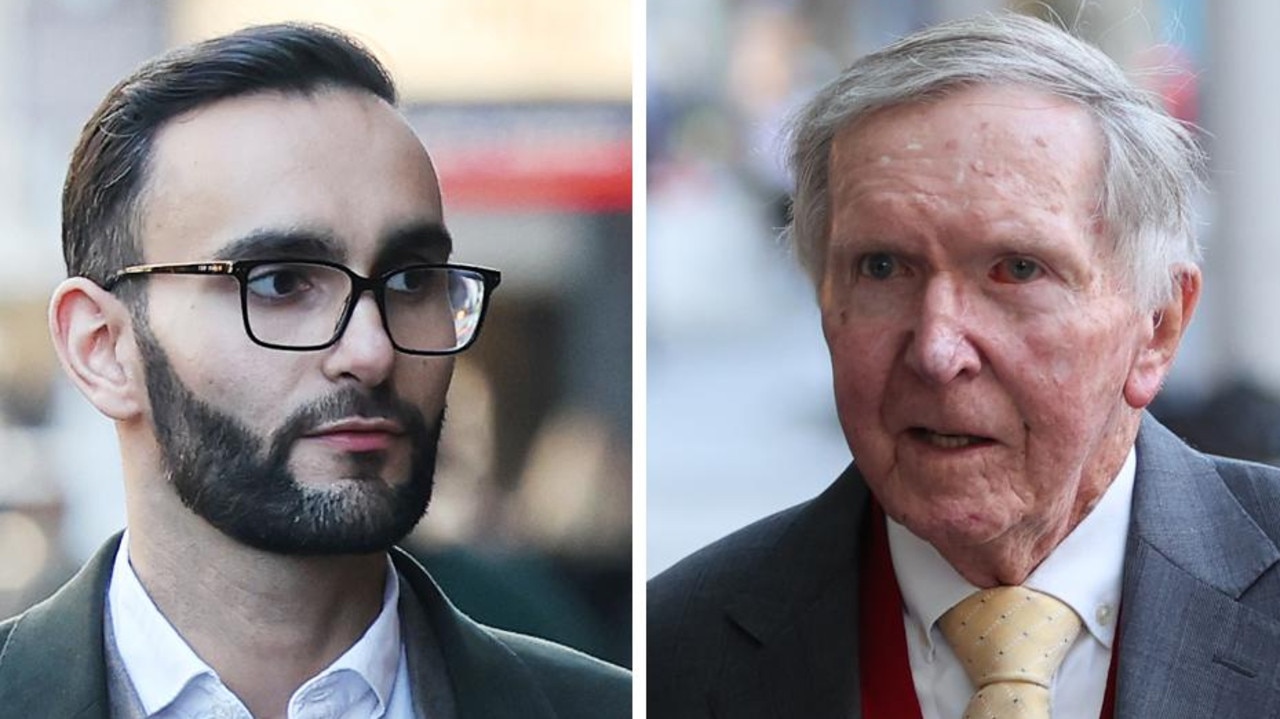
An ongoing, high-stakes eight-week corruption investigation run by New South Wales’ Independent Commission Against Corruption (ICAC) has pulled back the curtain on the covert internal operations of a secretive religious-aligned conservative faction operating within the state’s Liberal Party, with explosive testimony from key insiders laying bare alleged irregularities in political fundraising and tax practices. The inquiry centers on the faction, self-named the Reformers, which sought to expand its influence by recruiting thousands of conservative and Christian-identifying members to regional and metropolitan Liberal Party branches across the state. At the heart of the probe are questions over whether four central figures linked to the group — Jean-Claude Perrottet, brother of former NSW premier Dominic Perrottet, and influential Liberal powerbrokers Christian Ellis, Jeremy Greenwood and Robert Assaf — improperly solicited or accepted political donations, including from sources prohibited from contributing to Australian political parties, to fund the Reformers’ membership recruitment drives. Neither Dominic Perrottet nor federal Opposition Leader Angus Taylor, whose name has emerged in testimony, have been accused of any wrongdoing, and Taylor has explicitly denied ever providing funding to the faction. On Friday, co-founder of the Reformers Robert Assaf returned to the witness stand for a second round of intense questioning over the group’s convoluted handling of donations, including hundreds of thousands of dollars in funding from prominent Australian hotelier Michael O’Hara, who bankrolled the group until a bitter public falling out over state government Covid-19 public health mandates. Assaf co-founded the faction alongside Ellis, the owner of Sydney-based lobbying firm Beckington. The commission heard that the Reformers initially established a dedicated Westpac bank account under the group’s name to hold incoming donations. However, once Ellis launched Beckington — which held a lucrative monthly retainer contract for consulting work with Catholic Schools NSW — all donations were quietly rerouted through the lobbying firm instead. Giving evidence under oath, Assaf told counsel assisting the commission Peggy Dwyer SC that early discussions between group leaders focused on structuring O’Hara’s donations in a way that would deliver the maximum possible tax benefit, since the Reformers were not a registered charity, making direct donations non-tax-deductible for contributors. When pressed directly on allegations that the group created fake consultancy invoices to allow O’Hara to claim illegal tax deductions for his donations, Assaf acknowledged the idea was raised as a possible workaround, but deflected further questions by stating other group leaders would have more detailed knowledge of the arrangement. Dwyer sharply pushed back on Assaf’s vague testimony, questioning how a university-educated man who had filed personal tax returns for years could claim ignorance of basic Australian tax law governing deductions. “Are you seriously suggesting that in 2020 you did not know that you had to declare tax deductions in accordance with the law?” Dwyer asked. Assaf responded that he had trusted the guidance of other group leaders at the time, who framed the arrangement as a common, minor workaround that was widely accepted. “I think I thought I just want to trust that whoever said to me at the time, ‘I know everyone does a little, it’s OK. It’s a tricky way to do things’,” Assaf told the commission. When asked if Ellis had a long history of finding workarounds for regulatory rules, Assaf replied: “He always seemed to have a way around things.” The commission confirmed that O’Hara never requested his donations to the Reformers be disguised through fake invoice arrangements. Nonetheless, in October 2020, Ellis issued O’Hara a receipt for non-existent consultancy work to allow the hotelier to claim a tax deduction, according to evidence presented to the inquiry. Assaf denied that the arrangement was intentionally designed to conceal the true nature of the payments, admitting only that the accounting practices were sloppy. “Well, it definitely wasn’t good accounting,” he said. “I don’t think anyone was thinking like that … no one was (thinking) they were doing anything wrong.” When pressed by Assistant Commissioner Fabian Gleeson on whether the arrangement was dishonest, Assaf admitted the situation was “tricky”. Earlier in his testimony, Assaf — who previously worked on staff for multiple federal Liberal parliamentarians, including former prime minister Tony Abbott — acknowledged he had general awareness of Australian electoral laws governing political donations. However, he claimed he never received detailed training on these rules, as his role was focused on internal party operations rather than fundraising compliance. “I was never introduced to the electoral laws in detail because I was always seen as an internal machination Liberal Party person,” Assaf said. “There were always other people who dealt with that when it came money coming into the party. I’ll tell you what, if someone told me any point before I got my first summons to this, that what I had done was a problem, I would have gone straight to the Electoral Commission and recorded it and sorted it out.” The inquiry also heard that Beckington made payments to Assaf’s wife, Carmel Assaf, who was discussed as a potential director of the firm in 2019. When asked why Carmel Assaf would need to hold a directorship to receive a standard referral fee, a payment Assaf confirmed he also received from the firm, Assaf again described the arrangement as a “tricky thing” related to the organization’s structure. By 2021, the Reformers’ recruitment efforts had added more than 1,000 new members to the NSW Liberal Party, Assaf confirmed. The recruitment drive boosted the party’s overall revenue through increased membership fees and grew the faction’s voting bloc within internal party elections, the inquiry heard. Multiple other key witnesses have already given evidence in the probe, including former Reformers associate Dylan Whitelaw, who was an employee of Catholic Schools NSW, and O’Hara himself. Whitelaw’s testimony included details of a 2021 group chat message that claimed senior party figure Dallas McInerney had secured a $15,000 one-time donation to the Reformers from Angus Taylor, plus a recurring $3,000 monthly contribution. When asked about the allegation outside the hearing on Friday, Taylor declined to comment, saying “As I’ve said, I am not going to provide a running commentary.” Beyond the Reformers’ internal fundraising activities, the ICAC probe is also examining ties between fugitive property developer Jean Nassif and former Catholic Schools NSW chief executive Dallas McInerney, who has stood aside from his role pending the outcome of the inquiry. Investigators are probing allegations Nassif made donations to undermine the political career of Liberal MP David Elliott and force the removal of Building Commissioner David Chandler, who oversaw regulation of the state’s construction industry. The inquiry is also examining alleged misconduct by two Labor councillors from Sydney’s Strathfield area: Sharangan Maheswaran, an employee of Nassif, and Karen Pensabene. Maheswaran is alleged to have participated in a plot to discredit Chandler and to blackball independent political rival Matthew Blackmore, including by compiling a “dirt file” and threatening professional retaliation if Blackmore refused to align with Maheswaran’s political goals. It is important to note that ICAC does not have the authority to make formal findings of criminal conduct. Once the public inquiry concludes, any individuals found to have potentially engaged in criminal activity will be referred to the NSW Director of Public Prosecutions for further action and possible prosecution.