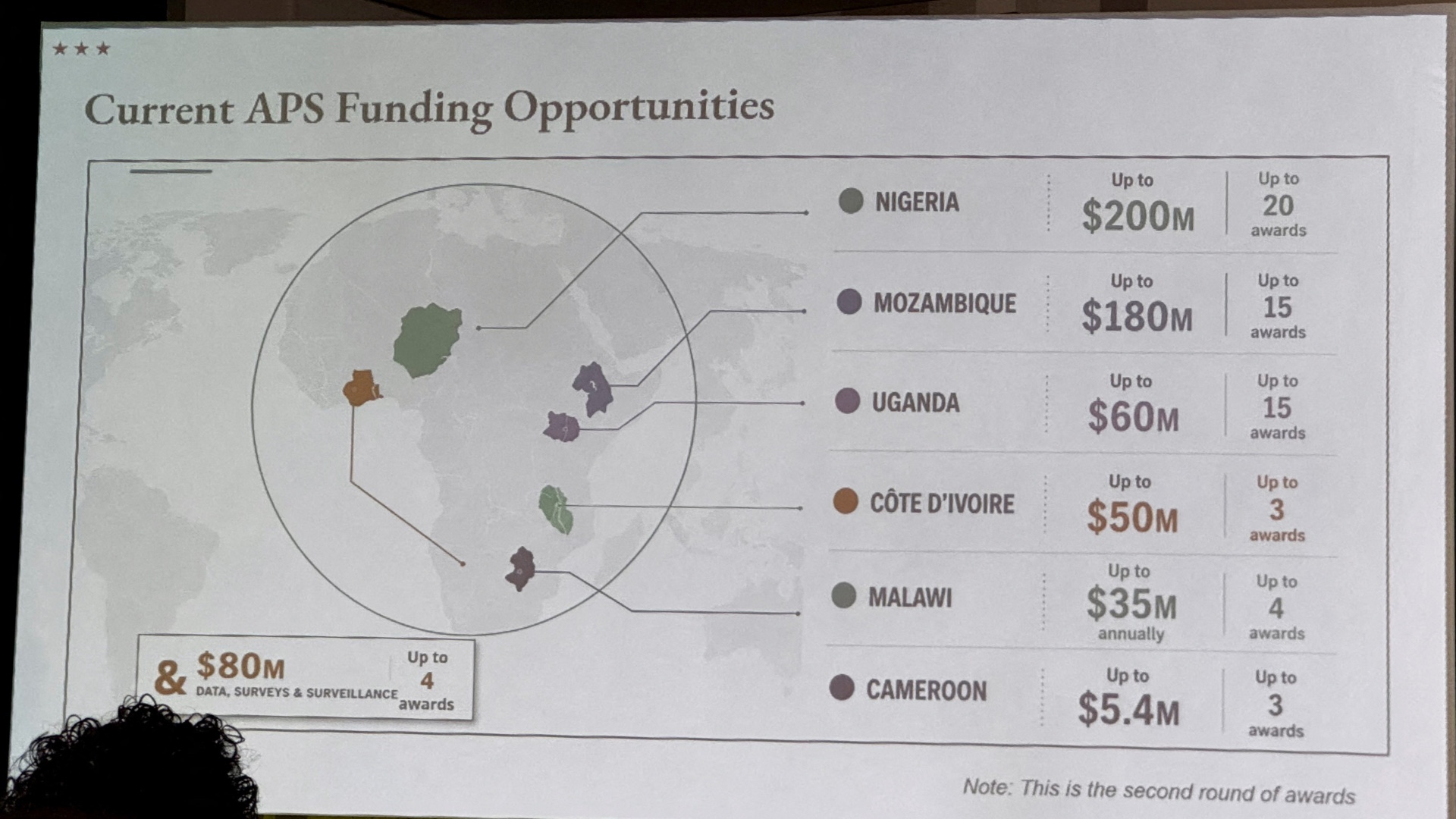
A controversial error by the Trump administration at an international AIDS conference in Rio de Janeiro, Brazil, has drawn widespread condemnation, after a slideshow presentation included a heavily inaccurate AI-generated map of African nations that the U.S. has public health partnerships with.
The presentation was led by Jeff Graham, the top U.S. envoy for the President’s Emergency Plan for AIDS Relief (PEPFAR), a landmark global HIV/AIDS initiative first launched during the George W. Bush administration. According to video footage of the event, which took place last week and reviewed by international news agency Reuters, the incorrect map bore watermarks confirming it was created with tools developed by OpenAI, the San Francisco-based artificial intelligence research firm best known for its ChatGPT large language model.
Multiple major geographic blunders riddled the map, which was intended to visualize the scope of U.S. AIDS-related health work across Africa. Nigeria, a country that holds a long Atlantic coastline in West Africa, was incorrectly depicted as a landlocked nation. Ivory Coast, another West African coastal country, was misplaced to the opposite side of the continent and also shown as landlocked. Mozambique, a southern African nation that sits across the Mozambique Channel from Madagascar, was incorrectly placed deep inland in the Horn of Africa, thousands of kilometers from its actual location.
In a statement to Reuters, the U.S. State Department accepted full responsibility for the error, attributing the mistake to a staffer who put the presentation together on short notice. Notably, the department issued no formal apology to African delegates and partners in attendance at the conference, while reaffirming that the U.S. remains committed to delivering “real results” in the global fight against AIDS on the African continent.
The embarrassing blunder has unfolded against a far broader and more consequential backdrop of sweeping restructuring to U.S. foreign assistance under the second Trump administration. As part of a policy push to streamline federal operations and cut government spending, the administration has moved to dismantle the U.S. Agency for International Development (USAID), America’s leading humanitarian and development aid provider, and slashed at least one-third of the nation’s foreign service personnel. What started as a 90-day freeze on new foreign aid allocations in early 2025 has since evolved into an almost total dismantling of the U.S.’s longstanding global humanitarian infrastructure.
Public health experts and former officials have sounded the alarm that these deep cuts will lead to hundreds of thousands of preventable deaths among the world’s most vulnerable populations, many of them children. Secretary of State Marco Rubio has repeatedly pushed back on these warnings, insisting “No children are dying on my watch” months into the administration’s cost-cutting drive.
But Atul Gawande, who served as USAID’s global health assistant administrator during the Biden administration, has warned the death toll will be staggering even in the first 12 months of the cuts. “You’re talking hundreds of thousands [of deaths] in year one at a minimum,” Gawande said. “Just on the reduction in immunisations, you’re talking about more than a million.” A separate analysis from the Center for Global Development estimates that cuts to U.S. humanitarian funding, the largest in the world, could lead to as many as 700,000 additional preventable deaths globally each year.