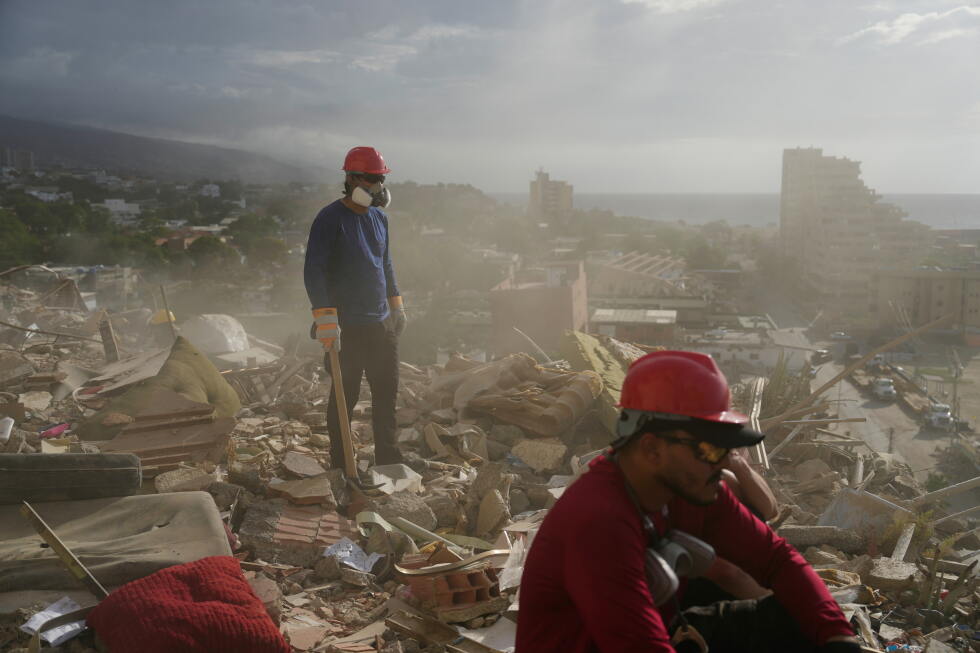
More than 30 days after a pair of powerful back-to-back earthquakes rocked Venezuela’s northern coastal region, the air in the most devastated neighborhoods of La Guaira still hums with the roar of heavy demolition and recovery equipment. Fine dust from crumpled structures lingers in the humid coastal air, uncollected waste has accumulated in debris-choked blocks, and hundreds of displaced families sleep out in the open beside homes declared structurally unsafe to enter. Water delivery trucks navigate cracked, buckled streets just to deliver basic supplies to stranded communities.
For Carolina de Jesús, Venezuela project director for the global humanitarian organization Project HOPE, who has worked in the disaster zone nearly every day since the tremors struck, the lingering stench of unretrieved bodies permeates hard-to-reach neighborhoods.
According to public health and environmental experts who spoke with the Associated Press, the coming weeks will be a make-or-break period to stop secondary disasters sparked by contaminated rubble and unregulated early recovery work from escalating into a far larger crisis. Official Venezuelan government data confirms the magnitude 7.2 and 7.5 quakes that hit on June 24, 2026 have already claimed more than 5,000 lives, injured nearly 17,000 people, and left roughly 18,000 people without permanent shelter. Authorities have not released an official count of missing persons, but independent estimates place the number of unaccounted for individuals in the tens of thousands. The World Bank has calculated that the earthquakes caused $19.6 billion in direct physical damage to infrastructure and property.
For survivors already grappling with a Venezuelan health system crippled by years of deep economic crisis, the steep environmental toll of the disaster is now becoming a daily threat to their health and safety. “There is hope, but also enormous pressure over what will happen tomorrow,” de Jesús said.
Many families are still clinging to uncertainty as they search for loved ones buried under collapsed buildings. Mary Cruz Andueza, 35, is one of these waiting relatives: her mother’s apartment tower, built as part of a state housing program launched under late President Hugo Chávez, crumbled during the quakes. “I don’t know if she’s alive, if she’s dead, if she’s in a hospital or still beneath the rubble,” Andueza said. Days spent searching near the rubble site left her seriously ill, she added: “We’ve had coughs, allergies, fever and headaches because we’re working so close to the collapsed buildings every day.”
The scale of the recovery challenge is staggering: officials estimate the quakes left roughly 1.2 million tons of building debris scattered across La Guaira. Much of this rubble is laced with hazardous contaminants including gasoline, motor oil, lead-based paints, industrial solvents, microplastics and other toxic materials released when structures collapsed. Experts warn that without careful sorting and safe disposal, these pollutants can leach into soil, groundwater and coastal waterways, creating long-term public health and ecological risks. La Guaira’s geography, where steep mountains rise directly behind dense coastal communities, leaves almost no flat, unused land available for safe debris storage or processing.
Joaquín Benítez, director of Environmental Sustainability at Caracas’ Andrés Bello Catholic University, explained that authorities are currently working to separate contaminated waste from reusable construction materials. Clean, recyclable material like crushed concrete will be repurposed for reconstruction projects, while hazardous waste including asbestos, chemical residues and fuel byproducts will need to be transported to specialized licensed disposal sites. Benítez also confirmed that in the chaotic first days of emergency response, when crews rushed to clear blocked roads to reach trapped survivors, some unprocessed debris was dumped along the shoreline or directly into the Caribbean Sea. Local journalists report this practice was stopped after the first few days of the disaster. If debris holding toxic fuels and chemicals reaches coastal waters, contaminants could degrade water quality for coastal communities and destroy fragile marine ecosystems. Large volumes of sediment and construction waste can also alter natural shoreline contours and damage critical coastal habitats like mangroves that protect inland communities from storms.
Diego Díaz Martín, president of Venezuelan environmental advocacy group Vitalis, warned that seasonal tropical rains, common to the region this time of year, could trigger deadly landslides on hillsides already weakened by earthquake damage. He added that many ecological impacts of the disaster remain hidden, as large swathes of the affected region have not yet been fully assessed by environmental teams. Martín called on Venezuelan authorities to incorporate long-term risk reduction into recovery planning, including banning new reconstruction in areas known to be at high risk of landslides. As of late July, the Venezuelan government has not responded to requests for comment on its plans to address the environmental and public health fallout of the earthquakes.
Access to safe, treated drinking water has emerged as one of the most pressing daily threats to quake survivors. Even when water trucks reach isolated communities, de Jesús noted, there is no guarantee the water has been properly purified to make it safe for drinking and cooking. Unsafe water and broken sanitation infrastructure have already driven increases in treatable but life-threatening conditions including diarrheal disease, urinary tract infections and skin infections, and have created ideal conditions for mosquito-borne viral diseases to spread.
“Earthquakes do not cause outbreaks by themselves. The risk comes from the post-disaster conditions,” explained Dr. Mauricio Cerpa, an epidemiologist with the Pan American Health Organization’s (PAHO) Emergency Operations Center. Overcrowded temporary shelters, destroyed water and sewer systems, disrupted routine healthcare and dropped vaccination rates all combine to create fertile ground for infectious disease outbreaks, he said. Cerpa added that Venezuelan health authorities have flagged 18 high-priority diseases and public health threats requiring immediate monitoring, including diarrheal illnesses, respiratory infections, dengue, malaria and measles. Even before the earthquakes struck, Venezuela’s national vaccination coverage had fallen far below WHO-recommended levels, making crowded shelter populations far more vulnerable to large outbreaks.
Health officials have made disease surveillance in temporary displacement camps an immediate top priority, and PAHO has deployed health teams to support mass vaccination campaigns and upgrade water and sanitation services across the disaster zone. Cerpa also warned that thousands of Venezuelans living with chronic conditions including diabetes and hypertension face elevated health risks if routine healthcare services remain interrupted by quake damage.
Thousands of civilian volunteers and humanitarian aid workers have stepped in to fill gaps in the official government response, which has faced criticism for slow coordination and limited access to hard-hit areas. De Jesús said many of these workers have already developed preventable respiratory illnesses after weeks of breathing fine silica and cement dust released during rubble clearing operations. Others have suffered dehydration and diarrheal illness after working 12+ hour days in the region’s sweltering tropical heat.
“One of the main challenges is how to recover all the essential care,” Cerpa said, noting that local hospitals must both restart routine treatment for chronic disease patients while meeting surging demand for disease surveillance, mental health support and maternal health care. Alycia Clark, vice president and chief pharmacy officer at international medical aid organization Direct Relief, said the earthquakes have worsened longstanding shortages of essential medications, trained healthcare workers and functional medical infrastructure that already left millions of Venezuelans without access to consistent care. Many patients are now at risk of missing life-sustaining routine treatment, she added.
Public health and environmental experts agree that the next phase of recovery will focus on three core priorities: restoring safe drinking water and sanitation services, rebuilding core health care capacity, and mitigating environmental hazards before they spiral into new, preventable disasters. Clark emphasized that the immediate, acute trauma response to the quakes will soon transition to a years-long public health challenge that will require sustained international support. “The needs are only going to increase from this point forward,” she said.
This coverage of climate and environmental issues from the Associated Press receives financial support from a network of private foundations. The AP retains full editorial control over all content. More information on AP’s standards for philanthropic partnerships, a full list of supporters, and a breakdown of funded coverage areas is available at AP.org.