Seventeen-year-old Salvatore’s daily life is defined by the burden of his 170kg frame. Simple, routine tasks that most teenagers take for granted – from tying their own shoelaces to riding a scooter – have become overwhelming challenges. Even his Vespa cannot withstand his weight: its wheels have broken seven times in a single week. “He eats constantly,” explains his mother Anna, a quiet witness to her son’s struggle. Today, Salvatore is just one of thousands of Italian children and adolescents grappling with severe obesity, a public health crisis that has hit the country’s southern regions particularly hard. In some areas of Campania, more than 40% of eight- and nine-year-olds are classified as overweight, and Ponticelli, a small town on the outskirts of Naples, has gained a grim distinction as one of the global capitals of childhood obesity.
This crisis marks a striking reversal for a country long celebrated as the birthplace and spiritual home of the world-renowned Mediterranean diet, held up for decades as a global blueprint for healthy eating. The diet, rich in leafy vegetables, legumes, extra-virgin olive oil, whole grains and fatty fish, rose to global prominence after 1950s research by American physiologist Ancel Keys and biochemist Margaret Keys, who linked the traditional eating habits of southern Italian communities to dramatically lower rates of heart disease. But according to public health experts, the Italy that inspired that landmark research no longer exists. “The traditional Mediterranean diet has been lost,” says Dr Valter Longo, director of the Longevity Institute at the University of Southern California. “Only 10% of Italians really follow it.” Dr Longo summarizes the modern Italian diet by its “five Ps”: pizza, pasta, potatoes, protein and pane (Italian for bread) – a far cry from the balanced, nutrient-dense eating patterns that made the country a global model for health.
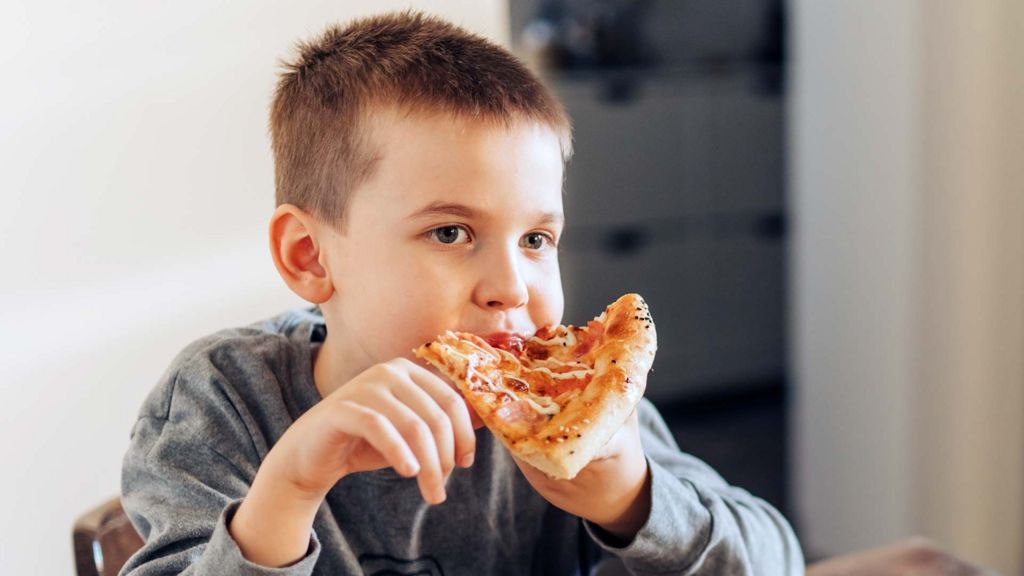
The shift away from traditional diet is visible everywhere across Italy: from supermarket shelves packed with ultra-processed snacks and sugary drinks to neighborhood pizzerias selling oversized slices topped with fried chips, processed sausages and other high-calorie fried add-ons. Pediatric obesity specialist Dr Roberto Berni Canani, based at Naples’ Federico II University, sees the life-altering consequences of this shift every single day. “I’ve treated children who are just two or three years old and already weigh 25kg,” he says. What alarms him most, he adds, is that most parents do not recognize their children’s unhealthy weight as a problem. Families usually visit his clinic for unrelated symptoms – persistent coughs, chronic stomach pain, recurring diarrhea – and rarely connect these issues to their child’s excess weight.
Ten-year-old Francesca, who weighs 60kg, is a typical example. She came to Dr Berni Canani seeking care for a persistent cough and difficulty swallowing, which doctors suspect is caused by esophageal inflammation; her weight was never a concern for her family. Francesca describes her daily diet: bread and Nutella for breakfast, a chocolate-filled sponge cake for a mid-morning snack, pasta with lentils for lunch, and chicken for dinner – with no vegetables at all. “I put them in front of her, but she won’t touch them,” her mother Carmen explains. Even though Francesca participates in artistic gymnastics and Latin dance, her parents have never viewed her weight as a health risk. Dr Berni Canani explains that the issue is not any single meal, but the cumulative effect of constant small servings of calorie-dense food, excessive sugar, insufficient produce, and a widespread lack of awareness among families of how these habits add up over time. “These are good parents,” he says. “They simply don’t recognise the importance of diet quality and body weight.” By the time many families seek care, unhealthy eating and lifestyle habits are already deeply ingrained, shaped at home and reinforced by gaps in the school system.
In much of Italy, encouraging consistent physical activity for children faces unexpected structural barriers. Many schools are housed in centuries-old historic palazzos that were never designed to accommodate modern physical education programs. At Naples’ Ugo Foscolo primary school, the school gym is so small it barely has enough space for a full class of children to move around freely. Teacher Francesca Pecce says she struggles to get parents to take childhood obesity seriously, in part because of deep-rooted cultural attitudes. “In Neapolitan culture, if a child is a little chubby with rosy cheeks, people often think they’re healthy,” she explains. Pecce believes schools can drive cultural change, particularly by teaching children healthy habits that they then bring home to their parents: “Sometimes it’s easier to educate the parents through their children than the other way around.”
Regional authorities are now testing large-scale interventions to reverse the crisis. In Naples, secondary school students are participating in nutrition workshops run by the Valter Longo Foundation, part of a regional program that will reach more than 17,000 students across 25 schools, with added support for families to adjust eating habits at home. Not all young participants are convinced that education alone will shift behavior. Eighteen-year-old Ciro argues: “My classmates already know what’s healthy. They just don’t care.” Nineteen-year-old Carmen, however, says the workshops fill a critical gap, noting that temptation is everywhere, and even traditional Italian foods have become far less healthy: “When we go out for pizza, people don’t just order a Margherita. They put chips, sausages and fried food on top.” Compounding the issue is a longstanding cultural norm: Italian mothers and grandmothers have long expressed love through generous servings of food, creating a perfect storm of factors that drive excess weight gain.
The World Health Organization classifies obesity as an “escalating global epidemic”: more than one billion people worldwide live with obesity today, and childhood obesity rates have quadrupled since 1990. In 2025, Italy made history as the first country to pass a national law formally recognizing obesity as a chronic, progressive, relapsing disease, framing it not as a simple failure of personal choice, but as a complex condition shaped by biology, environmental factors and social circumstances. Campania has become a testing ground for this new approach, rolling out a series of ambitious interventions, including a controversial trial of a “fast-mimicking diet” for overweight adolescents. Researchers are recruiting 300 participants for the trial, which puts subjects on a severely restricted 1,100-calorie diet on day one, followed by four days of just 770 calories per day, repeated every three months. The goal of the program is to trigger what researchers call a “metabolic reset” that rewires unhealthy eating patterns. Dr Longo, who has studied the effects of fasting for three decades, says: “Fasting, or controlled deprivation of food, is linked to a longer and healthier lifespan.” But the approach has divided medical experts. Dr Berni Canani argues that there is still too little clinical evidence supporting the safety and efficacy of fasting-mimicking diets for children to recommend them in national guidelines, and he warns that strict restrictions could carry serious psychological risks for adolescents, who are still developing a healthy relationship with food. “I fear that imposing food restrictions on teenagers could increase the risk of eating disorders, anorexia and body dysmorphia,” he says.
Back at Betania Hospital in Ponticelli, Salvatore waits for a chance at life-changing bariatric surgery. Dr Sonja Chiappetta, who has treated severe obesity at the hospital for 15 years, says the patient demographic has shifted dramatically in just a decade: “Until recently, most of my patients were in their fifties. Now I see those same patients when they’re teenagers, as young as 16. They are getting younger, and it’s frightening.” The bariatric procedure Dr Chiappetta performs removes up to 90% of the stomach, limiting the amount of food patients can consume, and demand for the surgery has surged across southern Italy. For Salvatore, however, surgery is not yet possible: his weight is so excessive that the procedure would carry life-threatening risks. Instead, he is currently taking GLP-1 weight-loss injections to reduce his appetite and lower his weight enough to qualify for surgery. Salvatore hopes he will be able to have the operation this summer, allowing him to do something he has not done in years: wear a swimming suit in public without feeling crippling self-consciousness. His story is just one of thousands across Italy, where a generation of children is growing up increasingly disconnected from the Mediterranean diet legacy that once made the country a global model of health.