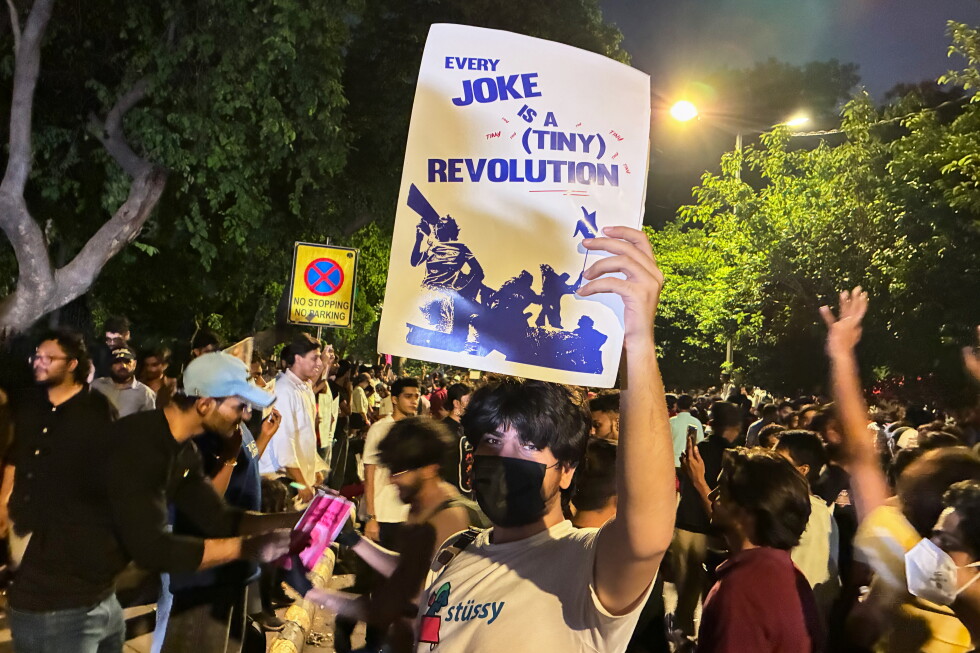
In the bustling streets of New Delhi, thousands of young Indian demonstrators have launched a dual-front movement that is redefining modern political protest: while mass gatherings put direct pressure on authorities off-line, a creative, humor-fueled digital campaign is winning the battle for online narrative, turning the same social media infrastructure that built Prime Minister Narendra Modi’s political brand against his administration. What began as a single-issue outcry over education system corruption has rapidly evolved into a broad youth movement that challenges long-standing taboos around criticizing the image-conscious prime minister, using satire and viral content to sidestep traditional government censorship and crackdowns.
Rooted in anger over a series of high-profile exam leaks—including the illegal distribution of answers for India’s national medical college entrance exam that has jeopardized the career prospects of millions of aspiring students—the protests first erupted one month ago. Demonstrators initially called for the resignation of Education Minister Dharmendra Pradhan, but public frustration quickly expanded to demand broader government accountability, spreading to major cities across the country.
The driving force behind the movement’s digital and cultural expansion is the Cockroach Janta Party, a satirical grassroots collective that coined the movement’s identity two months ago. The group has turned humor and meme culture into a powerful tool of resistance, giving Generation Z and young millennial Indians a language that matches their digital-native habits to express widespread discontent. “We find long, formal speeches boring. We’re the summary generation—we consume content in quick, bite-sized chunks, so we use that same format to spread our message,” a 23-year-old student protester explained to The Associated Press, speaking on condition of anonymity over fears of government retaliation.
This satirical approach has shaped every part of the movement, from online content to on-the-ground demonstrations. Even violent clashes with police have been reframed as viral, shareable content: protesters joke about maintaining their fitness streaks on the tracking app Strava while fleeing baton charges, and edit footage of dodging police barricades to mimic gameplay of the popular endless runner mobile game Subway Surfers. Young female activists have adapted influencer culture for protest, posting “get ready with me” tutorials before marches and “fit check” posts highlighting homemade safety gear like helmets and goggles. Pro-government television anchors, who have repeatedly framed demonstrators as “anti-national” actors backed by foreign conspiracies, have become common targets of parody videos mocking their over-dramatic broadcast styles.
At the main New Delhi protest site, the influence of digital meme culture is impossible to miss. Demonstrators wear pop culture costumes like Spider-Man and Batman, carrying placards laced with irreverent jokes and references. One sign featuring Education Minister Pradhan quips, “When will AI take his job?” Another sums up the movement’s core ethos: “Every joke is a (tiny) revolution.” While some slogans lean into profane, edgy language that would be unheard of in traditional Indian political protest, activists say it is simply the natural language of their generation.
For Modi, who has held national office for nearly 13 years and built his political dominance around a carefully curated public image of strength and decisiveness, this humorous grassroots challenge poses an unprecedented dilemma. With nearly half of India’s population under the age of 25, young voters make up one of the country’s largest and most influential electoral blocs. A heavy-handed crackdown on the movement risks alienating this critical demographic, but allowing the mockery to continue unchallenged erodes the carefully cultivated authority Modi has built over his decade in power.
Most notably, the movement has broken a long-standing unwritten taboo: direct public mockery of the prime minister himself. For years, criticism of Modi was often muted during public protests due to widespread fears of government retaliation against dissent. Today, however, Modi’s own gestures, speech patterns and mannerisms are regularly edited into viral political jokes that circulate widely across social platforms.
When Modi released a late-night, selfie-style video addressing the protesters last week, promising swift legal action against those responsible for exam leaks, social media users quickly responded with a wave of parody edits. The clips added satirical voice-overs calling out unfulfilled campaign promises from Modi’s past terms. One of the most viral edits cut directly from Modi opening his address by calling protesters “friends” to a clip of three young women staring directly into the camera and responding, “No, we are not.”
For the protesters, this tactic is not just about comedy—it is about fighting the government on its own turf. “There is no better way to challenge Modi than using the same social media that helped him build his political brand,” a 21-year-old student said. “We’re just answering him in his own language.”
Beyond the political punchline, young activists say the humor serves a deeper purpose: it is a coping mechanism for a generation that has far less patience for unaddressed injustice than older cohorts. “If our phone data runs out mid-day, we can’t even stand that inconvenience. So of course we’re not going to tolerate this systemic corruption that’s ruining our futures,” a 25-year-old protester explained, noting that the meme-driven movement reflects a core generational shift. Unlike previous generations that were socialized to endure hardship quietly, she said, young Indians today refuse to “simply put up with” a system that they say has failed them. The satirical digital campaign has expanded the movement far beyond its street protest roots, growing its reach and ramping up pressure on an administration that has been careful not to be seen caving to the fast-growing youth movement, even as it struggles to counter the protesters’ narrative.