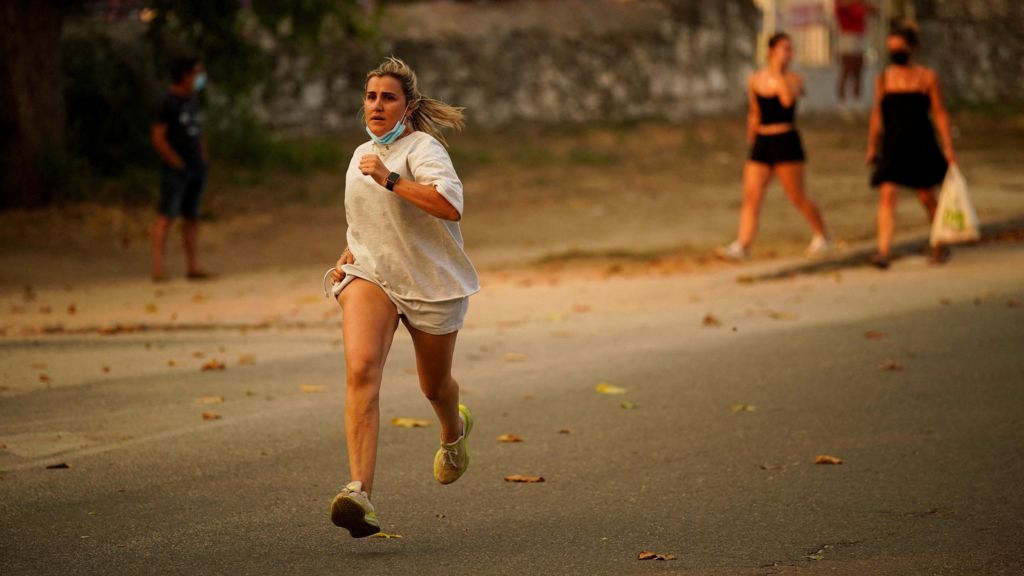
As southern Europe grapples with record-breaking heatwaves and prolonged drought, catastrophic wildfires have erupted across France and Spain, forcing tens of thousands of residents to flee their homes and overwhelming emergency response capabilities.
In central Spain, three separate blazes west of Madrid merged into a single massive inferno that regional officials describe as the worst wildfire in the region’s recorded history. Spanish authorities have declared a national emergency after the blaze spun completely out of control, with at least 30,000 people evacuated and an additional 20,000 placed under mandatory lockdown. Madrid’s regional president Isabel Díaz Ayuso characterized the event as a perfect storm of extreme heat, unrelenting gusty winds, and converging fire fronts that has created an unprecedented challenge for first responders.
Carlos Novillo, Madrid’s regional emergency management chief, confirmed that the wildfire is currently beyond the containment capacity of firefighting teams. “It is not possible to attack the fire in that area, so defensive measures are being taken,” he told reporters, noting the blaze is advancing toward the municipalities of Robledo de Chavela and Fresnedillas de la Olivia, roughly 50 kilometers outside the capital. Spain’s Military Emergency Unit has been deployed to slow the fire’s progress, with priority placed on protecting populated areas near the historic town of El Escorial.
Emergency crews are also racing to prevent a second large wildfire in nearby Ávila province, the 15,000-hectare Burgohondo blaze, from merging with the Madrid fire. “Authorities are doing everything we can” to stop the two fires from combining, Spain’s Interior Minister Fernando Grande-Marlaska said. As of Friday, more than 15,000 total hectares of land have been burned across the Madrid and Ávila regions, with eight full municipalities fully evacuated and three additional towns locked down.
Local officials report the fire’s spread has been alarmingly rapid: the mayor of El Tiemblo in Ávila said flames covered 20 kilometers of terrain in less than 30 minutes. For 86-year-old Ecologio Cabrera, who fled his village west of Madrid with hundreds of other evacuees seeking shelter in a Vilamanta sports hall, the disaster is unlike anything he has ever experienced. “If you don’t run from it and you try to face it, it devours you,” Cabrera told reporters. His family had attempted to protect their home with garden hoses before firefighters ordered a full evacuation.
Spanish authorities have opened an investigation into the Burgohondo blaze, with one person arrested and a second person under investigation for alleged negligence related to heavy machinery use during a period of high fire risk. Spanish Prime Minister Pedro Sánchez is scheduled to visit the region’s emergency coordination center on Saturday to assess the response, after describing the situation as dramatic and urging residents to exercise extreme caution.
Across the border in southwestern France, the situation is equally dire, with more than 110,000 people evacuated after wildfires tore through the Gironde and Landes regions. The Gironde blaze, labeled an “XXL fire” by local prefect Sophie Brocas, has burned more than 19,000 hectares of forest and destroyed roughly 80 homes. The entire Cap Ferret peninsula, a popular summer tourist destination, was fully evacuated, with hundreds of visitors and residents escaping by boat as flames swept through coastal communities. While the peninsula has a year-round population of less than 8,000, seasonal numbers can surge to 80,000 during peak summer travel.
Fire officials note conditions are even more severe than the devastating 2022 wildfires that hit the same region, with prolonged drought turning vegetation into dry tinder that allows fires to spread through the night. “We have never seen a convective fire of this magnitude,” French Interior Minister Laurent Nuñez told broadcaster TF1, adding that roughly 50 firefighters have been injured in containment efforts. On Friday evening, the blaze shifted direction and began advancing east toward the major city of Bordeaux, prompting plans for additional evacuations. French President Emmanuel Macron has mobilized military forces to support the response and activated the European Union’s civil protection mechanism to request international reinforcements, which will include two Black Hawk helicopters from the Czech Republic and Slovakia.
Further south in the Landes region, a second blaze near Biscarrosse forced more than 23,000 people to evacuate from homes, campsites, a nursing home, and a youth summer camp. Landes prefect Gilles Clavreul said the fire could not be extinguished on Friday, with sustained winds of 50 kilometers per hour and temperatures hovering near 37 degrees Celsius creating extreme fire conditions. Local leaders say the prolonged stretch of extreme, dry heat is unprecedented. “We have faced extreme weather conditions for the last month and a half” with no rain and above-average temperatures, said Philippe de Gonneville, mayor of the hard-hit town Lège-Cap Ferret. “It’s unheard of. Neither we nor the firefighters have seen anything like it.”
The simultaneous outbreaks come as southern Europe grapples with a growing climate-fueled wildfire crisis. Data from the EU’s Copernicus Climate Change Service confirms Europe is warming at more than twice the global average, creating hotter, drier conditions that leave vegetation parched and primed for ignition. Most wildfires require a spark, often from human activity or lightning, but extreme heat, low moisture, and strong winds allow fires to spread rapidly and become nearly impossible to contain. This year alone, wildfires have burned more land across Europe than the annual average recorded over the past two decades, according to the European Forest Fire Information System. The European Environment Agency has warned that climate change has significantly increased forest fire risk across the continent, with the most severe danger concentrated in southern Europe. The European Union has already deployed additional aircraft and helicopters to support cross-border firefighting efforts in both Spain and France as authorities work to bring the blazes under control.