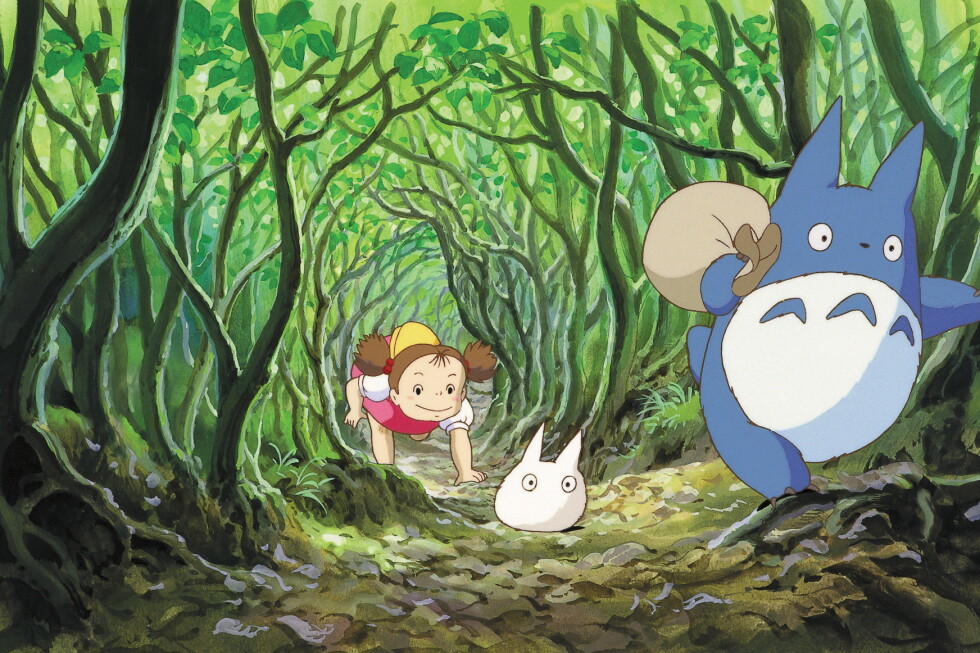
For Amanda Mendoza VanCleave, the annual arrival of Studio Ghibli Fest is a date she marks on her calendar without fail. For 10 years, this recurring program of theatrical rereleases of beloved Studio Ghibli animated films has grown into a treasured intergenerational tradition for VanCleave, her 3-year-old daughter, and her mother Araceli, who make a point of catching every rereleased title on the big screen at their local Austin, Texas cinema.
VanCleave laughs recalling her daughter’s excited reaction to the opening Totoro title card of *My Neighbor Totoro* — an unplanned outburst that drew gentle laughter from the entire theater. Though the family first discovered Ghibli’s catalog on the streaming platform HBO Max, their annual theater outings have become a beloved shared ritual. During a recent screening of Hayao Miyazaki’s 1988 classic, the trio even attended in matching Totoro pajamas. “It’s been our thing: us three girls together,” VanCleave says.
Studio Ghibli’s ability to inspire fierce, enduring fandom is widely known, but its consistent theatrical draw decades after its films’ initial releases is unparalleled in global cinema. Every year, audiences ranging from lifelong Ghibli devotees to young first-time viewers flock to cinemas for Ghibli Fest, which runs across select dates from June through October each year. What began as a small retrospective series has evolved into an annual cinematic marathon, turning timeless titles like *My Neighbor Totoro*, *Spirited Away*, and *Ponyo* into permanent theatrical mainstays rather than one-off rereleases.
When GKids, Studio Ghibli’s North American distributor, partnered with Fathom Events to launch the formal Ghibli Fest in 2017, five films generated $5 million in total ticket sales. What has surprised industry insiders is that the event’s growth has only accelerated since Ghibli’s full catalog became available to stream on HBO Max in 2020 — the last three consecutive years have been the festival’s highest-grossing on record.
“I’d be lying if I thought the program when we conceived it would be going as long as it has,” says Dave Jesteadt, president of GKids. “It does defy conventional wisdom. We keep waiting for the year that people tire of going to the films, but that’s not what’s happening. Every single year, we see records being set. The grosses are going up, not down.”
2024 has marked the festival’s most successful year to date: 14 titles have grossed $16.4 million in ticket sales, up from $10.6 million for eight films in 2023. Already this year, *Ponyo* and *My Neighbor Totoro* each sold out five-day theatrical runs that were added to meet overwhelming fan demand. Shannah Miller, Fathom Events’ vice president of marketing, says audience demand has pushed the festival to expand its reach dramatically over the years. “When we started, I think our theatrical footprint was about 640 locations. This year, we’re crossing over 1,100 locations. We started with two, maybe three playdates for a particular title, but due to fan demand, we have five-day runs for some titles.”
When GKids first acquired distribution rights to the full Ghibli library in 2011, the Japanese animation studio emphasized how critical theatrical screenings were to its creative vision. Early retrospectives were limited to small arthouse cinemas in major cities, but Ghibli Fest brought the films to mainstream multiplexes across the U.S., introducing a new generation of young viewers to animated storytelling outside of Disney’s offerings. “One of the worst things that can happen to classics is that they’re perceived as classics and kept in amber,” Jesteadt says. “We wanted to move to a nationwide celebration that really treated these as equivalent to any new Hollywood film.”
As overall U.S. moviegoing attendance has risen more than 10% in 2024, theater chains have increasingly leaned on classic film rereleases to fill gaps in release schedules and boost attendance on slow weekdays. Ghibli Fest paved the way for this repertory trend years ago, and its long-term work has cultivated an entirely new generation of Ghibli fans: while older audiences often first fell in love with Miyazaki’s 2001 Oscar-winning masterpiece *Spirited Away*, many younger viewers now discover the studio through lighter, whimsical titles like *Ponyo* or *Howl’s Moving Castle*.
When Ghibli’s catalog launched on streaming in 2020, industry observers predicted theatrical attendance would decline. Instead, streaming introduced Ghibli to millions of new viewers who then sought out the experience of seeing the films on the big screen for the first time.
The 2024 Ghibli Fest lineup continues through October, with upcoming screenings including *Tales of Earthsea*, *Only Yesterday*, a 40th-anniversary presentation of 1986’s *Castle in the Sky*, a 4K remaster of *Princess Mononoke*, and a 25th-anniversary run of *Spirited Away*. While occasional Ghibli rereleases happen in other countries, the annual Ghibli Fest phenomenon is unique to the U.S.
“We are equally in awe of and proud of what we’re building and the opportunity to celebrate instead of all the doom and gloom, ‘Is theater dead?’ conversations,” Miller says. “We have a different story to tell with Studio Ghibli.”
Outside of Ghibli Fest, Studio Ghibli’s cultural dominance continues to grow: Los Angeles’ Academy Museum is currently hosting a new special exhibit dedicated to *Ponyo*, and legendary Ghibli composer Joe Hisaishi is touring a concert series of the studio’s most famous scores, including a seven-night residency at New York’s Radio City Music Hall this August. But for fans, nothing compares to seeing the films on the big screen.
Angela Lector, a 27-year-old lifelong Ghibli fan, has attended festival screenings in costume as *Howl’s Moving Castle*’s protagonist Sophie and connected with Japanese film students at a showing of *Princess Mononoke*. “Being in the theater is so much more fun than being on HBO Max,” Lector says. “Being in your home, you can make your own popcorn and cuddle up with your dog. But being in the theater you can actually talk to people you don’t know about the movie.”
The only common complaint from fans is that the festival does not include more underrated deep cuts from the Ghibli catalog; Lector for one hopes to see 1984’s *Nausicaä of the Valley of the Wind*, Miyazaki’s pre-Ghibli classic, added to future lineups. “The Ghibli films are timeless. There’s something for everyone in them,” Lector says. “Everything feels human. No one is too powerful or too small.”
That inclusive, welcoming energy extends to the audience as well. VanCleave recently noticed her daughter’s preschool classmate wearing a signature hair bow like Kiki from *Kiki’s Delivery Service*, struck up a conversation with the girl’s mother, and discovered the family also loves Ghibli. She ended up inviting them to this year’s *Ponyo* screening — which marked the young girl’s first ever trip to a movie theater. “It was cute,” VanCleave says. “The two 3-year-olds shared a recliner.”