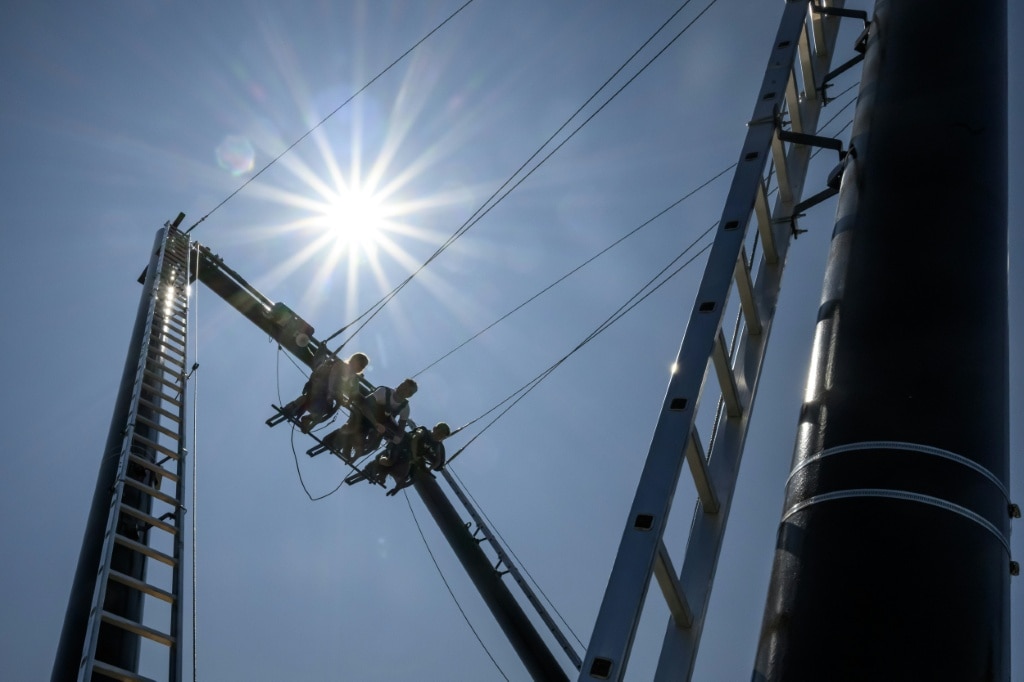
Beneath the bright summer sun of the Swiss Alps, piercing shrieks—half thrill, half nervous excitement—cut through the crisp mountain air as a chairlift approaches Grand Chamossaire peak, the centerpiece of Villars ski resort. Perched 2,110 meters above sea level, a striking 12-meter V-shaped steel structure holds the resort’s newest star attraction: a giant swing that launches riders out over a steep, open void, with sweeping panoramic views of snow-dusted Alpine peaks and rolling green valleys stretching out before them.
The attraction, which opened to the public earlier this month, is far more than just a new adventure activity for thrill-seekers. It represents a strategic, long-term adaptation by Alpine ski resorts to a shifting climate, as rising temperatures make winter snowfall increasingly unpredictable at many mid-altitude mountain locations. For Villars-Gryons-Diableret, the region that manages the Villars resort, the goal is simple: diversify tourist offerings to draw more off-season visitors, put underused ski lift infrastructure to work in summer, and protect the local tourism economy that supports hundreds of jobs.
Martin Deburaux, head of the ski area, told Agence France-Presse that while the past two winter seasons have actually drawn record visitor numbers—as skiers who once frequented lower-altitude slopes now travel higher to find reliable snow—the resort is planning ahead for an uncertain future. “We know we are facing climate change,” Deburaux explained. “We are looking for substitutes to conserve jobs, the dynamism and the tourist economy built up around our ski lift facilities.”
Right now, the gap between winter and summer visitor numbers is stark: the resort welcomes more than 700,000 guests during the winter ski season, but only around 100,000 in the summer months. Resort leaders aim to triple summer visitor volumes over the next few years, a goal that requires building a diverse lineup of warm-weather activities beyond skiing. The giant swing is just the latest addition to a growing portfolio that already includes hiking trails, mountain biking routes, and a large-scale ephemeral land art fresco by French artist Saype, which covers an entire hillside with an image of a child drawing.
In a nod to travelers who seek quiet, undisturbed nature alongside adventure, resort planners intentionally sited the new swing in an area already zoned for recreational activities, leaving larger swathes of the mountain untouched for visitors who prefer peaceful Alpine scenery over adrenaline rushes. Accessible to anyone with a ski lift ticket, the swing can accommodate up to three riders at once. Each participant sits on a saddle shaped like the body of an Alpine ibex, grips sturdy handlebars, and is secured with heavy safety straps before a system of cables and pulleys pulls them back to a 90-degree suspended position, hanging face-down hundreds of meters above the valley floor.
When the safety release triggers, the swing lurches forward into a dramatic plunge that elicits everything from joyful screams to breathless laughter from riders. Many who have tested the attraction describe the experience as equal parts terrifying and exhilarating. “I had a bit of a pit in my stomach before getting strapped in,” said Alexandra Henchoz, a 37-year-old visitor who tried the swing with her husband and 10-year-old daughter. “But once it is happening, it is just incredible. You feel like a bird flying.”
Other visitors echoed that mix of fear and delight. Yannick Boudouin, 38, called the moment of release “an amazing sensation,” while his partner Anais Fougairolles, 31, described it as “a mini free-fall and then nothing but fun.” Seventy-year-old Marc Truffer admitted he was so scared he couldn’t even scream during the initial plunge. “It took my breath away going down, but then the view was magnificent,” he said.
As climate change continues to reshape the Alpine landscape, the Grand Chamossaire swing offers a model for how mountain resort communities are proactively reimagining their economies, balancing the need to grow off-season tourism with respect for the fragile natural environment that draws visitors to the region in the first place.