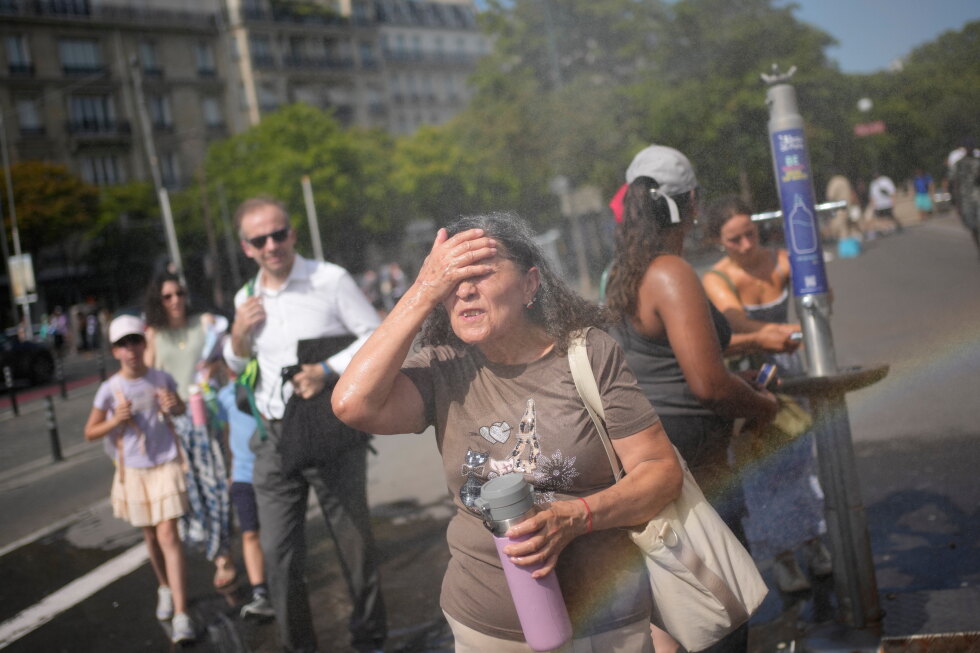
PARIS (AP) — A historic early-season heat wave that smashed temperature records across Western Europe last month caused at least 5,700 more deaths than normal in France alone, the country’s national public health agency confirmed Wednesday in a sharply upward revision of its initial death toll estimate.
Public Health France’s analysis found that between June 17 and July 1, when the dangerous heat gripped most of the country, 21,674 deaths from all causes were registered across all French regions. Statistical modeling built on mortality data from previous years put the expected number of deaths for that same period at just 15,910. The gap between the projected and actual death counts, totaling 5,764 extra fatalities, is classified as excess mortality directly linked to the extreme heat event.
The 36% rise in mortality compared to baseline averages marks the deadliest heat wave France has experienced since the catastrophic 2003 heat event, which killed an estimated 15,000 people across the country. This year’s heat wave set multiple unprecedented records: France logged its hottest ever national average temperatures on June 24 and 25, hitting a daily mean of 30°C (86°F). Nighttime temperatures also remained at record-breaking levels, and peak daytime temperatures surged above 40°C (104°F) across much of the nation.
More than half of the excess deaths occurred in the three-day window between June 25 and 27, immediately after the peak of the heat, the agency confirmed. The Paris region was the hardest-hit area, with 1,999 excess fatalities — an 80% increase over the expected mortality rate for that period. Local funeral directors reported widespread strain on services, with multiple mortuaries hitting full capacity and turning away bodies awaiting burial or cremation.
Nearly half of all deaths during the heat wave occurred in hospitals, which faced sudden surges in patients seeking care for heat-related illnesses. Roughly one-third of patients died at their residences, and most of the remaining fatalities occurred in elderly care facilities, where vulnerable populations face particular risk from extreme heat.
Public health officials noted that this heat event was unique for its unusually early arrival on the calendar, paired with exceptional intensity and duration that exposed nearly the entire French population to dangerous conditions. Crucially, the heat struck when schools were still in session and most workplaces were operating at full capacity, unlike mid-summer heat events that occur when many people are on vacation.
This deadly toll in France is part of a wider pattern across the European continent, where early and intense extreme heat this year has caused more than 10,000 total excess deaths as new mortality data continues to be compiled from affected countries. The event also sparked massive wildfires in neighboring Spain, threatened water infrastructure across the Western U.S. and Latin America as El Niño amplifies global heat trends.
The current 5,700 excess death estimate is an updated figure that far surpasses the agency’s initial preliminary count of roughly 2,000 extra deaths for the peak heat week between June 22 and 28. Officials noted the final toll will be revised again later this year once full, finalized mortality data is available. Climate and health experts warn that full mortality counts from heat waves always take time to compile, as many heat-related deaths are never formally categorized as such on death certificates. For example, extreme heat often triggers fatal heart attacks in vulnerable older adults or people with preexisting conditions, but these deaths are typically listed only as heart attacks on official documentation, masking the heat’s role in the fatality.