Tensions between the United States and Iran have spiked sharply this Wednesday, with US President Donald Trump announcing a harsh new retaliatory policy targeting critical Iranian civilian infrastructure in response to any attacks on commercial shipping passing through the strategically vital Strait of Hormuz. Against a backdrop of already heightened regional instability, the escalation has triggered immediate ripple effects across energy markets, geopolitical alliances and civilian sectors across the Middle East.
One of the most immediate impacts of rising tensions played out in global energy markets Wednesday, as benchmark Brent North Sea crude prices surged past the $95 per barrel mark for the first time in almost six weeks. While futures prices later trimmed some of their early gains, the commodity still closed the trading day up roughly 3 percent overall, reflecting widespread investor anxiety over potential disruptions to the 20 percent of global oil supplies that pass through the Strait of Hormuz daily.
In the Red Sea and adjacent regional waters, the Iran-aligned Houthi movement of Yemen has upped its own actions after announcing a naval blockade against Saudi Arabia. The International Chamber of Shipping confirmed to Agence France-Presse that Houthi operatives have been transmitting radio warnings to commercial vessels transiting through the region, raising further risks to global shipping lanes already disrupted by months of Houthi attacks on commercial traffic.
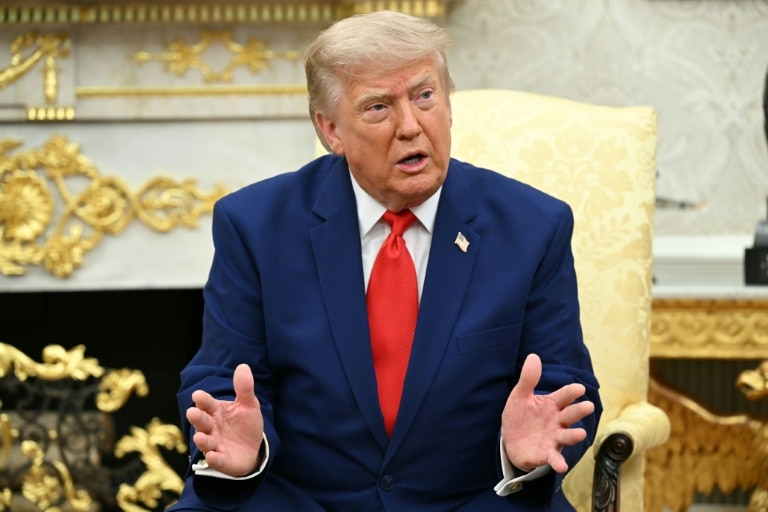
President Trump doubled down on Washington’s hardline stance in a post on social media, warning that the US would destroy one Iranian bridge or power plant for every attack on shipping in the Strait of Hormuz. Stating that the US was “not finished” with its campaign against Iran—an effort that has already cost US taxpayers $37.5 billion—Trump specified that retaliation would be triggered regardless of whether Iran used missiles, rockets, drones or any other weapon to target vessels.
The US military has already carried out new strikes on Iranian soil this week, hitting targets on Larak Island, a key Iranian territory located directly within the Strait of Hormuz. Iran’s semi-official Tasnim news agency reported Wednesday that authorities are still conducting assessments to determine the full extent of damage from the attack.
Beyond the direct US-Iran confrontation, regional instability continues to impact cultural sites and neighboring states. The United Nations cultural agency UNESCO added the ancient Phoenician city of Tyre in southern Lebanon to its list of World Heritage Sites in Danger, after months of sustained Israeli bombardment of the area that has put its unique cultural heritage at severe risk. In a separate development, Bulgaria’s national parliament voted Wednesday to approve the deployment of up to eight US KC-135 refueling aircraft and 250 American military personnel to the country’s Bezmer Air Base, a deployment that will run from July 24 to October 1 to support US-led military operations across the Middle East. Further south, Jordan’s armed forces announced they intercepted four Iranian missiles launched from Iranian territory Wednesday, with two additional missiles falling in uninhabited remote areas. The military confirmed no casualties or material damage occurred as a result of the incident.
On the nuclear non-proliferation front, Iran reiterated its denial of claims that it operates a secret nuclear facility at Kolang Mountain, a claim first made by the Trump administration which led to Trump threatening a strike on the central Iranian site. Iranian Foreign Ministry spokesman Esmaeil Baqaei wrote on the social platform X that Washington’s “obsessive focus on Kolang Kouh where no nuclear activity is taking place is nothing more than a fabricated pretext for aggression, destruction, and sabotage.”
In Lebanese political developments, caretaker Prime Minister Nawaf Salam reaffirmed the country’s goal of achieving a full Israeli withdrawal from occupied Lebanese territory during a visit to a village where the Lebanese army recently deployed. The deployment comes as part of a US-brokered agreement reached last month, which requires Lebanon’s military to disarm Hezbollah in the deployment zones, while Israeli forces withdraw from so-called “pilot areas” that will be taken over by Lebanese government forces.
Even for major regional tourism hubs, the months-long wave of regional conflict has taken a visible economic toll. The government of Dubai announced a new tourism incentive scheme this Wednesday that will offer up to more than $800 in discounts and promotional deals to local residents who host visiting friends and family. The program, which runs through the end of October, is designed to reverse tourism declines brought on by months of heightened regional tensions. Even outside periods of conflict, Dubai’s summer months typically see lower tourist numbers, as temperatures in the desert emirate regularly climb above 50 degrees Celsius.