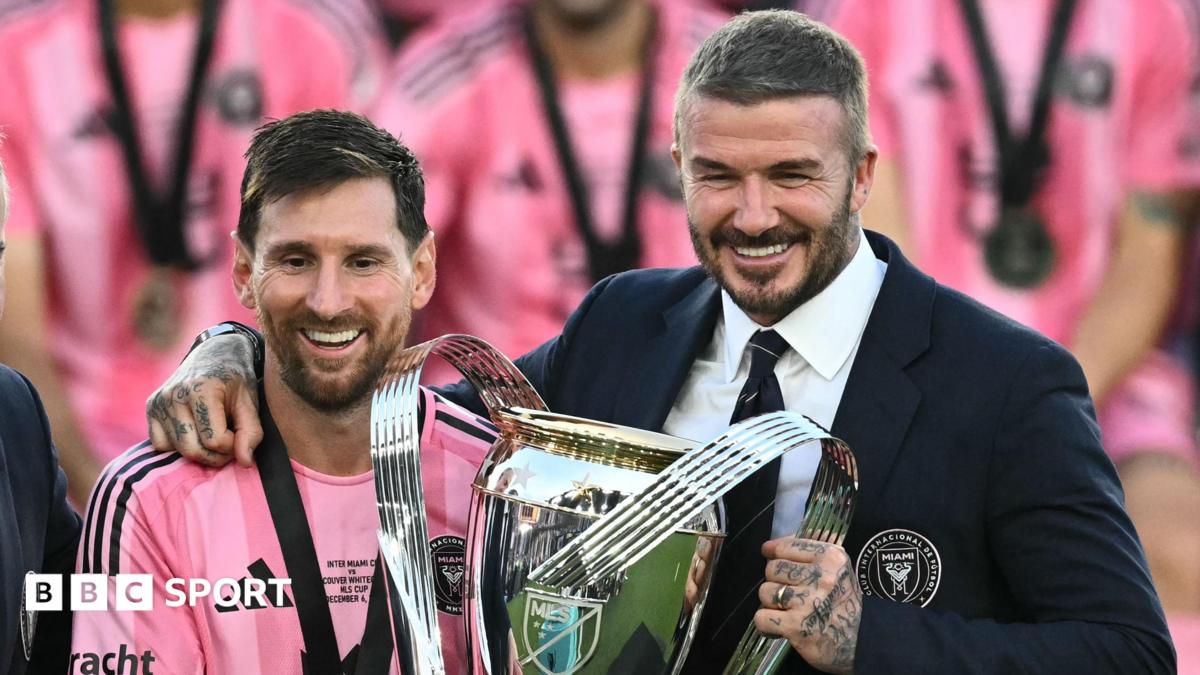
The 2026 FIFA World Cup has created an unprecedented wave of football enthusiasm across the United States, and Major League Soccer (MLS) is seizing this moment to turn a one-time tournament hype into long-term growth as it pushes to join the ranks of the world’s top elite football leagues. Leading the charge is global icon Lionel Messi, alongside other top stars like Son Heung-min and David Beckham, who are fronting a new national advertising campaign with the bold rallying cry: “Thanks world, We’ll take it from here.”
The campaign targets the millions of new football fans who tuned into the 2026 World Cup, inviting them to follow the sport as MLS’s regular season resumes and even offering complimentary tickets to first-time attendees. For league executives, the World Cup’s massive domestic success has delivered a once-in-a-generation momentum that MLS is eager to capitalize on. “The World Cup has now exposed millions of people to Major League Soccer,” said Dan Courtemanche, MLS executive vice-president who joined the organization back in 1995, before the league even played its first match. “We’re going to continue to capitalise on that momentum.”
This moment of opportunity is decades in the making. Ironically, MLS itself is a legacy of the 1994 World Cup, when FIFA required the U.S. to launch a top-tier professional football league as a condition of awarding the country hosting rights. When the league kicked off in 1996, it operated with just 10 teams and not a single purpose-built football stadium. Thirty years on, MLS has expanded to 30 clubs, nearly all of which play in their own football-specific venues.
The 2026 World Cup defied all early skeptics to deliver record-breaking viewership and fan engagement across the U.S. Despite widespread predictions of empty stadiums due to sky-high ticket prices, every venue sold out and packed crowds turned out for matches. Even after the U.S. men’s national team was eliminated from the tournament, broadcast ratings remained at historic levels. The U.S.’s round of 16 defeat to Belgium became the most-watched single-network football match in U.S. history, drawing more than 33 million viewers on Fox. Meanwhile, England’s round of 16 win over Mexico drew a combined 45 million viewers across English-language Fox and Spanish-language Telemundo, making it the most-watched football match of any kind in U.S. history. While these numbers still fall short of the 127.7 million viewers that tuned into the 2025 Super Bowl, they put top World Cup matches on par with popular NFL regular season and playoff contests, marking a massive milestone for football in the U.S.
For years, MLS has harbored ambitions to grow into a global elite league on par with Europe’s top competitions. Commissioner Don Garber noted at a recent future-focused league event that MLS has already achieved major commercial success. “I think we’re looked at as the top, one of the top leagues commercially,” Garber said. “We’ve cracked that code. Now we’ve got to crack the rest of it.”
Already, the league is making major strides to shake off its outdated reputation as a retirement home for aging European superstars. A total of 45 MLS players featured at the 2026 World Cup, including two Argentine stars who started in the final: Messi and Rodrigo de Paul. Courtemanche pointed out that the narrative of MLS as a destination for post-peak legends is no longer accurate: the average age of new international signings to the league is now just 23.8 years old, with many young talents using MLS as a springboard to future moves to European leagues. To facilitate that player movement and align with global football calendars, MLS will shift to a summer-to-spring season structure starting in 2027, matching the schedule used across most of Europe. The league is also pouring investment into youth development, with every MLS club operating a full youth academy to nurture homegrown talent.
During the World Cup, at a LA Galaxy-hosted public viewing party for the U.S. national team match against Bosnia-Herzegovina, dozens of young players ignored the big screen to compete in informal pickup matches on adjacent pitches, a testament to the growing grassroots interest in the sport. Eight-year-old Landon, named for U.S. football legend Landon Donovan, already dreams of playing professionally for LAFC one day, after attending MLS youth camps and playing on elite travel teams.
Still, critics argue that MLS faces structural barriers to competing with Europe’s top leagues, most notably the pervasive “pay-to-play” culture in U.S. youth development. While top-tier MLS academies offer free training, similar to European clubs, young players typically need to pay thousands of dollars for private coaching and travel team participation to even get scouted by academy programs. League officials counter that the youth development system is constantly evolving, and all clubs offer need-based scholarships for talented low-income players. Garber emphasized that the league is committed to improving its youth pipelines to produce more talent for the U.S. men’s national team and strengthen the league long-term.
Off the pitch, MLS has already become a wildly successful commercial enterprise, with celebrity ownership driving growing mainstream appeal. Messi is the league’s biggest current draw, but dozens of A-list entertainers and sports legends hold ownership stakes across MLS clubs, including Will Ferrell and Magic Johnson (LAFC), Reese Witherspoon (Nashville SC), and Matthew McConaughey (Austin FC). The financial growth of the league has been staggering: when Drew Carey became an original owner of the expansion Seattle Sounders in 2009, the club paid a $30 million expansion fee; today, the Sounders are valued at more than $900 million. David Beckham secured an option to buy an expansion franchise for just $25 million as part of his 2007 LA Galaxy contract; his Inter Miami CF, boosted by the signing of Messi, is now valued at more than $1 billion.
Despite the current World Cup-fueled football frenzy across the U.S., skepticism remains that football will ever displace American football as the country’s top sport. Brian Udovich, whose 12-year-old son plays in an elite MLS youth league in Southern California, noted that many talented young players switch to American football as teenagers, drawn by the massive cultural hype and institutional support. Friday night high school American football games draw thousands of fans, feature marching bands and cheerleaders, and turn top players into local celebrities, while youth football matches are often low-key Saturday morning events attended only by family.
But longtime American football insiders argue that the 2026 World Cup has permanently shifted football’s place in U.S. culture. New York Red Bulls coach Michael Bradley noted that for decades, the sport labored under an inferiority complex that it would never truly take root in the U.S. “We don’t have the long, storied football history that other countries do. I think for a long time that led to an inferiority complex that maybe football would never really survive in the United States,” Bradley told reporters. Today, that narrative has changed: “I think we can all unequivocally say in 2026, football is not going anywhere.”