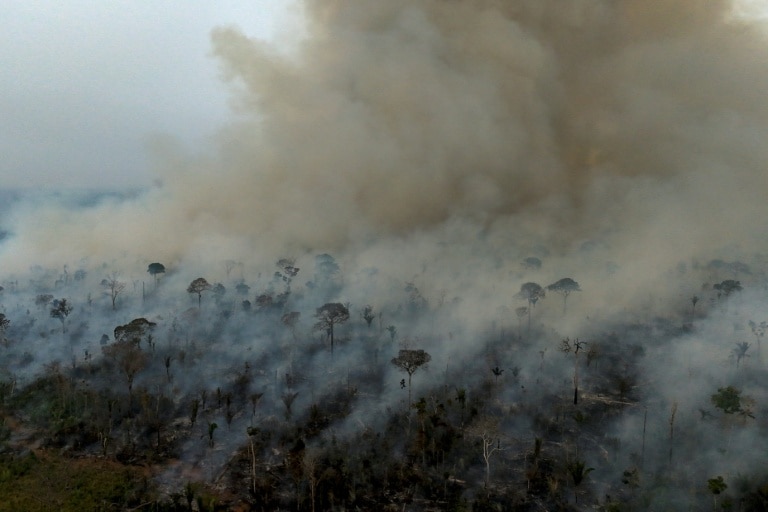
In a striking reversal of the previous year’s catastrophic environmental damage, forest fires in Brazil’s Amazon rainforest dropped to the lowest level recorded since official monitoring began in 1985, according to a new report released this week by independent environmental monitoring network MapBiomas.
The 2025 decline comes after 2024 saw the Amazon ravaged by widespread flames, driven by an unprecedented drought that amplified the spread of predominantly human-set blazes tied to agricultural clearing and illicit deforestation. MapBiomas’ analysis of satellite data puts the total burned area across the Brazilian Amazon in 2025 at 3.1 million hectares, or 7.7 million acres — a figure that marks a dramatic break from years of expanding fire activity in the world’s largest tropical rainforest.
The downward trend was not limited to the Amazon: nationwide, total burned area across Brazil also fell to its smallest size since 2018. Report coordinator and geographer Ane Alencar described the sharp decline as “out of the ordinary,” attributing the shift to three key factors.
First, an unusually delayed rainy season between the end of 2024 and start of 2025 eliminated the typical dry weather window that land clearers rely on to set intentional fires for agricultural expansion. These poorly managed blazes, often linked to illegal deforestation and unregulated mining activity, are the leading cause of Amazon wildfires.
Second, MapBiomas recorded a parallel drop in Amazon deforestation in 2025, which reduced the volume of dry, cleared vegetation that acts as fuel for spreading flames. Finally, Alencar noted a significant “psychological factor” at play: communities that lived through the devastating 2024 fire season proactively helped contain small outbreaks before they could escalate into large-scale blazes.
The report notes that this sharp decline interrupts a multi-year trend of growing fire activity in the Amazon, bringing the region back to historic low levels of burned area. However, the findings also include important caveats and warnings. Fires in the vast Cerrado savanna biome, which sits adjacent to the Amazon in central Brazil, continued to burn at the same high rates seen in recent years, with no decline recorded. Alencar also warned of rising risk for 2026, pointing to the projected arrival of a “super El Niño” event — a climate pattern that brings extended dry conditions and elevated wildfire risk to the Amazon.
The drop in fires and deforestation represents a major political win for leftist Brazilian President Luiz Inácio Lula da Silva, who has made Amazon protection a core pillar of his reelection campaign ahead of October’s general election, where he is seeking a fourth non-consecutive term. Official data from the first quarter of 2026 already shows Amazon deforestation at its lowest rate this decade, and Lula has pledged to fully eradicate illegal deforestation across the country by 2030. Protecting the Amazon is widely recognized as a critical global priority for combatting climate change, as the rainforest’s dense vegetation absorbs vast volumes of the greenhouse gases that drive global warming.
Even as Lula gains credit for the declining fire numbers, he faces ongoing backlash from environmental activists over his endorsement of a major new offshore oil exploration project off the Amazon coast, a decision that has drawn fierce criticism from climate and Indigenous rights groups.