A sharp escalation in cross-border hostilities has rocked the Russia-Ukraine conflict this week, after Ukraine launched one of its largest drone attacks on Moscow in recent months just hours after Russia pummeled Ukrainian population centers with a wave of ballistic missiles, deepening a cycle of retaliatory violence that pushes any diplomatic resolution further out of reach more than four years into Russia’s full-scale invasion.
Moscow Mayor Sergei Sobyanan confirmed Monday that more than 400 Ukrainian drones were launched at the Russian capital between late Sunday and early Monday. According to official Russian statements, the vast majority of incoming unmanned aerial vehicles were shot down far from central Moscow, with 85 intercepted within Moscow’s immediate perimeter. Andrei Vorobyov, governor of the Moscow Oblast surrounding the capital, reported 10 civilian injuries and damage to multiple residential buildings and critical civilian infrastructure sites.
Yevgeniya Khrustaleva, head of Domodedovo District south of Moscow, confirmed the attack sparked a large blaze at the Yuzhnye Vrata industrial park, located roughly 18 miles from the city center. Unconfirmed reporting from independent Russian outlet Astra also claimed a fire broke out at an oil depot in Podolsk, 12 miles south of Moscow, but the claim has not been verified by official Russian sources.
This major drone attack underscores how far Ukraine’s long-range drone technology has advanced since the full-scale invasion began, creating a persistent security challenge for Russia: the country’s expansive territory makes comprehensive air defense coverage nearly impossible to maintain. Ukrainian forces have increasingly targeted Russian energy infrastructure in these strikes, leading to localized fuel shortages and undermining public confidence in the Kremlin’s ability to secure the home front. The scale of Monday’s attack is among the largest; in May, Russian defense officials reported downing 1,054 Ukrainian drones in a single 24-hour period.
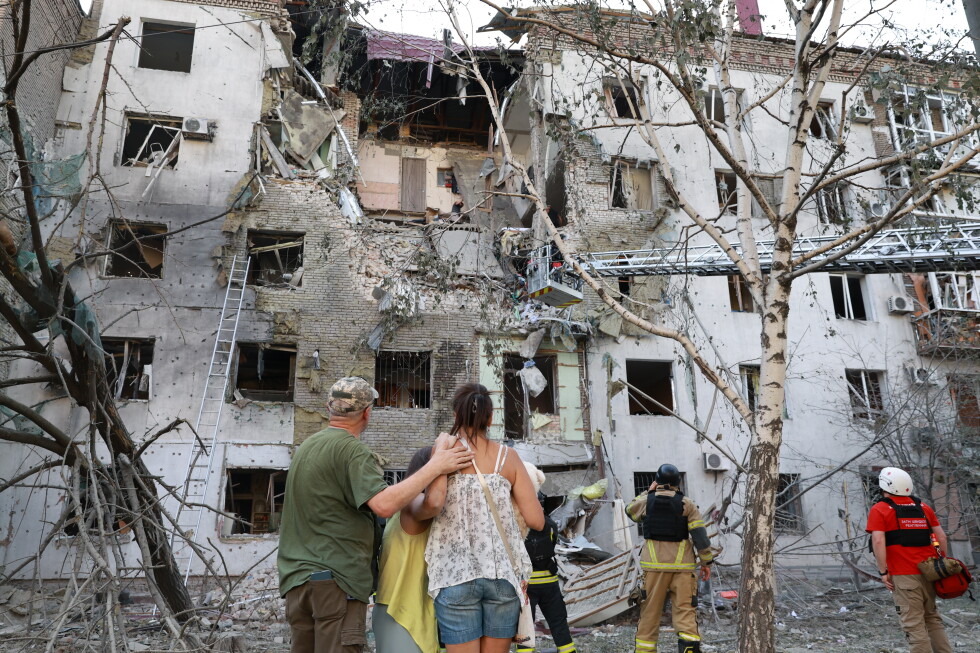
The tit-for-tat strike came on the heels of a major Russian bombardment that used large numbers of ballistic missiles against Ukrainian cities. Ukrainian officials confirmed that Sunday’s Russian attack killed at least six civilians and wounded dozens more. Russia’s Defense Ministry claimed the overnight strike targeted fuel storage facilities in the southern Ukrainian port of Odesa, while Ukraine’s Air Force reported that Russia launched two ballistic missiles and 94 long-range drones in the overnight assault. Ukrainian air defenses intercepted or jammed 81 of the drones, but nine remaining drones and one Russian missile caused damage across nine separate Ukrainian locations.
A Washington-based think tank, the Institute for the Study of War, noted Sunday that Russian forces have fired more ballistic missiles into Ukraine in July than the country is estimated to produce in a single month. The organization concluded that Russia is drawing down its stored stockpiles of ballistic missiles to ramp up strikes, as these weapons have a far higher penetration rate than slower drones or cruise missiles, allowing them to exploit gaps in Ukraine’s layered air defense network. Russia has significantly stepped up ballistic missile use in recent weeks to capitalize on these defensive gaps, as Kyiv continues to appeal to Western allies for more advanced interceptor systems capable of countering the hard-to-stop weapons.
Beyond the frontline escalation, Ukrainian President Volodymyr Zelenskyy is working to navigate a growing domestic political crisis sparked by a major government reshuffle last week that laid bare deep divisions between military establishment leaders and younger reformist factions over the strategy for continuing the war. Zelenskyy announced last week that he would replace 35-year-old former Defense Minister Mykhailo Fedorov, while retaining 60-year-old Soviet-trained General Oleksandr Syrskyi as the head of Ukraine’s armed forces. The decision sparked days of public street protests, with demonstrators rallying in support of Fedorov and calling for the removal of Syrskyi. Zelenskyy has said he will hold “key negotiations” on Monday to shore up public and political unity, as he works to convince Ukrainians that the cabinet shake-up will not undermine the country’s military campaign against Russian forces.