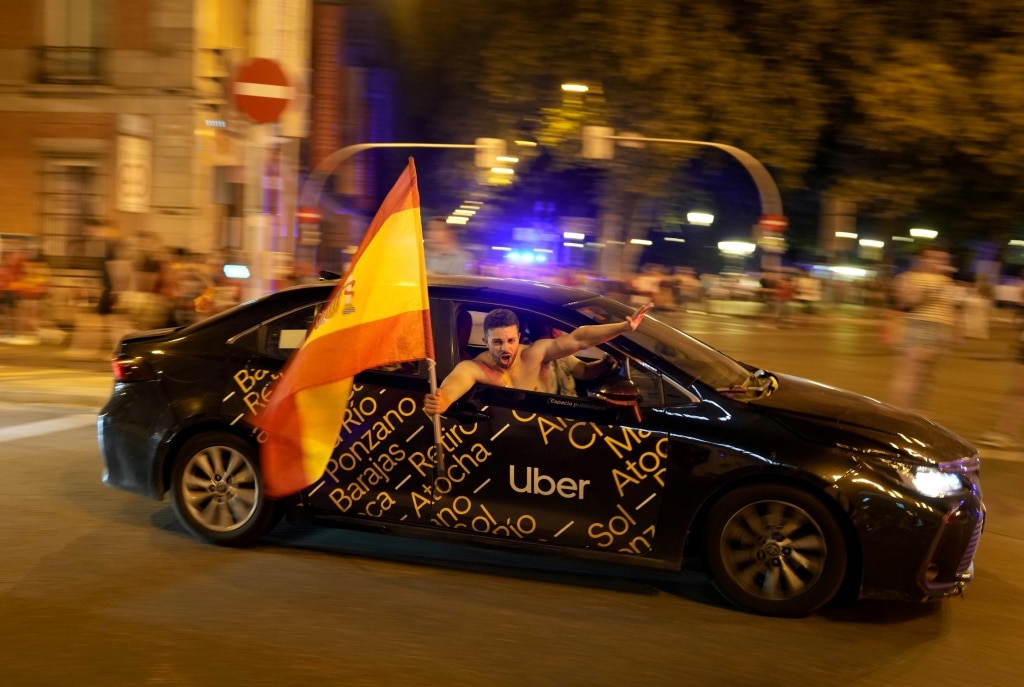
Fresh off a historic 1-0 final victory over Argentina at the 2026 World Cup hosted in the United States, Spain’s men’s national football team is set to return to Madrid on Monday for a jubilant heroes’ welcome that is projected to draw up to one million adoring fans across the parade route.
This triumph marks only the second men’s World Cup title in Spanish football history, following the team’s breakthrough win in South Africa 16 years prior in 2010. For millions of young Spanish supporters, this is the first men’s world title they have ever witnessed, turning the victory into a historic outpouring of national pride across the football-obsessed nation.
After Sunday’s tense final in East Rutherford, where La Roja held off a persistent Argentine defense to secure their narrow win, the squad and coaching staff led by manager Luis de la Fuente are scheduled to land at Madrid’s airport at 12:50 pm local time (1050 GMT), bringing the golden World Cup trophy back to Spanish soil for the first time in 16 years.
Following their arrival, the team is set to be received by Spain’s head of state King Felipe VI and Prime Minister Pedro Sanchez at official residences before boarding an open-top parade bus to begin the victory procession through central Madrid starting at approximately 4:30 pm. According to Francisco Martin, the central government’s representative in Madrid, the parade will kick off near Moncloa Palace, Sanchez’s official residence, and travel through the city center to Cibeles Square, the iconic traditional gathering spot for Spanish national team celebrations that has hosted similar events following major tournament wins for decades. A formal victory ceremony with the full squad will then be held at the square.
To manage the unprecedented crowds expected to line the parade route, local authorities have rolled out extensive security and public transport adjustments. In total, 2,050 local police officers and 400 Civil Guard personnel have been deployed to maintain order and ensure the event runs smoothly. As of Monday morning, however, final details of the timetable were still being adjusted: Prime Minister Sanchez is scheduled to complete a brief official visit to Algeria before returning to Madrid in time for the celebrations, and the royal household had not issued a final confirmation of King Felipe VI’s attendance at the events.
Even before the team touched down on Spanish soil, spontaneous celebrations broke out across the entire country on Sunday night immediately after the final whistle, stretching from the crowded streets of Madrid to the smallest rural villages across Spain. Thousands of supporters who had gathered in city-center bars and three official fan zones flooded into the capital’s streets the moment the match ended, with car horns blaring across the city and fireworks lighting up the warm summer sky.
An Agence France-Presse reporter on the ground at Madrid’s Colon Square, one of the city’s main fan zones, documented jubilant supporters draped in Spain’s iconic red-and-yellow national flag singing, dancing, and setting off flares and fireworks long into the night. Crowds chanted repeatedly “Campeones! Campeones!” (Champions! Champions!) and shouted “Que viva España!” (Long live Spain) as they celebrated a rare golden era for Spanish football: this 2026 men’s World Cup title comes just two years after Spain won the men’s Euro 2024 championship, and the Spanish women’s national team already holds the women’s World Cup title won in 2023.
In an official statement posted to social media platform X, the Spanish Royal Household praised the team’s historic achievement, writing “You have faced each challenge with the conviction of a great team and have carried the name of Spain to the very top.” The statement noted the title was a reward for the team’s “exemplary commitment in every match,” adding “Today, we celebrate a title. Tomorrow we will remember a legend.”
Organizers and officials expect the celebrations to echo the massive outpouring that followed Spain’s 2010 World Cup win, when hundreds of thousands of fans packed Madrid’s streets to welcome the team home, marking another defining moment for Spanish football.