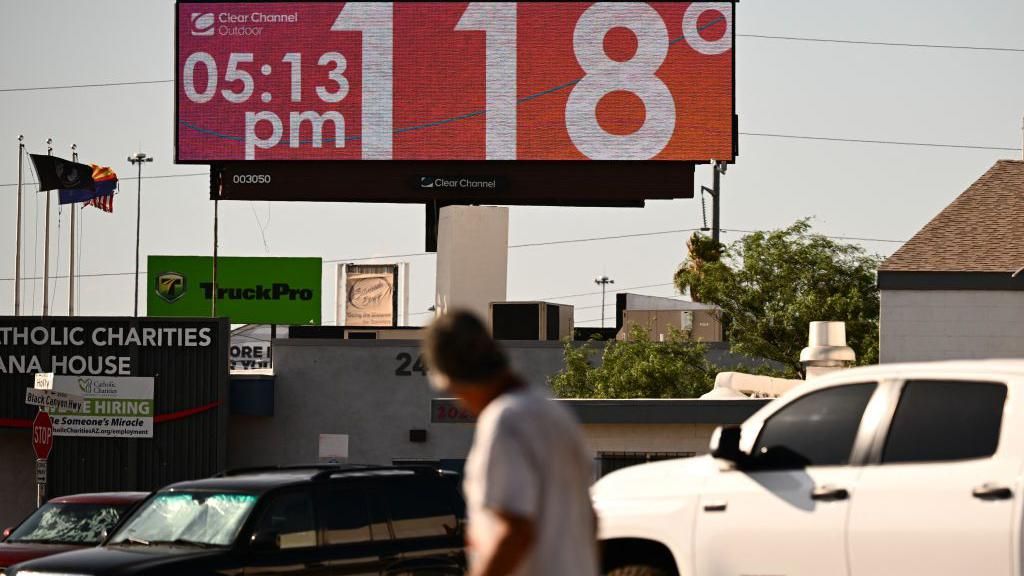
Across vast swathes of the United States and Western Europe, summer 2026 has brought record-shattering, blistering heat that has already claimed hundreds of lives, and climate scientists are clear: this extreme warmth is not an anomaly, but the new normal for communities worldwide.
The human cost of this year’s heatwaves has already been staggering. France reported more than 2,000 excess deaths during its late-June heat event. In England and Wales, researchers estimate over 2,700 people have died from heat-related causes across a string of extreme heat events starting in May. During the 4 July holiday weekend alone, the U.S. recorded at least 44 confirmed heat-linked deaths.
Unlike decades past, today’s extreme heat carries a uniquely dangerous twist: overnight temperatures no longer drop enough to let human bodies recover from daytime heat stress, explained Jennifer Marlon, a Yale University climate researcher specializing in extreme heat impacts. “People don’t realise this is not the same heat that we were experiencing 10 years ago, it is actually worse, because in many cases nighttime temperatures are not cooling off,” Marlon told the BBC. With core body temperatures unable to reset during cool nights, even healthy people face elevated risk of heat exhaustion and fatal heat stroke.
While most newly heat-stricken regions are scrambling to adapt, one U.S. city has been preparing for this future for years: Phoenix, Arizona, located in the always-warm Maricopa County. For decades, local officials have built targeted programs to cut heat deaths, and their efforts have yielded measurable results that experts say could act as a global blueprint for heat resilience.
As one of the consistently hottest regions in the U.S., Maricopa County has long prioritized heat safety, launching widespread initiatives ranging from expanded cooling center access to free air conditioning support for low-income residents. In a pioneering move in 2021, Phoenix became the first city in the world to appoint a dedicated municipal heat officer, a role focused on coordinating cross-government action on heat risks.
“We’ve had the relative benefit of knowing that this is going to be a problem every year, but it appears to be more and more of a problem or more of a predictable event in communities across the globe,” said Nicholas Staab, Maricopa County’s chief medical officer.
The county’s proactive strategy has already driven a notable decline in heat mortality. After peaking at 645 heat-related deaths in 2023, the annual count dropped to 405 in 2025, a reduction many public health experts attribute directly to targeted policy interventions. Much of the county’s work centers on expanding access to cooling for the groups most at risk: low-income households and unhoused residents. Cooling centers have extended operating hours, with many now open 24/7 to pull people off overheated streets, and a dedicated program provides free air conditioning repairs or replacements for eligible low-income residents.
“The world has a lot to learn from Maricopa County,” Marlon said.
Despite these successes, the downward trend in mortality is not guaranteed. As of 11 July this year, Maricopa County has already recorded 23 confirmed heat-related deaths, with another 282 cases still under investigation. If all pending cases are confirmed as heat-linked, 2026’s death toll will outpace last year’s count, a reminder of the growing pressure rising temperatures place even on well-prepared communities.
Ladd Keith, director of the Heat Resilience Initiative at the University of Arizona, noted that the simplest step other regions can replicate is appointing a dedicated heat officer to coordinate cross-department action and cut through bureaucratic gridlock. “It’s incredibly important to make someone responsible for heat because the problem is, if it’s no one’s responsibility, then no one will address it,” he said.
Marlon added that even regions unaccustomed to extreme heat can quickly stand up coordinated cooling center networks with proper cross-agency communication – but that progress first requires widespread recognition that extreme heat is not a temporary, one-off event.
Driven by human-caused climate change, the global average temperature has already risen more than 1.1°C above pre-industrial levels, and temperatures will continue to climb for years even if nations implement steep, immediate cuts to greenhouse gas emissions. Experts emphasize that heat adaptation is no longer optional for communities worldwide, and that heat risks extend far beyond public health: it threatens critical infrastructure and economic stability too, buckling paved roads and causing widespread flight delays during heat peaks.
Most critically, Keith said, communities must abandon outdated planning based on historical temperature records and prepare for a hotter future. “We have to shift away from planning for the historic heat we’ve experienced and start to plan for the heat we’re going to experience in the next five to 10 years,” he said. “If people think it’s bad now, it’s going to be hotter, and it’s going to be hotter longer. The records are going to be broken, you can almost guarantee, year after year across the world.”