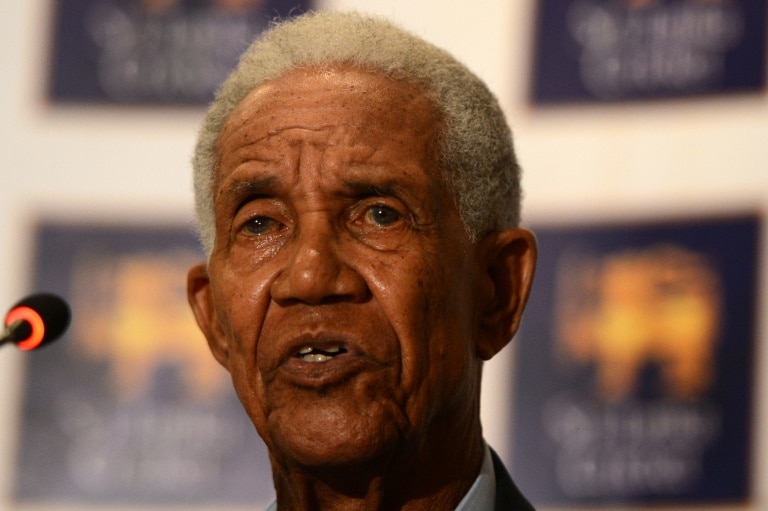
The global cricket community is mourning the passing of Sir Garfield ‘Garry’ Sobers, the iconic West Indies all-rounder universally regarded as one of the greatest players to ever step onto a cricket field, who died at the age of 89.
Across the 20th century, cricket produced no shortage of generational talent, but fans and experts alike have long placed just two players in a tier of their own: legendary Australian batsman Donald Bradman and Sobers. Confirming the loss on social media Friday, West Indies Cricket shared a heartfelt tribute: “A great innings has come to an end. In our hearts, now and forever, Sir Garfield Sobers.”
Sobers’ standing in the sport was cemented decades ago. In a 1999 poll of 100 leading cricket experts conducted by Wisden for its selection of Five Cricketers of the 20th Century, Sobers earned 90 votes — falling just 10 votes shy of a perfect tally that only Bradman achieved. Even Bradman himself, who passed away in 2001, offered Sobers the highest possible praise, calling him “in my opinion, the greatest cricketer of all time.”
That glowing acclaim stems not just from Sobers’ impressive statistical record or his graceful on-field style, but from the unprecedented breadth of his skill across every aspect of the game. As a batsman, he compiled 8,032 Test runs across 93 matches at an average of 57.78 — a career mark that would alone secure any player a place in cricket’s hall of fame. As a bowler, he claimed 235 Test wickets at an average of 34.03, with the rare versatility to open the bowling with fast left-arm pace or switch to orthodox or wrist spin when pitches deteriorated, a talent that caught the eye of West Indies selectors when he was just a teenager. He was also one of the most agile and sharp fielders of his era, holding 109 Test catches — most often at slip, though as captain he would regularly position himself in the high-risk short-leg spot when off-spinner Lance Gibbs was bowling.
Australian all-rounder Alan Davidson summed up Sobers’ unmatched versatility in a 2016 interview marking Sobers’ 80th birthday: “The bloke could do just about anything on a cricket field except umpire. He was a complete cricketer, magnificent fielder, bowled all types of bowling, and when in form, he absolutely decimated great bowling attacks. You could not set a field to him because he just had that innate ability to be able to score runs whenever he wanted to.”
Born Garfield St Aubrun Sobers in Bridgetown, Barbados, in July 1936, Sobers’ early life was marked by tragedy when he was just six years old: his father, a merchant seaman, died when his ship was torpedoed by a German U-boat off the coast of North Carolina. Even from a young age, Sobers displayed extraordinary athletic talent across multiple sports, and he made his first-class debut for Barbados as a spinner against touring India in January 1953, at just 16 years old. A year later, after facing the touring Marylebone Cricket Club (MCC) side and just two first-class appearances total, he was called up as a last-minute replacement for the injured Alf Valentine to make his Test debut against England at Sabina Park in March 1954. Though England won the match by nine wickets, Sobers made an immediate impact, dismissing star batsman Trevor Bailey in his very first Test over and finishing with four wickets for 75 runs in England’s first innings.
It took just four years for Sobers to etch his name into the record books, during a Test against Pakistan in Kingston. At the time, Len Hutton’s 364 against Australia had stood as the highest individual Test score for 20 years. Sobers hit an unbeaten 365 in that match, breaking the record in his first ever Test century; the new record stood for 39 years, until fellow West Indian Brian Lara hit 375 against England in 1994. Later that same decade, in the famous tied Test of Brisbane in 1960-61, Sobers scored a blistering 132 that set the pace for one of the most memorable Test series in cricket history. Davidson later called that innings “absolutely one of the greatest I have ever seen in my life. He didn’t just beat the field. He split the field. His placement was just incredible.”
In 1964-65, Sobers took over from Frank Worrell as West Indies captain, leading the side to its first ever series win against Australia at home. He captained the side through 1972, when he handed the reins to Rohan Kanhai, with mixed overall results, but his leadership laid critical groundwork for the West Indies team that would grow into the most dominant side in international cricket through the 1970s and 1980s. Even as his career wound down, Sobers delivered historic performances: in 1972, he scored 254 for the Rest of the World team at the Melbourne Cricket Ground, an innings Bradman called “probably the greatest exhibition of batting ever seen in Australia.”
Beyond international cricket, Sobers led South Australia to a Sheffield Shield title and played county cricket for Nottinghamshire in England. In 1968, he made global cricket history once again, becoming the first first-class cricketer to hit six sixes off a single six-ball over — a feat that was only matched once in top-tier first-class cricket in the decades that followed, by Indian all-rounder Ravi Shastri in 1985.
Sobers retired from Test cricket in 1974, and was knighted for his contributions to sport a year later. In 2004, the International Cricket Council created the Sir Garfield Sobers Trophy, awarded annually to the best men’s cricket player in the world, in his honor. For most fans and contemporaries, however, Bradman’s simple, unreserved praise will remain the defining description of his legacy: the greatest cricketer of all time.