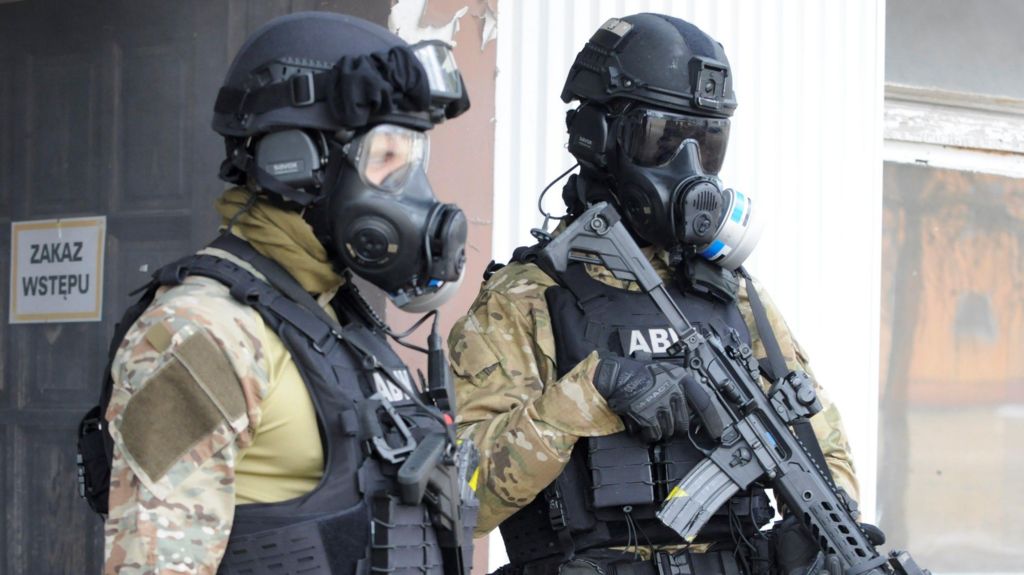
In a high-stakes case that lays bare Russian efforts to exploit long-running historical fault lines between neighboring Poland and Ukraine, Polish prosecutors have formally charged an 18-year-old Ukrainian national with carrying out coordinated sabotage operations on behalf of Russian intelligence. The suspect, identified only as Illia K in line with Polish privacy regulations, is accused of committing 47 separate criminal offenses between November 2024 and his arrest in August 2025.
According to Poland’s Internal Security Agency (ABW), the core objective of the sabotage campaign was to stoke ethnic friction and undermine mutual trust between the two Eastern European countries, which have maintained a critical alliance in the face of Russia’s full-scale invasion of Ukraine. The targeted acts included the deliberate desecration of memorials honoring Polish victims of the World War II-era Volhynia massacre, a 1943–1944 campaign carried out by the Ukrainian Insurgent Army (UPA) that killed an estimated 100,000 ethnic Poles in territory that is now part of western Ukraine.
Prosecutors noted that while Illia K was motivated by financial gain rather than ideological alignment with Russia, all of his actions were executed to advance the interests of a foreign intelligence service. Beyond vandalizing historical monuments, the teen was also charged with plotting to fly a drone over Polish President Karol Nawrocki’s motorcade during the annual Polish Armed Forces Day parade held in Warsaw on August 15, 2024. He was taken into custody just three days before the scheduled event, authorities confirmed.
The ABW added that the suspect allegedly recruited other co-conspirators to participate in the sabotage operations, paying them through cryptocurrencies registered in Russia and China. Tasked by an unidentified handler via an encrypted messaging platform, Illia K was required to send photographic proof of completed acts back to his controller. In addition to Volhynia massacre memorials in the towns of Domostawa and Wrocław, the teen also vandalized the Monument to the Jewish Heroes of the Warsaw Ghetto in Poland’s capital, placing pro-UPA glorifying inscriptions and symbols at multiple sites.
The legacy of the Volhynia massacre has strained Polish-Ukrainian relations for decades, with deep divisions over the historical legacy of the UPA. Tensions over the issue flared again in May 2024, when Ukrainian President Volodymyr Zelenskyy issued a decree naming a Ukrainian military unit after the “Heroes of the UPA”. In response, President Nawrocky stripped Zelenskyy of Poland’s highest state honor, the Order of the White Eagle — a step that had only been taken once before in three centuries of the honor’s existence.
Wojciech Konończuk, director of Warsaw’s Office for Eastern Studies, explained that the divergent national memories of the UPA create a permanent rift that can be easily exploited by outside actors. “For Ukrainians they are heroes because they fought the Soviets,” Konończuk noted in a recent interview. “Many years after the Second World War, the UPA were fighting the Soviet occupation, so Ukrainians only want to remember that part of the history of the formation after 1945. So they don’t know, or don’t want to know what were the UPA activities before 1945.”
“For Poles, the UPA were a criminal structure which was responsible for the mass killing of the Polish population,” he added. “At the same time the level of knowledge in Poland of the history of UPA after the Second World War — basically they were fighters against the Soviets — is usually non-existing knowledge in Polish society.”
The case comes amid a documented surge in Russian espionage and disinformation activity targeting Poland. The ABW reported in May that it had launched 48 active espionage investigations in the previous year, more than double the number recorded in 2024. Russian intelligence services have centered their efforts on discrediting Poland on the global stage and weaponizing pre-existing historical and ethnic divisions, most notably the long-standing tensions between Poland and Ukraine, the agency confirmed. If convicted, Illia K faces a maximum sentence of life imprisonment.